AC Freezing Up: Thaw It Safely, Then Find the Cause
Frost on the copper line outside or ice on the indoor coil means the coil got colder than freezing. The AC can no longer move air across it, so cooling drops off, and when the ice melts it can overflow the drain pan.
Turn cooling off and set the fan to On so warm room air melts the ice, which usually takes a few hours. While it thaws, replace the filter and open closed vents. If the AC freezes up again after that, the likely cause is low refrigerant from a leak, a failing blower, or a dirty evaporator coil, and a technician needs to test it.
What to do when you find ice
- Switch the thermostat from Cool to Off
This stops the compressor so the coil can warm up.
- Set the fan to On
Running the blower alone pushes room air over the coil and speeds thawing. Some people turn the system fully off instead; it just takes longer.
- Check the filter
A clogged filter is the most common reason for a frozen coil. Replace it now.
- Watch the drain pan
Melting ice produces a lot of water. Put towels down and make sure the pan drains.
- Restart and watch
Once the lines are dry and no ice is visible, return to Cool. If frost reappears within a day, call a technician.
Why an evaporator coil freezes
Every cause comes down to the coil getting too cold: either not enough warm air passes over it, or there is not enough refrigerant in it.
Signs your AC is freezing before you see ice
Ice often hides inside the air handler. Clues that it is building include weak airflow from the vents, air that feels cool but not cold, water around the indoor unit, and a frosty or sweating large copper line at the outdoor unit. If the house slowly gets warmer through the afternoon while the system runs nonstop, check for ice before assuming the unit is too small. A frozen coil is also a common reason for an AC blowing warm air.
Your part and the technician's part
Safe checks you can do
No tools beyond a flashlight. Turn the system off at the thermostat before opening any filter or access door.
- Thaw the coil with the compressor off and the fan running.
- Replace the air filter and set a reminder for the next change.
- Open supply vents and move furniture or rugs off return grilles.
- Keep the drain pan from overflowing while the ice melts.
- Avoid running the AC on cool nights; use the fan or open windows instead.
Leave these to a licensed technician
These involve high voltage, refrigerant or sealed components. Refrigerant work requires EPA Section 608 certification.
- Checking the refrigerant charge and finding a leak with EPA Section 608 certification.
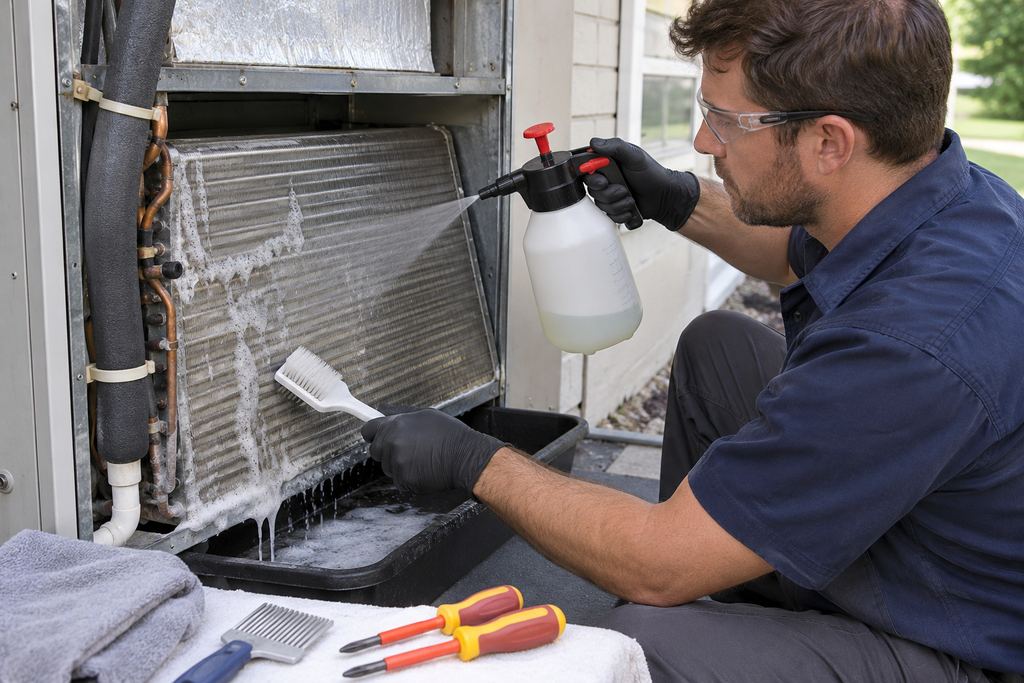
- Cleaning the evaporator coil inside the air handler.
- Testing the blower motor, capacitor and fan speed setting.
- Measuring static pressure to find duct restrictions.
- Checking the metering device and the thermostat's control of the system.
Central systems, heat pumps and mini-splits
On central air, the evaporator coil sits on top of the furnace or inside the air handler, so you may see ice only on the line set outside. A heat pump in cooling mode freezes for the same reasons. In winter, some frost on a heat pump's outdoor coil is normal and its defrost cycle clears it; a solid block of ice that does not clear is not normal. Mini-split indoor heads freeze when their filters clog or the refrigerant is low, and they often show an error code. Window units have their own page: window AC freezing up.
What to ask the technician
- Was the refrigerant low, and where is the leak?
Refrigerant does not wear out. If they add some, ask what they found and whether a leak repair is planned. The refrigerant leak repair cost guide explains what affects that price. - What was the static pressure or airflow reading?
It shows whether the ducts and filter are choking the system. - Does my system use R-22?
R-22 has not been produced since 2020, so repairs that need it cost more and can tip the decision toward replacement.
Frequently asked questions
How long does a frozen AC take to thaw?
Often a few hours with the fan running, and longer if the ice is thick or you turned the whole system off. Wait until the lines and coil are dry before cooling again.
How can I tell if my AC is low on refrigerant?
Signs include ice on the coil or line, longer run times, air that is cool but not cold, and sometimes a hissing sound. Only a technician can confirm it by measuring pressures and temperatures.
Can a bad thermostat cause the AC to freeze?
It can contribute. A thermostat that never satisfies, or that keeps the compressor running on a cool night, gives the coil more time to frost. A miswired fan setting can also leave the blower off while the compressor runs.
Why should I wait a few minutes before restarting after thawing?
Many systems hold the compressor off for three to five minutes after shutdown so pressures can equalize. That built-in delay protects the compressor.
Is it safe to run a frozen AC?
No. Running it with ice on the coil cuts cooling, risks liquid refrigerant returning to the compressor, and can overflow the drain pan.
- Heating and cooling maintenance checklist (ENERGY STAR)
- Section 608 Technician Certification (U.S. EPA)
Last updated November 24, 2026. Editorial policy · Report an error
Related guides and services
Request help with a frozen AC
Describe where the ice was and how often it happens. A local contractor can follow up to schedule a diagnosis. Availability varies by ZIP code and season.
AC Service Near Me is an independent referral service. Work is performed by independent, locally owned contractors. How we earn money
Let us know where you see ice and whether it has happened before. A local contractor can follow up.
Please keep this page open.
- Your request is matched with an independent contractor or partner network that serves your ZIP code.
- The contractor contacts you to confirm details and schedule a visit.
- They diagnose the system and quote the work. You decide whether to go ahead.
Read how requests are handled.
We're still setting up the contractor network that receives online requests, so your details were not sent to anyone and were not stored. Please call to request service, or check back soon.
Call (888) 555-0199