AC Leaking Water: Find the Source and Stop the Damage
Water dripping outside from a pipe near the condenser is normal. An AC leaking water inside the house is not, and the sooner you find the source, the less you spend on drywall and flooring.
Most indoor AC leaks come from a clogged condensate drain line, a cracked or rusted drain pan, a failed condensate pump, or an evaporator coil that froze and is now melting. Turn the system off, catch the water, and replace a dirty filter. If the drain line is clear and water still appears, or you see ice, a technician should inspect the coil, pan and refrigerant charge.
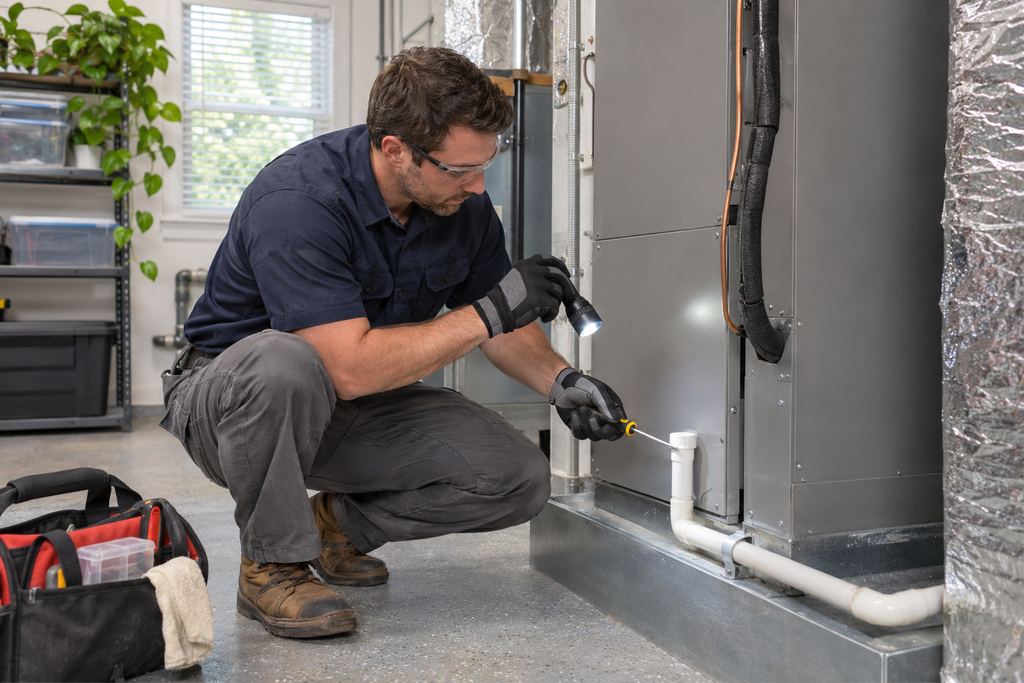
If water is reaching outlets, the air handler's wiring or a light fixture, turn the AC off at the thermostat and switch off that circuit's breaker if you can do it from a dry spot. A ceiling that bulges or sags under an attic unit can give way; keep people out from under it. Do not stand in water to work on anything electrical.
Normal drips and real leaks
Every AC removes moisture from the air. On a humid day the condensate line, usually a white PVC pipe near the outdoor unit or by the foundation, should drip steadily while the system runs. Window units are built to drip outside, too. That water is expected.
Water is a problem when it shows up somewhere it should not: around the base of the indoor unit, on the ceiling below an attic air handler, from a ductless head onto the wall, or inside a window unit's room-side grille.
Common causes of an indoor AC leak
What you can do now and what to leave to a technician
Safe checks you can do
No tools beyond a flashlight. Turn the system off at the thermostat before opening any filter or access door.
- Turn cooling off at the thermostat and put towels or a pan under the leak.
- Check the drain pan under the indoor unit and empty standing water with a wet/dry vacuum.
- Flush the condensate line through its access port if your owner's manual allows.
- Check whether the condensate pump is plugged in and its reservoir is full.
- Replace the air filter.
- Look for ice on the coil or refrigerant line; if present, run the fan only to thaw it.
Leave these to a licensed technician
These involve high voltage, refrigerant or sealed components. Refrigerant work requires EPA Section 608 certification.
- Replacing a cracked pan or a failed condensate pump.
- Clearing a clog deep in the line and correcting its slope or trap.
- Testing the float switch, which should never be bypassed.
- Checking refrigerant charge if the coil froze.
- Insulating sweating ducts or reconnecting a loose drain line.
Where the water is, and what usually causes it
| Where you see water | Likely source |
|---|---|
| Floor around a closet or basement air handler | Clogged line, overflowing pump, cracked pan |
| Ceiling stain below an attic unit | Clogged primary line and a full or rusted secondary pan |
| Drips from supply vents | Sweating ducts or high attic humidity |
| Wall below a mini-split head | Clogged or poorly sloped condensate line on the head |
| Room side of a window unit | Unit tilted toward the room or a blocked drain channel |
What repair usually involves
Clearing a drain and testing the float switch is usually a short visit. Costs rise when a pan, pump or coil is involved, or when a coil froze because of a refrigerant leak. The AC repair cost guide covers how parts and labor are priced. Ask the contractor to list the cause and the fix separately in a written quote, and photograph any water damage for your insurer before cleanup.
Frequently asked questions
Is it okay if water leaks from my AC?
Dripping outside from the condensate line is normal. Water inside the house is not. Even a small indoor leak can stain ceilings and grow mold, so find the cause soon.
What should I do if my AC drain line is clogged?
Turn the system off, clear standing water from the pan, and flush the line through the access port if the manual allows. If it stays clogged, have a technician clear it mechanically. See our drain line cleaning page.
How much does it cost to fix an AC water leak?
It depends on the cause. A drain clog is usually the smallest job; a new pan, pump or a coil that froze from low refrigerant costs more. Ask for a written quote after the cause is confirmed.
Can I keep running the AC while it leaks?
Not for long. Water can damage the house and reach wiring, and if the coil is frozen, running it can strain the compressor. Turn it off until the source is found.
- Heating and cooling maintenance checklist (ENERGY STAR)
- Mold (U.S. EPA)
- Electrical Safety Foundation International (ESFI)
Last updated November 24, 2026. Editorial policy · Report an error
Related guides and services
Request help with an AC water leak
Tell us where the water is showing up and whether you saw ice. A local contractor can follow up. Availability varies by ZIP code and season.
AC Service Near Me is an independent referral service. Work is performed by independent, locally owned contractors. How we earn money
Say where the water is and how much. A local contractor can follow up about a visit.
Please keep this page open.
- Your request is matched with an independent contractor or partner network that serves your ZIP code.
- The contractor contacts you to confirm details and schedule a visit.
- They diagnose the system and quote the work. You decide whether to go ahead.
Read how requests are handled.
We're still setting up the contractor network that receives online requests, so your details were not sent to anyone and were not stored. Please call to request service, or check back soon.
Call (888) 555-0199