AC Compressor Replacement Service
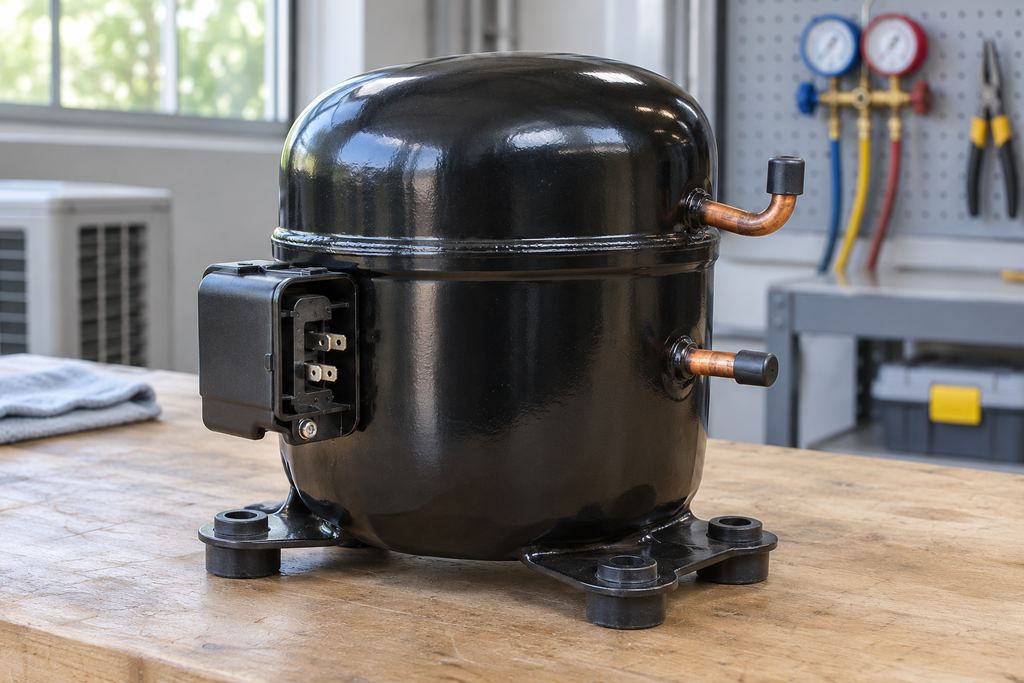
AC compressor replacement swaps the pump at the heart of your outdoor unit, the part that moves refrigerant through the whole system. It is a refrigerant job that takes a skilled crew most of a day. Request service and a local contractor can confirm the compressor has failed and price both a new compressor and a new system.
- Compressor failure confirmed by testing, not guesswork
- Refrigerant recovery and recharge done under EPA Section 608 rules
- Repair and full replacement compared side by side
A local contractor confirms the diagnosis and explains repair versus replacement.
Please keep this page open.
- Your request is matched with an independent contractor or partner network that serves your ZIP code.
- The contractor contacts you to confirm details and schedule a visit.
- They diagnose the system and quote the work. You decide whether to go ahead.
Read how requests are handled.
We're still setting up the contractor network that receives online requests, so your details were not sent to anyone and were not stored. Please call to request service, or check back soon.
Call (888) 555-0199What the compressor does
The compressor squeezes low-pressure refrigerant vapor coming back from the indoor coil into hot, high-pressure gas. That gas releases heat through the outdoor coil, then returns indoors to absorb more. Without a working compressor, the fans still run but nothing cools. It sits in the outdoor unit of a split system, or inside the single cabinet of a packaged unit.
Inside the outdoor unit
- 1Compressor
Pumps refrigerant through the system. The most expensive part in the outdoor unit. - 2Condenser coil
Releases heat from the refrigerant to outdoor air. - 3Fan and motor
Pulls air across the coil. A failed motor can overheat the compressor. - 4Run capacitor
Helps the compressor and fan motor start and run. A common, lower-cost failure. - 5Contactor
Electrical switch that turns the unit on when the thermostat calls for cooling. - 6Service valves
Where the technician connects gauges to check refrigerant pressures.
Signs that lead to a compressor replacement
- Warm air with the outdoor fan running: The compressor is not pumping.
- Tripped breaker every time it starts: A grounded or shorted compressor can do this.
- Loud knocking or rattling from the unit: Possible internal mechanical damage.
- Burnt smell at the outdoor unit: Turn the system off and leave it off.
- Starts, runs briefly, shuts off: Internal overload tripping repeatedly.
- Low capacity after a long leak: Running low on refrigerant can damage the compressor.
Compressor types you may hear about
How a compressor replacement is done
- Confirm the diagnosis
Capacitor, contactor and wiring are ruled out; compressor windings and amp draw are tested.
- Recover the refrigerant
Required by EPA rules; it cannot be vented.
- Remove the old compressor
Wiring is disconnected and refrigerant lines are cut or unbrazed.
- Install the new compressor and filter drier
Brazed in under a nitrogen purge, often with new start components.
- Pressure test and evacuate
The system is leak-tested and pulled into a deep vacuum to remove moisture.
- Recharge and verify
Refrigerant is weighed in, then pressures, superheat or subcooling and amp draw are checked.
New compressor or new system?
A compressor makes sense on a newer system with a parts warranty, a sound coil and R-410A or a newer refrigerant. A new system is often the better use of money when the unit is older, out of warranty, or charged with R-22, which has not been produced since 2020. New equipment installed today uses R-410A or, increasingly, A2L refrigerants such as R-454B or R-32 under the EPA's technology transition rules.
The cost side is explained in AC compressor replacement cost. For whole-system pricing see AC replacement cost, and for the service itself, AC replacement.
Protecting the new compressor
Safe checks you can do
No tools beyond a flashlight. Turn the system off at the thermostat before opening any filter or access door.
- Replace filters on schedule so airflow stays right
- Keep the outdoor coil clear of leaves, grass and shrubs
- Do not cycle the system on and off repeatedly; give it a few minutes before restarting
Leave these to a licensed technician
These involve high voltage, refrigerant or sealed components. Refrigerant work requires EPA Section 608 certification.
- Yearly maintenance with capacitor and contactor checks
- Coil cleaning and refrigerant charge verification
- Leak repair rather than repeated top-offs
How a service request works
AC Service Near Me is a referral service. We don't send our own technicians. We connect you with independent local contractors.
- Tell us what you need
Enter your ZIP code and choose the service. Add a few details about the problem or project.
- Your request is routed
It goes to an independent HVAC contractor or partner network that serves your area and handles that type of work.
- A contractor contacts you
The contractor reaches out to confirm details and schedule a visit.
- You decide
The contractor diagnoses the system and quotes the work. Pricing, scheduling and warranty terms are between you and them.
Frequently asked questions
How expensive is it to replace an AC compressor?
It is one of the most expensive AC repairs, driven by the part, refrigerant work and labor. Warranty coverage can cut the part cost. See the compressor cost guide for what a quote should list.
What is the function of the AC compressor?
It raises the pressure and temperature of the refrigerant so heat collected indoors can be released outdoors. It is the pump that keeps the refrigeration cycle moving.
How is an AC compressor replaced?
Refrigerant is recovered, the old compressor is removed and the new one brazed in with a new filter drier. The system is then pressure-tested, evacuated, recharged and checked. Homeowners should not attempt any of it; refrigerant handling requires EPA Section 608 certification.
How long does compressor replacement take?
Often most of a working day once the part is on hand. Parts that must be ordered, burnout cleanup or difficult access add time.
Does this page cover car compressors?
No. It covers home central AC and heat pump compressors. Vehicle AC compressors are handled by auto repair shops.
- Section 608 of the Clean Air Act: Stationary Refrigeration and Air Conditioning (U.S. EPA)
- Technology Transitions under the AIM Act (U.S. EPA)
- ENERGY STAR Heating and Cooling Guidance (ENERGY STAR (U.S. EPA))
Last updated November 24, 2026. Editorial policy · Report an error
Related guides and services
Request compressor replacement
Enter your ZIP code and describe the problem. A contractor who serves your area follows up to confirm the diagnosis and options.
AC Service Near Me is an independent referral service. Work is performed by independent, locally owned contractors. How we earn money
A local contractor confirms the diagnosis and explains repair versus replacement.
Please keep this page open.
- Your request is matched with an independent contractor or partner network that serves your ZIP code.
- The contractor contacts you to confirm details and schedule a visit.
- They diagnose the system and quote the work. You decide whether to go ahead.
Read how requests are handled.
We're still setting up the contractor network that receives online requests, so your details were not sent to anyone and were not stored. Please call to request service, or check back soon.
Call (888) 555-0199