AC Condenser Replacement for Split Systems
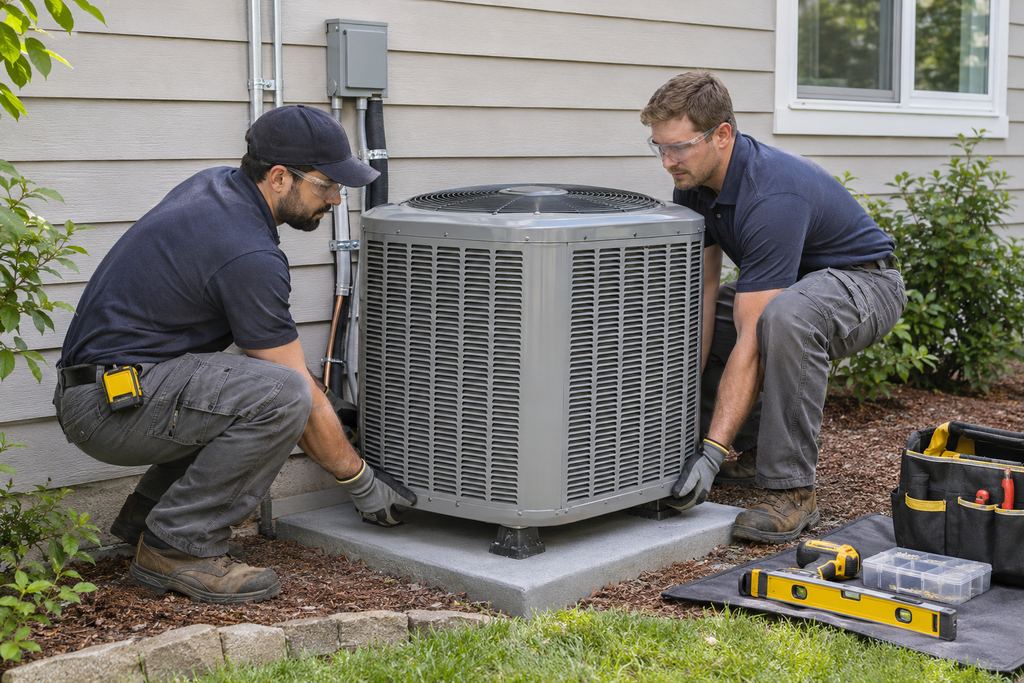
AC condenser replacement means swapping the outdoor half of a split system, usually after the compressor, coil or cabinet fails in a way that a part repair cannot fix. Before you approve it, make sure the new unit matches your indoor coil and refrigerant, and price it against a full system replacement.
- Outdoor unit swap: compressor, coil, fan and controls in one cabinet
- Indoor coil and refrigerant compatibility checked before quoting
- Refrigerant recovery and charging by an EPA Section 608 technician
Share your ZIP code and what the last technician found. A local contractor confirms the diagnosis before quoting.
Please keep this page open.
- Your request is matched with an independent contractor or partner network that serves your ZIP code.
- The contractor contacts you to confirm details and schedule a visit.
- They diagnose the system and quote the work. You decide whether to go ahead.
Read how requests are handled.
We're still setting up the contractor network that receives online requests, so your details were not sent to anyone and were not stored. Please call to request service, or check back soon.
Call (888) 555-0199What the word condenser means on a quote
On a home central air system, "condenser" usually refers to the whole outdoor unit. That cabinet holds the compressor, the condenser coil that sheds heat, the fan and motor, and the electrical parts that start them, such as the contactor and capacitor. Replacing the condenser therefore replaces all of those at once.
Some searches for condenser replacement are about cars, where the condenser is a small radiator in front of the engine. This page covers home split systems only.
The job itself is refrigerant work. The technician recovers the old charge, cuts out the old unit, sets the new one on a level pad, brazes the line set, pressure tests with nitrogen, pulls a vacuum and then charges to the manufacturer's specification. Every step that opens the refrigerant circuit needs a technician with EPA Section 608 certification, and most areas require a permit for the electrical and mechanical work.
Repair the part or replace the outdoor unit?
The failed component, the system's age and its refrigerant decide most cases.
| What failed | Usual first option | When a new condenser makes more sense |
|---|---|---|
| Capacitor or contactor | Replace the part: capacitor replacement is a routine repair | Rarely, unless the unit has other major faults |
| Condenser fan motor | Replace the motor | The cabinet is rusted through or the coil is also failing |
| Compressor | Compare a compressor replacement with a new unit | The unit is out of parts warranty, older, or the coil is weak |
| Condenser coil leak | Leak repair if the leak is small and reachable | Leaks are in the coil itself or keep coming back |
| Physical damage from storms, hail or vehicles | Coil straightening or panel repair for light damage | The coil or refrigerant lines are crushed; check your homeowner's insurance |
| Any major failure on an R-22 system | Usually not worth a large repair | Often better to replace the indoor coil too, or the whole system |
What has to match when only the outdoor unit changes
A new condenser paired with the wrong indoor coil can run, but it may not deliver its rated capacity or efficiency.
- Indoor coil: The outdoor model should appear with your indoor coil as a rated combination in the AHRI Directory. Ask for the AHRI reference number.
- Refrigerant: R-22, R-410A and newer A2L refrigerants such as R-454B and R-32 are not interchangeable. A refrigerant change usually means a new indoor coil.
- Capacity: Tonnage should match the indoor coil and blower. A load calculation is worth asking for if comfort was poor before.
- Line set: The copper lines must be the right size and clean. Some changes call for flushing or replacing them.
- Metering device: The expansion valve or piston at the indoor coil must suit the new unit and refrigerant.
- Electrical supply: The breaker and disconnect must fit the new unit's nameplate rating, which may differ from the old one.
What moves the price of a condenser replacement
Contractors price this job differently, so ask for a written quote that lists each item. For typical ranges and how to read them, see the condenser cost guide.
Tonnage and SEER2 rating set the equipment price.
A change of refrigerant can add an indoor coil and line set work.
Whether the quote reuses, replaces or upgrades the coil is the biggest swing.
Rooftops, tight side yards and long line runs take more labor.
A new disconnect, whip or breaker may be needed to meet code.
Permit fees and who registers the warranty should be in writing.
What you can check and what the technician handles
Safe checks you can do
No tools beyond a flashlight. Turn the system off at the thermostat before opening any filter or access door.
- Confirm the thermostat is set to cool and the setpoint is below room temperature
- Check the AC breaker once; if it trips again, leave it off
- Pull grass clippings and leaves away from the condenser cabinet
- Photograph the outdoor and indoor data plates so quotes can be compared
- Write down symptoms: humming, warm air, ice, noises, breaker trips
Leave these to a licensed technician
These involve high voltage, refrigerant or sealed components. Refrigerant work requires EPA Section 608 certification.
- Electrical testing of the compressor, capacitor and contactor
- Refrigerant recovery, leak testing and charging
- Confirming the indoor coil match and line set condition
- Disconnecting power at the unit and pulling the permit
- Recycling the old unit and its refrigerant
Questions to ask before you sign
- Is this a matched combination?
Ask for the AHRI reference number for the outdoor unit and indoor coil together. - What refrigerant does the new unit use?
And does the quote include a new indoor coil if the refrigerant changes? - Did you compare a full system price?
On older systems, the gap between a condenser and a full replacement can be smaller than expected. Our central AC replacement page explains that option. - Who pulls the permit and registers the warranty?
Registration deadlines affect parts coverage on many brands. - Can I verify your license and insurance?
Look the license number up on your state's contractor licensing board site.
How a service request works
AC Service Near Me is a referral service. We don't send our own technicians. We connect you with independent local contractors.
- Tell us what you need
Enter your ZIP code and choose the service. Add a few details about the problem or project.
- Your request is routed
It goes to an independent HVAC contractor or partner network that serves your area and handles that type of work.
- A contractor contacts you
The contractor reaches out to confirm details and schedule a visit.
- You decide
The contractor diagnoses the system and quotes the work. Pricing, scheduling and warranty terms are between you and them.
Frequently asked questions
How much is labor to replace an AC condenser?
Labor depends on how hard the unit is to reach, whether lines and the indoor coil are reused, and local rates. Ask for a written quote that separates equipment, labor, refrigerant, permit and removal. The condenser cost guide explains each line.
How do you disconnect an air conditioner condenser?
That is technician work. It involves recovering refrigerant and working at the electrical disconnect, which homeowners should not open. If you need the unit off, set the thermostat to off and switch off the AC breaker.
Can you replace just the condenser?
Yes, when the indoor coil is in good shape, uses the same refrigerant and is rated with the new outdoor model. If the refrigerant changes or the coil is old, contractors often recommend replacing both.
What happens if your AC condenser is bad?
The system may blow warm air, hum without starting, trip the breaker or run without cooling. A failing unit can also damage itself further, so turn it off and have it diagnosed. Start with AC blowing warm air if that matches what you see.
Does a new condenser need a new thermostat?
Not usually. A thermostat change is needed only if the new equipment has staging or communicating controls the old one cannot run.
- Section 608 of the Clean Air Act: Stationary Refrigeration and Air Conditioning (U.S. EPA)
- Protecting Our Climate by Reducing Use of HFCs (U.S. EPA)
- AHRI Directory of Certified Product Performance (Air-Conditioning, Heating, and Refrigeration Institute)
- Energy Saver (U.S. Department of Energy)
Last updated November 24, 2026. Editorial policy · Report an error
Related guides and services
Request a condenser replacement quote
Enter your ZIP code and describe the failure. A local contractor checks the indoor match and refrigerant before quoting.
AC Service Near Me is an independent referral service. Work is performed by independent, locally owned contractors. How we earn money
Share your ZIP code and what the last technician found. A local contractor confirms the diagnosis before quoting.
Please keep this page open.
- Your request is matched with an independent contractor or partner network that serves your ZIP code.
- The contractor contacts you to confirm details and schedule a visit.
- They diagnose the system and quote the work. You decide whether to go ahead.
Read how requests are handled.
We're still setting up the contractor network that receives online requests, so your details were not sent to anyone and were not stored. Please call to request service, or check back soon.
Call (888) 555-0199