AC Refrigerant Leak Repair
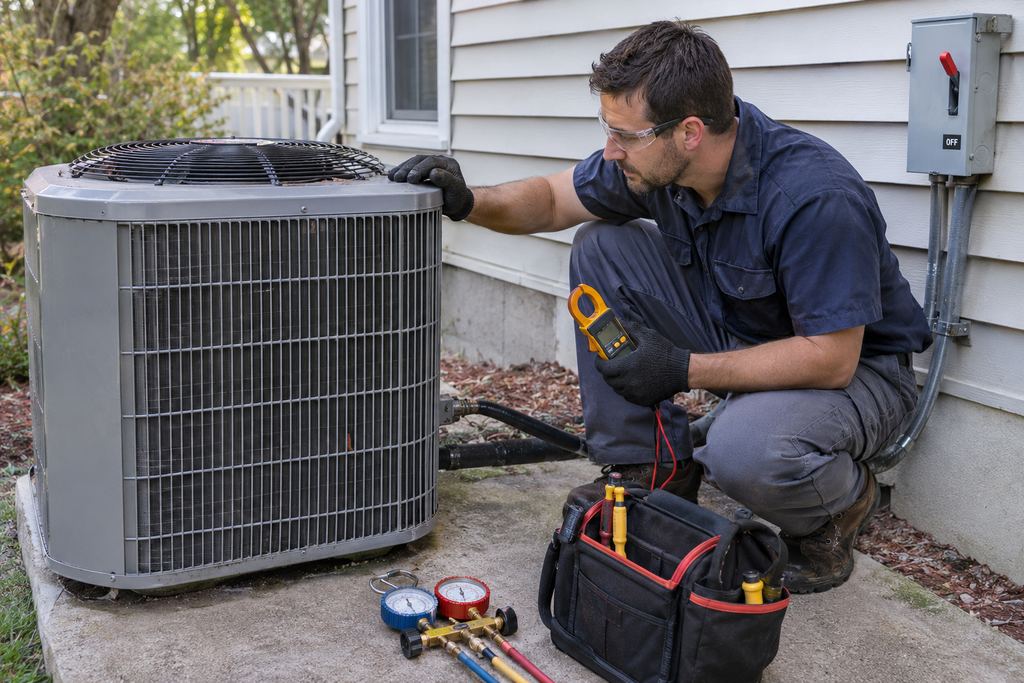
An air conditioner does not use up refrigerant. If the charge is low, there is a leak, and adding more without fixing it only buys time. AC refrigerant leak repair means finding the leak, repairing or replacing the leaking part, proving the system holds pressure, and recharging it. All of it is work for a technician with EPA Section 608 certification.
- Leak located with detectors, bubbles, dye or nitrogen
- Repair, pressure test, vacuum and correct recharge
- No homeowner refrigerant work or sealant cans
Describe what you have noticed. A local contractor confirms the leak before quoting.
Please keep this page open.
- Your request is matched with an independent contractor or partner network that serves your ZIP code.
- The contractor contacts you to confirm details and schedule a visit.
- They diagnose the system and quote the work. You decide whether to go ahead.
Read how requests are handled.
We're still setting up the contractor network that receives online requests, so your details were not sent to anyone and were not stored. Please call to request service, or check back soon.
Call (888) 555-0199Signs your AC is leaking refrigerant
- Air from the vents is not cold: The system runs, but the supply air is only slightly cool. See AC blowing warm air.
- Ice on the copper line or indoor coil: Low charge makes the coil run too cold. See AC freezing up.
- Hissing or bubbling sounds: Near the indoor unit, the outdoor unit or along the lines.
- Long run times and higher bills: The system runs longer to remove the same heat.
- Oily spots on fittings or the coil: Refrigerant oil escapes with the refrigerant.
- Recharges that keep coming back: A system that needed refrigerant last summer and needs it again is leaking.
What causes refrigerant leaks
Leaks usually start at a few predictable places. Vibration loosens flare fittings and wears through lines that rub on sheet metal. Schrader valve cores at the service ports can seep. Brazed joints can crack. Coils develop pinholes from corrosion, including formicary corrosion, which is linked to chemicals in household air reacting with copper. Lawn equipment, ice dams and storm debris can also damage outdoor coils and lines.
Split systems, heat pumps, packaged units and ductless mini-splits all leak in the same general ways, though mini-splits have more flare connections to check.
How a technician repairs a leak
- Confirm low charge
Gauges and temperature readings are compared with the manufacturer's charging specs.
- Find the leak
An electronic detector, bubble solution, UV dye or a nitrogen pressure test. Some leaks show only under pressure.
- Recover refrigerant
Remaining refrigerant is pumped into a recovery cylinder. Venting it is illegal.
- Repair or replace
Tighten or replace a valve core, re-flare a fitting, braze a joint or replace a coil or line section.
- Pressure test and evacuate
The system is tested with nitrogen, then pulled into a deep vacuum to remove moisture.
- Recharge to spec
Charged by weight or by superheat and subcooling, as the manufacturer specifies.
Small leaks from a home AC are not usually an emergency, but refrigerant can displace oxygen in a closed space, and newer A2L refrigerants are mildly flammable. If you notice a strong chemical smell or a large hissing leak indoors, turn the system off, open windows, avoid open flames and leave the area. If anyone feels dizzy, short of breath or has chest pain, go outside and call 911.
What you can do while you wait
Safe checks you can do
No tools beyond a flashlight. Turn the system off at the thermostat before opening any filter or access door.
- Set the thermostat to off, or to fan-only if there is ice, to protect the compressor
- Keep pets and children away from damaged lines
- Photograph frost, oil spots and the data plates
- Gather past invoices that mention recharges
Leave these to a licensed technician
These involve high voltage, refrigerant or sealed components. Refrigerant work requires EPA Section 608 certification.
- Leak search and repair
- Refrigerant recovery and recharge
- Brazing, pressure testing and evacuation
- Deciding whether a coil or the system should be replaced
What affects the repair price
Prices vary by contractor and region. The refrigerant leak cost guide breaks down each item.
Visible leaks are quick; hidden ones take longer.
A valve core is small; a coil is large.
R-22, R-410A and A2L refrigerants differ in price and availability.
Attic coils and long line sets take more labor.
Questions to ask the contractor
- Where is the leak and how did you find it?
A clear answer is a good sign. - Can it be repaired, or does a part need replacing?
Ask why. - How many pounds will you add, and at what price?
It should appear on the invoice. - Do you hold EPA Section 608 certification and a state license?
Check the license with your state contractor board.
How a service request works
AC Service Near Me is a referral service. We don't send our own technicians. We connect you with independent local contractors.
- Tell us what you need
Enter your ZIP code and choose the service. Add a few details about the problem or project.
- Your request is routed
It goes to an independent HVAC contractor or partner network that serves your area and handles that type of work.
- A contractor contacts you
The contractor reaches out to confirm details and schedule a visit.
- You decide
The contractor diagnoses the system and quotes the work. Pricing, scheduling and warranty terms are between you and them.
Frequently asked questions
How do you fix an air conditioning leak?
A technician finds the leak, recovers the remaining refrigerant, repairs or replaces the leaking part, pressure tests, evacuates and recharges. It is not a DIY job.
What does the 3 minute rule mean for my AC?
Wait about three minutes before restarting a central AC after it shuts off so system pressures can even out. Many thermostats enforce a short delay automatically.
Is it safe to stay in a house with a refrigerant leak?
A small leak is usually not dangerous, but turn the system off, ventilate and leave if there is a strong smell or a large leak indoors. Call 911 if anyone feels unwell.
Can I fix my AC compressor myself?
No. Compressor work involves refrigerant and line voltage. See compressor replacement for what the job involves.
Will a leak repair stop the system from needing refrigerant?
If every leak is found and fixed, a sealed system should hold its charge. Ask the technician to check the repair at the next maintenance visit.
- Section 608 of the Clean Air Act: Stationary Refrigeration and Air Conditioning (U.S. EPA)
- Protecting Our Climate by Reducing Use of HFCs (U.S. EPA)
- Energy Saver (U.S. Department of Energy)
Last updated November 24, 2026. Editorial policy · Report an error
Related guides and services
Request a refrigerant leak repair
Enter your ZIP code and describe the symptoms. A local contractor follows up to schedule a leak search.
AC Service Near Me is an independent referral service. Work is performed by independent, locally owned contractors. How we earn money
Describe what you have noticed. A local contractor confirms the leak before quoting.
Please keep this page open.
- Your request is matched with an independent contractor or partner network that serves your ZIP code.
- The contractor contacts you to confirm details and schedule a visit.
- They diagnose the system and quote the work. You decide whether to go ahead.
Read how requests are handled.
We're still setting up the contractor network that receives online requests, so your details were not sent to anyone and were not stored. Please call to request service, or check back soon.
Call (888) 555-0199