AC Diagnostic Cost and What the Fee Covers
An AC diagnostic fee pays for a technician's trip and the time to find out why your home air conditioner is not working. Contractors structure the fee differently, so the useful question is not only how much it is, but what it includes and whether it counts toward the repair.
Diagnostic fees are set by each contractor and vary with region, time of day and season. Some charge a flat trip fee, some a diagnostic fee that is credited if you approve the repair, and some bill by the hour. We do not quote a range. Ask what the fee covers, whether it is applied to the repair and what after-hours calls cost before you book. This page covers home central air and heat pumps; car AC diagnostics are a different service.
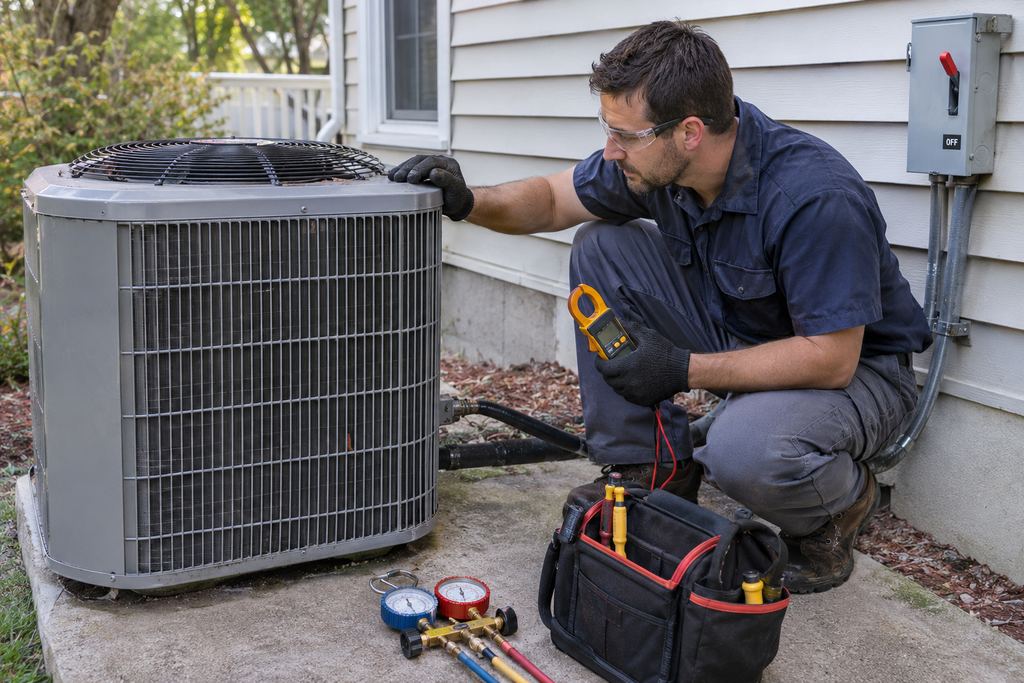
Common ways contractors charge for diagnosis
| Fee structure | How it works | What to ask |
|---|---|---|
| Flat trip or service call fee | One charge to come out and look, repair priced separately | Does it include any diagnostic time, or only the trip? |
| Diagnostic fee credited to repair | Fee is waived or deducted if you approve the repair | Is the credit valid for a later visit too? |
| Hourly labor | Billed by time on site, sometimes with a minimum | What is the minimum, and how is time rounded? |
| Maintenance plan member rate | Reduced or waived fee for plan customers | What does the plan cost, and what does it exclude? |
| After-hours surcharge | Higher rate for evenings, weekends and holidays | When does the surcharge start? |
What the technician checks during a diagnostic
- Thermostat and controls
Settings, wiring and whether the call for cooling reaches the equipment.
- Power and safeties
Breakers, disconnect, fuses, float switches and pressure switches.
- Electrical components
Capacitor, contactor, fan motors and compressor windings tested with a meter.
- Airflow
Filter, blower, coil condition and the temperature drop across the indoor coil.
- Refrigerant readings
Pressures and line temperatures, compared with the manufacturer's charging chart. Connecting gauges and handling refrigerant falls under EPA Section 608 rules.
- Findings and quote
The failed part, the recommended repair and a written price.
What can raise the diagnostic bill
Nights, weekends, holidays and the first hot week of the year.
Rural addresses outside a contractor's usual area may carry a travel charge.
Finding a refrigerant leak with electronic detectors, dye or nitrogen pressure testing is often billed separately.
A fault that comes and goes may take more than one visit to catch.
Attic air handlers, crawlspaces and rooftop units take longer to reach.
Free checks before you pay for a visit
Safe checks you can do
No tools beyond a flashlight. Turn the system off at the thermostat before opening any filter or access door.
- Check that the thermostat is on cool, set below room temperature, and has fresh batteries
- Look at the filter and replace it if it is clogged
- Reset a tripped AC breaker one time only
- Check that the outdoor unit is free of debris and the disconnect has not been pulled
- If the indoor coil or line is iced over, switch to fan only and wait for it to thaw
Leave these to a licensed technician
These involve high voltage, refrigerant or sealed components. Refrigerant work requires EPA Section 608 certification.
- A breaker that trips again after one reset
- Humming outdoor unit with the fan not turning
- Ice that returns after thawing
- Water overflowing from the drain pan or a tripped float switch
- Any burning smell, which means turn it off and call
Signs it is time to book a diagnostic
- Warm air from the vents: See AC not cooling for common causes.
- Short cycling: The system starts and stops every few minutes. This can point to an electrical fault, low charge or an oversized system.
- New noises: Buzzing, grinding, banging or squealing.
- High humidity indoors: Sticky air while the AC runs, which can be a sizing or airflow problem.
After the diagnosis: repair, replace or resize
Once the technician names the problem, you have a decision. Small parts such as capacitors and contactors are usually worth replacing. A compressor or coil failure on an older system is a bigger call. One rule of thumb multiplies the system's age by the repair cost; if the result passes about 5,000, it is worth getting a replacement quote too. Our AC repair cost guide lists what affects common repairs.
Sometimes the diagnosis points to sizing rather than a broken part. An oversized system cools quickly but shuts off before it removes humidity, and an undersized one runs nonstop on hot days. If that comes up, ask whether a load calculation was done when the system was installed. Fixing a sizing problem means new equipment, so compare replacement cost before deciding. Regular tune-ups catch many of these issues before they turn into a breakdown.
Information that shortens the visit
A technician who knows the symptom in advance can bring likely parts and spend less billable time searching.
- What exactly happens?
Say whether the indoor fan runs, whether the outdoor unit starts, and whether the air is warm, weak or absent. - When did it start?
Mention storms, power outages, recent work on the system or a new thermostat. - Are there codes or lights?
Many thermostats, furnaces and mini-splits show error codes or blink an LED. Write them down. - What equipment do you have?
The brand, model number and approximate age from the outdoor unit's data plate. - Is the system under warranty?
If it is registered, have the paperwork ready, since warranty repairs may follow a different billing process.
Frequently asked questions
How long does an AC diagnostic take?
Many residential diagnostics take somewhere around 30 minutes to an hour once the technician is on site. Refrigerant leak searches and intermittent faults can take longer or need a return visit.
Is the diagnostic fee applied to the repair?
With some contractors it is, with others it is not. Ask before the visit and make sure the answer appears on the invoice.
Do I pay the diagnostic fee if I do not approve the repair?
Usually yes. The fee covers the trip and the technician's time. Ask for the diagnosis in writing so you can get a second quote if you want one.
What is the $5,000 AC rule?
Multiply the system's age in years by the repair quote. Above about 5,000, consider replacement as well as repair. It is a rough guide and ignores efficiency and comfort.
Is this the same as a car AC diagnostic?
No. Vehicle air conditioning is serviced by auto repair shops. This page is about home central air, heat pumps and mini-splits.
- Section 608 Technician Certification (U.S. EPA)
- Energy Saver: Central Air Conditioning (U.S. Department of Energy)
Last updated November 24, 2026. Editorial policy · Report an error
Related guides and services
Book an AC diagnostic
Tell us what the system is doing. We pass the request to a local contractor who can explain their diagnostic fee before the visit.
AC Service Near Me is an independent referral service. Work is performed by independent, locally owned contractors. How we earn money
A clear symptom description helps the contractor tell you what the visit will involve.
Please keep this page open.
- Your request is matched with an independent contractor or partner network that serves your ZIP code.
- The contractor contacts you to confirm details and schedule a visit.
- They diagnose the system and quote the work. You decide whether to go ahead.
Read how requests are handled.
We're still setting up the contractor network that receives online requests, so your details were not sent to anyone and were not stored. Please call to request service, or check back soon.
Call (888) 555-0199