AC Inspection and Diagnostic Service
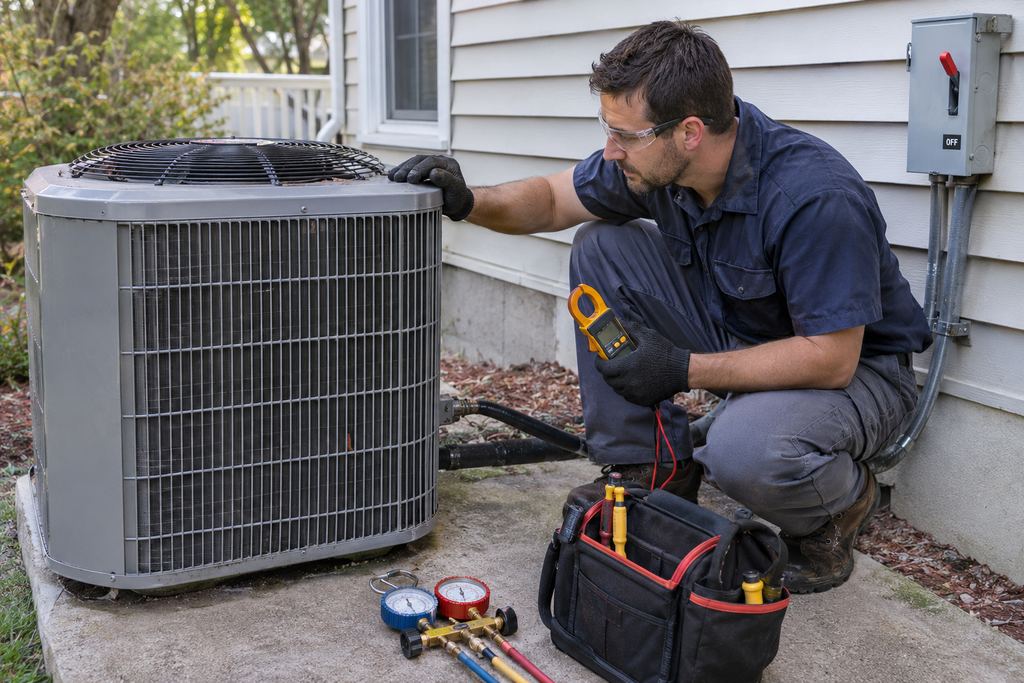
An AC inspection tells you what condition your air conditioner is in and, if something is wrong, exactly which part has failed. Send a request with your ZIP code and the symptom, and an independent local contractor can schedule a diagnostic visit.
- For systems that are acting up or that you just want checked
- Useful before buying a home or approving a big repair
- Ask for the findings and the quote in writing
Tell us what the system is doing, or that you want a checkup. A contractor in your area follows up to schedule.
Please keep this page open.
- Your request is matched with an independent contractor or partner network that serves your ZIP code.
- The contractor contacts you to confirm details and schedule a visit.
- They diagnose the system and quote the work. You decide whether to go ahead.
Read how requests are handled.
We're still setting up the contractor network that receives online requests, so your details were not sent to anyone and were not stored. Please call to request service, or check back soon.
Call (888) 555-0199Inspection, diagnostic or tune-up: which one you need
The words overlap, and contractors use them differently, so it helps to say what you want. A diagnostic call is for a system with a problem: it is not cooling, it trips a breaker, it leaks or it makes a new sound. The technician tests until the cause is found and then quotes the fix. An air conditioning inspection is a condition report on a system that may be working fine, often requested before buying a house, after a storm or when deciding whether an older unit is worth keeping.
A tune-up adds cleaning and adjustment to the inspection. If the system is running and you mainly want it ready for summer, an AC tune-up or a maintenance visit is the better request.
What a thorough air conditioner inspection covers
The list varies by contractor and system type. Ask which of these are included.
- Thermostat and controls: Confirms the thermostat calls for cooling and the low-voltage signal reaches both units.
- Airflow and filter: Checks the filter, blower and return path, and measures the temperature drop across the coil.
- Electrical parts: Tests the run capacitor, contactor, wiring and the amp draw of the compressor and fan motors.
- Refrigerant circuit: Reads pressures and temperatures to judge the charge and look for signs of a leak.
- Coils: Looks at the outdoor condenser coil and, where accessible, the indoor evaporator coil for dirt and damage.
- Condensate drain: Checks the drain line, pan and any float switch or pump for clogs and rust.
- Ducts and registers: Notes disconnected, crushed or leaking ducts that are visible from the attic or basement.
- Cabinet and pad: Looks for a sinking pad, bent fins, rust and loose panels on the outdoor unit.
What you should get at the end
Ask for the results in writing. A good report lists what was tested, the readings that matter, what failed or is close to failing, and a priced recommendation for each item. If the technician says the refrigerant is low, the next question is where the leak is, since a sealed system should not lose charge. Refrigerant work requires EPA Section 608 certification.
The most common failed parts found on a residential diagnostic are run capacitors and contactors, which wear out from repeated starts. They are usually inexpensive to replace; see capacitor replacement. Expensive findings, such as a failed compressor or a leaking coil on an older system, are the moment to price replacement alongside the repair.
Systems a diagnostic visit can cover
What a diagnostic fee depends on
Most contractors charge a flat fee to come out and test. Ask about it before the visit.
After-hours and weekend calls often cost more than a weekday appointment.
Some contractors apply the fee to the repair if you approve it the same visit.
A full inspection with duct checks or a written report for a home sale takes longer than a single-fault diagnosis.
Before you book
Contractors who receive requests through this site are independent, so check the state or local license, ask whether the technician is Section 608 certified, and ask what the fee includes. If airflow is the problem rather than the equipment, a duct leakage test may be the right add-on. Published fee ranges are collected in the AC diagnostic cost guide. Whether a contractor can come out soon varies with your location and the time of year.
How a service request works
AC Service Near Me is a referral service. We don't send our own technicians. We connect you with independent local contractors.
- Tell us what you need
Enter your ZIP code and choose the service. Add a few details about the problem or project.
- Your request is routed
It goes to an independent HVAC contractor or partner network that serves your area and handles that type of work.
- A contractor contacts you
The contractor reaches out to confirm details and schedule a visit.
- You decide
The contractor diagnoses the system and quotes the work. Pricing, scheduling and warranty terms are between you and them.
Frequently asked questions
How often should an air conditioner be inspected?
Once a year is the common recommendation, usually in spring, as part of routine maintenance. Book a separate diagnostic any time the system stops cooling, cycles oddly, leaks or trips a breaker.
What part fails most often on a home AC unit?
Run capacitors and contactors are the usual suspects, followed by fan motors and clogged drains. Refrigerant leaks and compressor failures are less common but cost far more to fix.
Which AC brand lasts the longest?
Lifespan depends more on correct sizing, installation quality and maintenance than on the name on the cabinet. An inspection that finds a dirty coil, a weak capacitor or poor airflow early does more for longevity than brand choice. We do not rank brands.
What is the $5,000 rule for AC units?
It is an informal rule of thumb: multiply the system's age by the repair cost. If the result is above $5,000, many contractors suggest getting a replacement quote as well. Treat it as a prompt to compare options, not a decision.
Is a home inspector's AC check the same thing?
Usually not. A general home inspector checks whether the system runs and cools, but typically does not test refrigerant pressures or electrical parts. An HVAC contractor's inspection goes further.
- Section 608 Technician Certification (U.S. EPA)
- Heating and cooling maintenance checklist (ENERGY STAR)
Last updated November 24, 2026. Editorial policy · Report an error
Related guides and services
Request an AC inspection
Describe the symptom or say you want a checkup. A contractor serving your ZIP code follows up to confirm the visit.
AC Service Near Me is an independent referral service. Work is performed by independent, locally owned contractors. How we earn money
Tell us what the system is doing, or that you want a checkup. A contractor in your area follows up to schedule.
Please keep this page open.
- Your request is matched with an independent contractor or partner network that serves your ZIP code.
- The contractor contacts you to confirm details and schedule a visit.
- They diagnose the system and quote the work. You decide whether to go ahead.
Read how requests are handled.
We're still setting up the contractor network that receives online requests, so your details were not sent to anyone and were not stored. Please call to request service, or check back soon.
Call (888) 555-0199