VRF Air Conditioning for Commercial Buildings
VRF air conditioning (variable refrigerant flow) connects one or more outdoor units to many indoor units through a single refrigerant piping network. Each indoor unit controls its own zone, and inverter compressors change speed to deliver only the refrigerant the zones are asking for at that moment.
Think of VRF as a large, engineered version of a multi-zone mini-split. One outdoor system can serve dozens of indoor units in offices, schools, hotels and apartment buildings. Heat recovery versions can cool some zones while heating others and move heat between them. VRF needs careful design, refrigerant safety checks and technicians trained on the specific manufacturer's equipment.
How a VRF system works
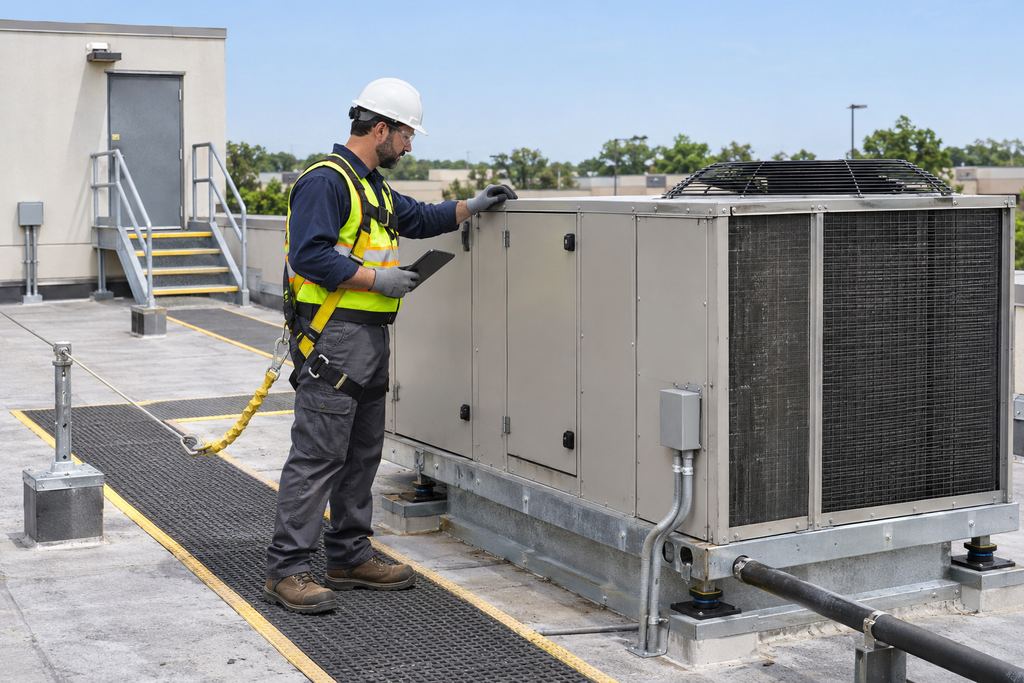
The outdoor units, usually on a roof or a pad, hold inverter-driven compressors and large condenser coils. Refrigerant piping runs through the building to indoor units in each zone: wall heads, ceiling cassettes, concealed ducted units or floor consoles. An electronic expansion valve at each indoor unit meters refrigerant to match that zone's load. The controller tracks every zone and adjusts compressor speed so the system as a whole delivers only what is needed.
Because refrigerant carries the heat instead of air or water, the piping is small compared with ducts or chilled water lines. That frees ceiling space and makes VRF popular for retrofits in older buildings where large ducts will not fit.
Two main VRF types
VRF compared with a conventional split system
| VRF | Ducted split system | |
|---|---|---|
| Zones | Many independent zones from one system | Usually one zone per system, more with dampers |
| Distribution | Refrigerant piping to each zone | Air ducts from one air handler |
| Part-load efficiency | Strong, from inverter compressors | Depends on the compressor type |
| Simultaneous heat and cool | Heat recovery models only | No |
| Ventilation air | Needs a separate outdoor air system | Often handled by the same air handler |
| Service | Manufacturer-trained technicians, proprietary diagnostics | Widely serviced |
Design points owners should know about
- Refrigerant charge and small rooms: A VRF system holds far more refrigerant than a home split system. Safety standards such as ASHRAE Standard 15 limit how much can leak into the smallest occupied space, which can require leak detection or design changes in small offices and hotel rooms.
- Refrigerant transition: New equipment is moving to lower-GWP refrigerants under the EPA AIM Act technology transitions rule, and EPA has revisited parts of that rule, so timelines for VRF can shift. Ask which refrigerant a quoted system uses and what that means for future service.
- Outdoor air: VRF indoor units recirculate room air. Code-required ventilation usually comes from a dedicated outdoor air system.
- Piping limits: Each manufacturer sets maximum pipe lengths and height differences. These shape where outdoor units can go.
- Commissioning: Startup includes pressure testing, evacuation, charge calculation and addressing every indoor unit. Skipped steps cause problems for years.
Common VRF service issues
Many service calls trace back to the network rather than one unit: a communication fault between indoor units and the controller, a sensor failure that confuses the whole system, or a refrigerant leak at one of the many brazed joints. Because one outdoor system feeds many rooms, a single alarm can affect several zones at once. Facility teams help most by logging error codes, which zones are affected and when it started. Refrigerant work must be done by technicians certified under EPA Section 608, and most manufacturers expect service by trained dealers to keep warranty coverage. For urgent outages in occupied buildings, see commercial AC emergency repair.
Is VRF a good fit for a home?
Some manufacturers sell smaller VRF lines for large homes, and they can make sense for big houses with many rooms that need separate control. For most homes, a multi-zone mini-split or a ductless mini-split per area does the same job with simpler equipment and a wider pool of service technicians.
Frequently asked questions
What is VRF in air conditioning?
Variable refrigerant flow. The system varies the amount of refrigerant sent to each indoor unit, using inverter compressors outdoors and electronic valves at each zone.
Is VRF better than split AC?
For buildings with many zones, VRF offers individual control and strong part-load efficiency. For a single home zone, a conventional split system is simpler and cheaper to install and service. See the split system guide.
What is the difference between VRF and VRV?
VRV is Daikin's trademarked name for its variable refrigerant flow systems. VRF is the generic term other manufacturers use. The VRV guide covers the naming.
What are the disadvantages of VRF?
Higher first cost than basic systems, large refrigerant charges that need safety review, separate ventilation equipment, and a smaller pool of technicians trained on each brand.
Is VRF the future of HVAC?
It is a growing option for mid-size commercial and multifamily buildings, especially electrification projects, but chilled water, rooftop units and ducted heat pumps remain common. The right choice depends on the building.
- ASHRAE standards (ASHRAE)
- Section 608 Technician Certification (U.S. EPA)
- Hydrofluorocarbons (HFCs) (U.S. EPA)
Last updated November 24, 2026. Editorial policy · Report an error
Related guides and services
Request commercial VRF help
Share the building type, system brand and error codes if you have them. We pass it to an independent local commercial contractor where one serves your area.
AC Service Near Me is an independent referral service. Work is performed by independent, locally owned contractors. How we earn money
Tell us the building type, the system brand if known, and what is happening.
Please keep this page open.
- Your request is matched with an independent contractor or partner network that serves your ZIP code.
- The contractor contacts you to confirm details and schedule a visit.
- They diagnose the system and quote the work. You decide whether to go ahead.
Read how requests are handled.
We're still setting up the contractor network that receives online requests, so your details were not sent to anyone and were not stored. Please call to request service, or check back soon.
Call (888) 555-0199