AC Coil Cleaning Cost and What Changes It
AC coil cleaning cost depends first on which coil you mean. Cleaning the outdoor condenser coil is a routine job, often part of a tune-up. Cleaning the indoor evaporator coil can be simple or can mean opening the plenum or pulling the coil out, which costs much more.
A basic condenser coil rinse with a coil cleaner is usually priced as a modest service or bundled into maintenance. Evaporator coil cleaning varies with access: in-place cleaning through an access panel is the lower end, while removing the coil for a deep clean adds labor and may require recovering and recharging refrigerant. Ask for a written scope as well as a price.
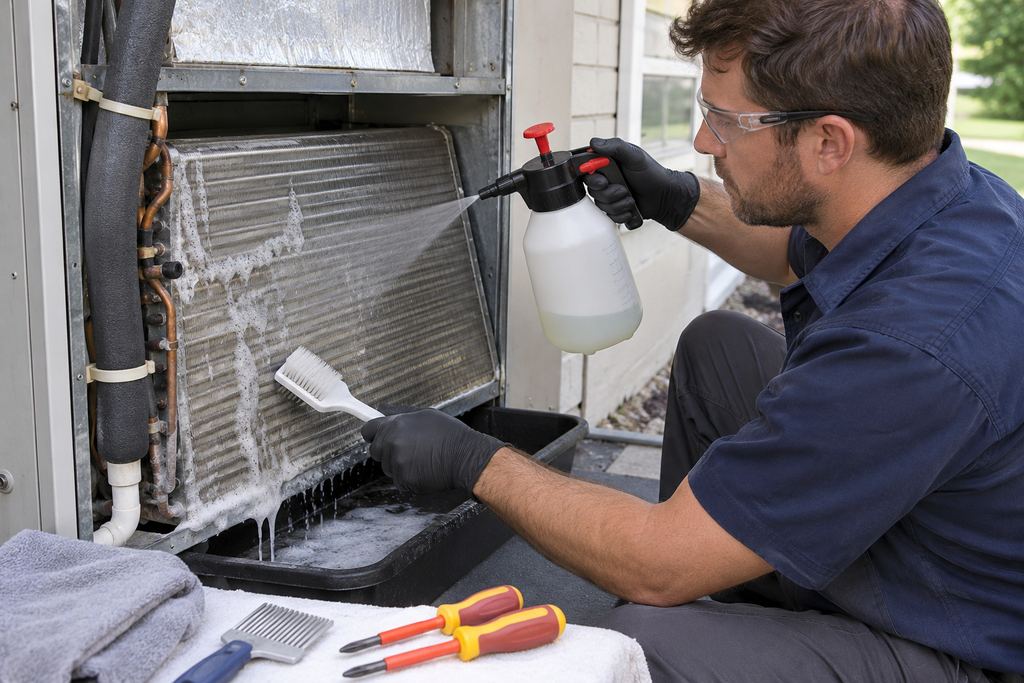
Coil cleaning scopes compared
The words on a quote can mean very different jobs. Compare scope, not only price.
| Scope | What it involves | Relative cost |
|---|---|---|
| Condenser coil, routine | Power off, debris cleared, coil cleaner applied and rinsed with low-pressure water, fins checked | Low; often bundled into a tune-up |
| Condenser coil, heavy buildup | Top and fan removed to rinse from the inside out, bent fins combed | Moderate |
| Evaporator coil, in place | Access panel opened, no-rinse or rinse cleaner applied, drain pan and line checked | Moderate |
| Evaporator coil, removed | Refrigerant may be recovered, coil pulled and cleaned, reinstalled, system evacuated and recharged | High; approaches repair pricing |
What raises or lowers the price
Outdoor coils are easy to reach. Indoor coils sit inside the air handler or a sealed cased coil above the furnace.
A basement is quick; a cramped attic in summer takes longer.
Light dust rinses off. Matted pet hair, grease near kitchens or biological growth on the indoor coil takes more time and product.
Bent fins, a slow drain line, a dirty blower wheel or a rusted drain pan add to the bill.
Coil cleaning priced inside a maintenance visit or plan usually costs less than a standalone call.
Labor rates differ between metro areas. Spring scheduling is often easier than mid-summer.
What a coil cleaning visit should include
- Power shut off at the disconnect before work: The technician, not you, handles the outdoor disconnect and panels.
- A cleaner suited to the coil: Aluminum microchannel coils need gentler products than copper and aluminum fin coils.
- Low-pressure rinse: Pressure washers flatten fins and are a poor shortcut.
- Fin inspection and combing: Bent fins restrict airflow even on a clean coil.
- Drain pan and condensate line check for the indoor coil: Loosened debris can clog the drain. See drain line cleaning.
- A test run with readings: Temperature split or pressures before and after show the work made a difference.
Is coil cleaning worth paying for?
A dirty coil makes the system work harder. The U.S. Department of Energy notes that dirt on the coils reduces airflow and insulates the coil, cutting its ability to move heat. A dirty outdoor coil raises operating pressure and electricity use; a dirty indoor coil can cause freezing and water problems.
That does not mean every system needs a separate cleaning every year. Homes with pets, nearby construction, cottonwood trees, coastal salt or a filter that is rarely changed need it more often. A technician can tell you whether a cleaning is due during routine AC maintenance.
For the indoor coil specifically, see evaporator coil cleaning. For the outdoor coil, see condenser cleaning.
What a homeowner can do and what to hire out
Safe checks you can do
No tools beyond a flashlight. Turn the system off at the thermostat before opening any filter or access door.
- Change the indoor filter on schedule; it is the main defense for the evaporator coil
- Keep plants, grass clippings and dryer vent lint away from the outdoor unit
- Gently hose off loose debris from the outside of the outdoor coil, with the system off, if your owner's manual allows it
Leave these to a licensed technician
These involve high voltage, refrigerant or sealed components. Refrigerant work requires EPA Section 608 certification.
- Any cleaning that means removing panels, the fan or the top of the outdoor unit
- Chemical coil cleaners
- Indoor coil access and cleaning
- Coil removal, refrigerant recovery and recharge
Frequently asked questions
Should I clean my AC coils?
The outdoor coil benefits from a check every season, and many homes need it cleaned every year or two. The indoor coil stays cleaner with good filters. A technician can tell you which needs it.
What is an AC coil cleaner?
A foaming or liquid product made to loosen dirt from coil fins. Some are rinsed off; some indoor products are no-rinse and drain out with the condensate. Harsh acid or alkaline products can damage aluminum, so technicians match the cleaner to the coil.
Can I clean my AC coils myself?
You can rinse loose debris from the outside of the outdoor coil with a garden hose, system off, if the manual allows. Leave disassembly, chemical cleaners and the indoor coil to a technician.
Why does an evaporator coil cleaning cost more than a condenser cleaning?
The indoor coil is enclosed and harder to reach. If it must be removed, the job also involves refrigerant work by an EPA Section 608 certified technician.
Is coil cleaning part of a tune-up?
Often the outdoor coil rinse is. Indoor coil cleaning is usually extra. Ask what is included; our AC cleaning cost guide compares common packages.
- Energy Saver: Air Conditioning and Maintenance (U.S. Department of Energy)
- Section 608 of the Clean Air Act: Stationary Refrigeration and Air Conditioning (U.S. EPA)
- ENERGY STAR Heating and Cooling Guidance (ENERGY STAR (U.S. EPA))
Last updated November 24, 2026. Editorial policy · Report an error
Related guides and services
Get a coil cleaning quote
Enter your ZIP code and tell us which coil you are concerned about. A contractor who serves your area follows up with a scope and price.
AC Service Near Me is an independent referral service. Work is performed by independent, locally owned contractors. How we earn money
A local contractor inspects the coils and quotes the scope before cleaning.
Please keep this page open.
- Your request is matched with an independent contractor or partner network that serves your ZIP code.
- The contractor contacts you to confirm details and schedule a visit.
- They diagnose the system and quote the work. You decide whether to go ahead.
Read how requests are handled.
We're still setting up the contractor network that receives online requests, so your details were not sent to anyone and were not stored. Please call to request service, or check back soon.
Call (888) 555-0199