Why Your AC Smells Musty and How to Get Rid of It
When the AC smells musty, the source is almost always moisture that is not drying out: a damp evaporator coil, standing water in the drain pan, or ducts pulling air from a damp crawlspace.
A musty or dirty-sock smell from the vents usually means mold, mildew or bacteria are growing on the evaporator coil, in the drain pan, or in a clogged condensate line. Replace the filter and check that the drain pan empties. If the smell continues, a technician can clean the coil and pan, clear the drain, and check whether ducts or high indoor humidity are feeding the problem.
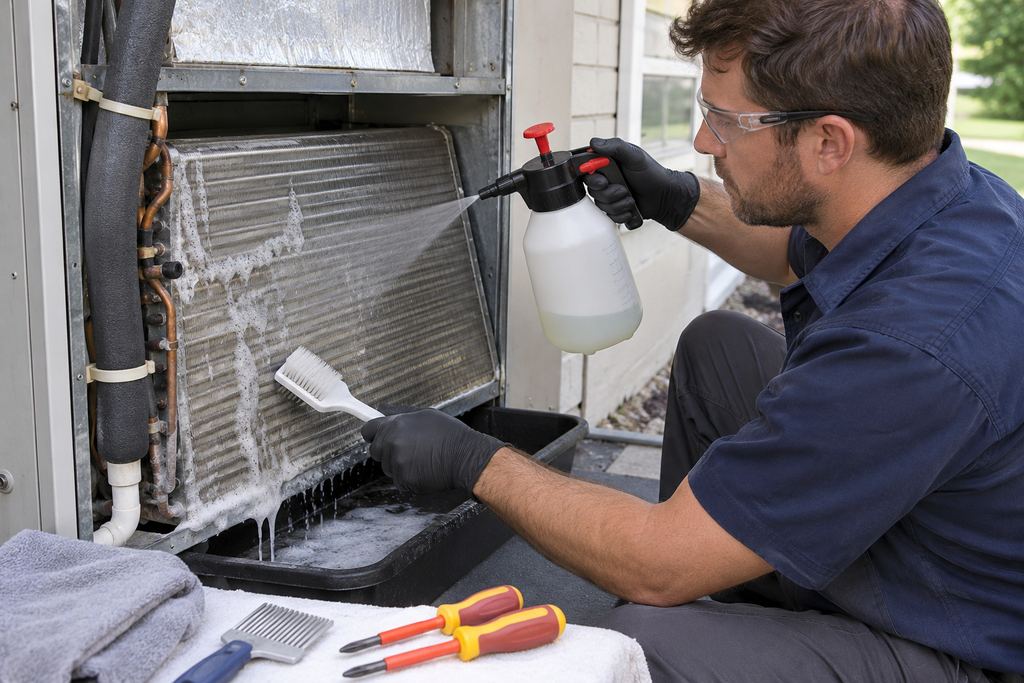
Where the smell comes from
Dirty sock syndrome
Dirty sock syndrome is the name technicians use for a sharp, sour smell like old gym socks that shows up when the system starts, often on heat pumps and in humid climates. It is generally attributed to bacteria growing on the evaporator coil, especially when the coil goes through repeated wet and dry cycles. It usually clears after a thorough evaporator coil cleaning with a coil-safe cleaner. Some homeowners also ask about UV lights aimed at the coil; ask the contractor what results to expect and how the lamps are maintained.
What you can clean and what needs a technician
Safe checks you can do
No tools beyond a flashlight. Turn the system off at the thermostat before opening any filter or access door.
- Replace the air filter, and use the size and type listed for your system.
- Check that the drain pan under the indoor unit is empty a few hours after the AC stops.
- Flush the condensate line through its access port if your manual allows.
- Clean supply and return grilles with a damp cloth.
- Run a portable or whole-house dehumidifier if indoor humidity stays high.
- For a window unit, clean or replace its filter and follow the manual's cleaning steps.
Leave these to a licensed technician
These involve high voltage, refrigerant or sealed components. Refrigerant work requires EPA Section 608 certification.
- Removing panels to clean the evaporator coil and blower wheel.
- Treating and drying the drain pan, or replacing a pan that is rusted or cracked.
- Clearing a clogged drain and fixing its slope.
- Sealing leaky return ducts in a crawlspace or attic.
- Recommending dehumidification or blower setting changes for humidity control.
What affects the cost of fixing a musty AC
We do not set prices. These are the factors contractors use when they quote this work.
A light cleaning in place is a smaller job than pulling the coil to clean it.
Tight attics and closets add labor time.
Replacing a rusted pan or rerouting a line adds to the job.
Sealing or replacing damp returns is a separate job from coil cleaning.
Some contractors include basic coil and drain cleaning in a tune-up. See coil cleaning cost and AC cleaning cost for more.
Keeping the smell from coming back
EPA recommends keeping indoor relative humidity below 60 percent, and ideally between 30 and 50 percent, to limit mold growth. A system sized correctly for the house runs long enough to pull moisture out; one that short cycles may not. In very humid homes, a whole-house dehumidifier can help. Change filters on schedule and have the coil and drain checked at an annual service visit.
Frequently asked questions
How can I fix a musty smell from my air conditioner?
Replace the filter, make sure the drain pan and line are clear, and lower indoor humidity. If the smell continues, the coil and pan likely need a professional cleaning.
Can a house smell musty without mold?
Yes. Damp materials, bacteria in a drain pan, or high humidity can cause a musty odor without visible mold. Persistent odor is still a sign of moisture that should be found and dried out.
What is the $5,000 rule for AC replacement?
It is a rule of thumb, not a standard: multiply the system's age by the repair cost, and if the result is over 5,000, replacement may be worth pricing. A musty smell alone is rarely a reason to replace a working system.
Is a musty AC smell harmful?
Mold and bacteria can irritate allergies and asthma. For most people the smell is a nuisance, but it means moisture is collecting where it should not, which is worth fixing.
Why does my AC smell musty only when it first turns on?
Moisture left on the coil after the last cycle sits warm while the system is off. When the blower restarts, it pushes that odor out first. Cleaning the coil and pan usually solves it.
- Mold (U.S. EPA)
- Heating and cooling maintenance checklist (ENERGY STAR)
Last updated November 24, 2026. Editorial policy · Report an error
Related guides and services
Request help with a musty AC
Describe the smell and when you notice it. A local contractor can follow up about coil and drain cleaning. Availability varies by ZIP code and season.
AC Service Near Me is an independent referral service. Work is performed by independent, locally owned contractors. How we earn money
Tell us when the smell is strongest and whether you have seen water near the indoor unit. A local contractor can follow up.
Please keep this page open.
- Your request is matched with an independent contractor or partner network that serves your ZIP code.
- The contractor contacts you to confirm details and schedule a visit.
- They diagnose the system and quote the work. You decide whether to go ahead.
Read how requests are handled.
We're still setting up the contractor network that receives online requests, so your details were not sent to anyone and were not stored. Please call to request service, or check back soon.
Call (888) 555-0199