Clogged AC Drain Line: How to Spot It and Clear It Safely
Your AC pulls water out of the air all summer, and that water has to leave through a small condensate drain line. When algae, sludge or dust block it, the water backs up into the drain pan and then into the house or a safety switch shuts the system off.
Common signs of a clogged AC drain line are water around the indoor unit, a full drain pan, a musty smell, or an AC that stops cooling because a float switch shut it off. If your owner's manual allows it, you can flush the line through its access port with water or a mild vinegar solution. If water keeps coming back, the line is sagging, or a condensate pump is involved, have a technician clear and inspect it.
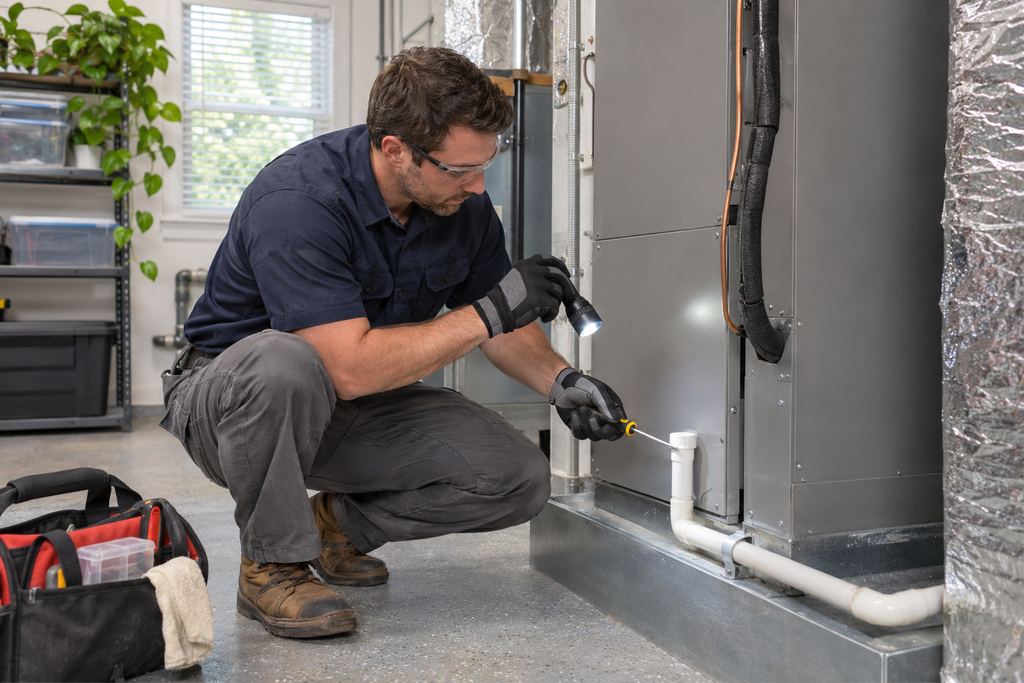
Signs the condensate line is blocked
- Standing water in the pan: The pan under the indoor coil should drain, not hold water.
- Water on the floor or ceiling: Attic units leak through ceilings; closet and basement units puddle at the base.
- AC shuts off and will not restart: Many systems have a float or overflow switch that cuts cooling when water rises.
- Musty or swampy smell: Standing water grows algae and mold near the blower.
- Nothing dripping outside: On a humid day, the outdoor end of the line should drip while the AC runs.
- Gurgling at the indoor unit: Air and water fighting through a partial clog can make bubbling sounds.
What condensate is and why the line clogs
Condensate is the water that forms on the cold evaporator coil, the same way water beads on a cold glass. It drips into a pan and runs by gravity through a PVC line, usually 3/4 inch, to a floor drain, the outside, or a condensate pump. In humid parts of the country a system can produce several gallons a day.
The line is warm, dark and wet, so algae and bacteria form a slimy film that catches dust from the coil. Lines that sag, run too flat, or lack a proper trap clog faster. A dirty filter adds to the problem because more dust lands on the wet coil and washes into the pan.
What you can do and what a technician should handle
Safe checks you can do
No tools beyond a flashlight. Turn the system off at the thermostat before opening any filter or access door.
- Turn the system off at the thermostat before working near the drain.
- Mop up standing water and check the pan for cracks or rust.
- Find the access port, often a T-shaped fitting with a cap near the indoor unit, and flush it as your owner's manual describes.
- If the manual allows, pour a cup of water or a diluted distilled white vinegar solution into the port, wait about 30 minutes, then flush with clean water.
- Use a wet/dry vacuum on the outdoor end of the line to pull out a clog, if you can reach it.
- Replace the air filter so less dust reaches the coil and pan.
Leave these to a licensed technician
These involve high voltage, refrigerant or sealed components. Refrigerant work requires EPA Section 608 certification.
- Clearing a clog deep in the line, inside a wall or past the trap.
- Repairing sagging, cracked or badly pitched drain lines.
- Testing or replacing a condensate pump that has stopped working.
- Replacing a rusted or cracked drain pan.
- Checking and re-mounting a float switch. Never bypass it to keep the AC running.
- Cleaning a coil coated in slime or dust.
How drain setups differ
| Setup | Where it drains | Typical trouble |
|---|---|---|
| Attic air handler | Line through the attic to the outside, with a secondary pan underneath | Overflow through the ceiling if the primary line and the secondary pan both clog |
| Closet or basement unit | Floor drain, laundry standpipe or condensate pump | Puddles at the base of the unit |
| Condensate pump | Small pump pushes water up and out | Failed float, clogged check valve or a dead pump motor |
| Ductless mini-split | Thin line from the indoor head, often outside through the wall | Water dripping from the head onto the wall |
What clearing a drain line usually costs
A simple clog is often cleared on a regular service call, and cost depends mostly on the contractor's diagnostic or trip fee and how hard the line is to reach. Prices go up when the line runs through a finished wall, a drain pan needs replacing, or a condensate pump has failed. The AC drain line cleaning page covers the service itself, condensate pump replacement cost covers pump failures, and drain pan replacement explains when a pan is beyond repair. Ask for a written quote that separates the visit fee from the repair.
Preventing the next clog
Flush the line through the access port a few times a cooling season if your manual approves it. Change filters on schedule. During an annual maintenance visit, ask the technician to clear the line, check the trap and slope, and test the float switch. Some contractors also suggest drain pan tablets; ask whether they suit your pan and line.
If the drain is fine but water still appears, the cause may be a frozen coil or a cracked pan. See AC leaking water for those cases.
Frequently asked questions
What is AC condensate?
It is water pulled out of indoor air as it passes over the cold evaporator coil. Removing that moisture is part of how an AC makes a room feel comfortable. The water collects in a pan and leaves through the drain line.
How long should vinegar sit in an AC drain line?
Guidance commonly given is around 30 minutes before flushing with water, but follow your owner's manual. Some manufacturers specify which cleaners are safe for their pans and coils. Vinegar will not clear a solid clog; that needs mechanical clearing.
How much does it cost to fix a clogged AC drain line?
It depends on the local service-call fee, access to the line, and whether a pump, pan or float switch also needs work. Ask the contractor for a written quote. Our drain line cleaning page lists the factors.
Can a clogged drain line stop the AC from cooling?
Yes. Many systems have a float switch that cuts power to the cooling circuit when water rises in the pan or line. Once the line is clear and the water drains, the system usually restarts.
- Heating and cooling maintenance checklist (ENERGY STAR)
- Mold (U.S. EPA)
Last updated November 24, 2026. Editorial policy · Report an error
Related guides and services
Request drain line service
Describe the water and where you see it. A local contractor can follow up about clearing the line. Availability varies by ZIP code and season.
AC Service Near Me is an independent referral service. Work is performed by independent, locally owned contractors. How we earn money
Tell us where the water is showing up and whether the system still runs. A local contractor can follow up.
Please keep this page open.
- Your request is matched with an independent contractor or partner network that serves your ZIP code.
- The contractor contacts you to confirm details and schedule a visit.
- They diagnose the system and quote the work. You decide whether to go ahead.
Read how requests are handled.
We're still setting up the contractor network that receives online requests, so your details were not sent to anyone and were not stored. Please call to request service, or check back soon.
Call (888) 555-0199