AC Condensate Pump Replacement Cost
AC condensate pump replacement cost is usually modest: the pump is a small part, and most of the bill is the service call and an hour or so of labor. The total rises when the pump needs a higher lift rating, new tubing or a safety switch wired into the air conditioner.
Expect a quote to include the pump, any new discharge tubing or fittings, wiring the overflow safety switch, and labor. Pumps for mini-splits, high-lift models and pumps rated for acidic furnace condensate cost more than basic reservoir pumps. A local contractor can tell you whether you need a replacement or just a cleaning.
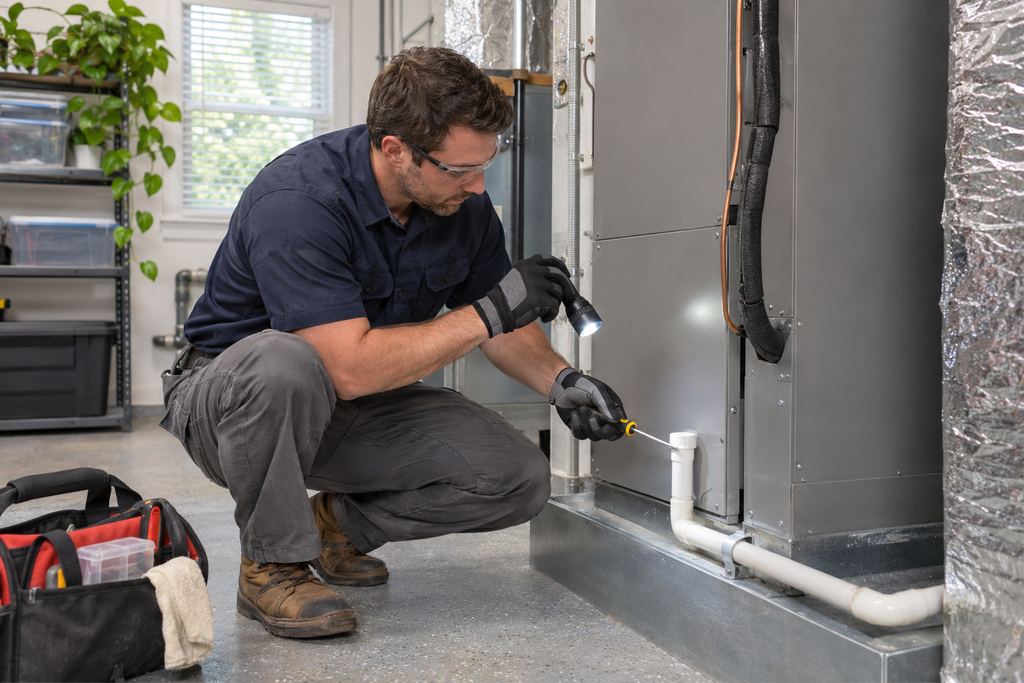
What a condensate pump does
Your air conditioner pulls water out of the air as it cools. Normally that water drains by gravity. When the air handler or furnace sits in a basement, a closet below grade, or anywhere without a downhill path, a condensate pump collects the water in a small reservoir and pushes it up and out through a narrow tube to a drain or outside.
A float inside the reservoir switches the pump on as water rises. Many pumps also have a separate safety switch that shuts the air conditioner off if the reservoir overflows, which protects ceilings and floors. When the pump fails, you will usually see water around the indoor unit or find the AC has stopped cooling because that switch has opened.
What drives the cost
Standard reservoir pumps sit beside furnaces and air handlers. Mini-split pumps are smaller, often hidden in a line-set cover or inside the wall unit's cavity, and can cost more.
Each pump is rated for how high it can push water and how much flow it delivers at that height. A long vertical run needs a stronger model.
High-efficiency gas furnaces produce acidic condensate. The pump has to be rated for it, and a neutralizer may be recommended.
Connecting the overflow switch so it shuts off the AC takes a few extra minutes and is worth it.
Brittle or kinked discharge tubing, a new route or a check valve add materials and time.
Attic and crawlspace installs take longer than a basement next to a floor drain.
Pump types compared
| Type | Where it is used | Cost note |
|---|---|---|
| Standard reservoir pump | Basement or closet furnaces and air handlers | Lowest; widely stocked |
| High-lift reservoir pump | Long vertical or horizontal runs | Higher part cost |
| Mini-split or line-set pump | Ductless wall units without gravity drainage | Higher part and labor cost; installation can be fiddly |
| Acid-rated pump with neutralizer | High-efficiency furnace plus AC sharing a drain | Adds neutralizer and its periodic media change |
Signs the pump may be failing
- Water on the floor around the pump or air handler: See AC leaking water.
- Pump runs constantly or hums without moving water: Worn motor or a blocked discharge line.
- AC stops cooling while the thermostat calls for it: The overflow safety switch may have shut it down.
- Gurgling, rattling or a musty smell from the reservoir: Sludge and algae buildup.
Checks you can make first
Safe checks you can do
No tools beyond a flashlight. Turn the system off at the thermostat before opening any filter or access door.
- Confirm the pump is plugged in and the outlet has power; if it is a GFCI outlet, press reset once
- Look for an obvious kink in the clear discharge tubing
- Clean the reservoir only if the pump's manual describes it and the pump is unplugged first
- Flush the AC drain line only as your owner's manual describes (drain line cleaning)
Leave these to a licensed technician
These involve high voltage, refrigerant or sealed components. Refrigerant work requires EPA Section 608 certification.
- Replacing the pump and rerouting tubing
- Wiring the safety switch into the AC control circuit
- Clearing a blocked line in the air handler or pan
- Any work if the safety switch keeps tripping
If the AC shut off because the pump's overflow switch opened, do not disconnect or jumper the switch to get cooling back. That is what keeps water from overflowing into ceilings and walls. Leave it connected and request service.
Replace the pump or repair it?
Condensate pumps are inexpensive enough that a failed motor or cracked reservoir is normally replaced rather than repaired. A pump that simply stopped because of sludge or a clogged check valve may only need cleaning. If water problems keep coming back, ask the technician to check the drain pan too; a rusted pan is a separate repair, covered on drain pan replacement. For a clog upstream of the pump, see AC clogged drain.
Common pump makers include Little Giant, Aspen and Sauermann, among others. We are not affiliated with any of them; your contractor will choose a model rated for your lift, flow and condensate type.
Frequently asked questions
What is an HVAC condensate pump?
A small pump with a reservoir and float that collects water from the AC or high-efficiency furnace and pumps it to a drain when gravity drainage is not possible.
How do you replace a condensate pump?
A technician disconnects power, removes the old pump, mounts the new one, connects the inlet and discharge tubing, wires the overflow safety switch into the AC control circuit and tests it with water. The wiring step is why we recommend a professional.
How far will a condensate pump push water?
It depends on the model. Manufacturers publish a maximum lift and a flow rate, and flow drops as lift increases. A technician picks a pump with margin above your actual run.
How do I tell if my condensate pump is bad?
Water around it, a motor that runs without moving water, or an AC that has shut off on its safety switch are the usual signs. Check the plug and outlet, then call a technician.
- Energy Saver: Air Conditioning and Maintenance (U.S. Department of Energy)
- ENERGY STAR Heating and Cooling Guidance (ENERGY STAR (U.S. EPA))
Last updated November 24, 2026. Editorial policy · Report an error
Related guides and services
Get a condensate pump quote
Enter your ZIP code and tell us where the water is showing up. A contractor who serves your area follows up.
AC Service Near Me is an independent referral service. Work is performed by independent, locally owned contractors. How we earn money
A local contractor checks the pump and drain and quotes before replacing anything.
Please keep this page open.
- Your request is matched with an independent contractor or partner network that serves your ZIP code.
- The contractor contacts you to confirm details and schedule a visit.
- They diagnose the system and quote the work. You decide whether to go ahead.
Read how requests are handled.
We're still setting up the contractor network that receives online requests, so your details were not sent to anyone and were not stored. Please call to request service, or check back soon.
Call (888) 555-0199