How Much Does AC Capacitor Replacement Cost?
AC capacitor replacement cost is one of the smaller bills in air conditioning repair. The capacitor itself is an inexpensive part; most of what you pay covers the technician's trip, the diagnosis and safe handling of a component that stores a high-voltage charge.
Your total usually equals a diagnostic or service-call fee plus the capacitor and a short block of labor. Dual run capacitors, hard-start kits, after-hours visits and high-demand weeks push the number up. A written quote from a technician who tested the part is the only figure worth relying on.
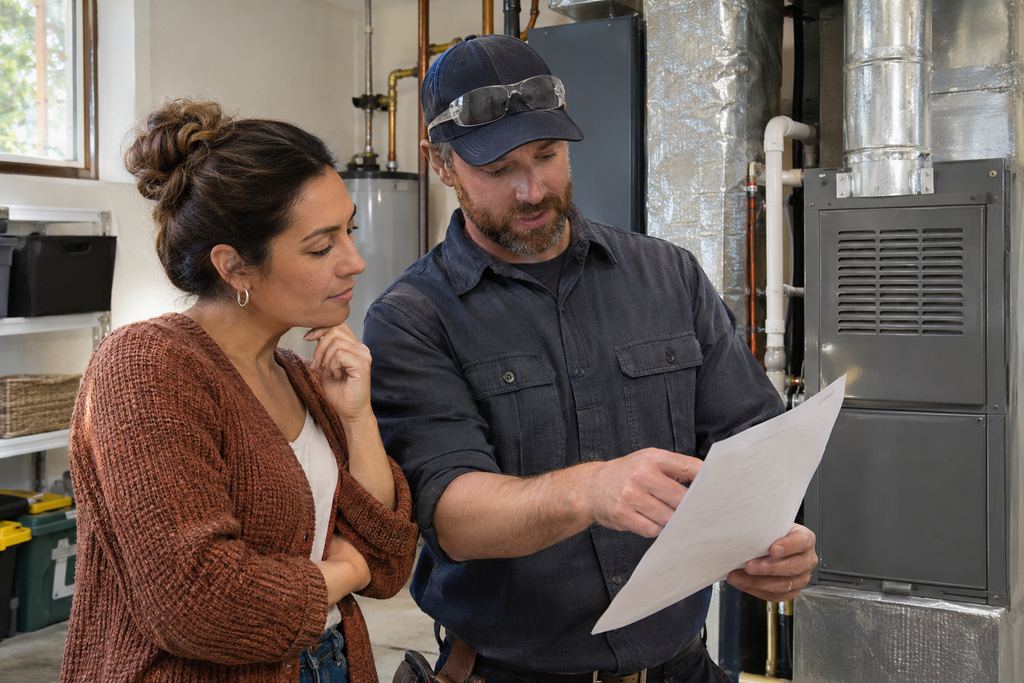
What the capacitor does
A run capacitor gives the compressor motor and the outdoor fan motor the electrical boost they need to start and keep turning efficiently. Most central air conditioners and heat pumps use a dual run capacitor, a single round can with three terminals that serves both motors. Some systems use two separate capacitors, and some add a start capacitor or hard-start kit for the compressor.
When the capacitor weakens, the outdoor unit may hum without starting, the fan may sit still while the compressor tries to run, or the system may start slowly and trip its breaker. Heat is the usual cause: outdoor cabinets in direct sun get very hot, and capacitors age faster in that environment.
What changes the price
Usually the largest share of a capacitor repair. Some contractors credit it toward the repair; ask.
A single run capacitor, a dual run capacitor, or a start capacitor or hard-start kit. Dual and hard-start parts cost more.
The new part must match the microfarad (µF or MFD) rating on the old one, with an equal or higher voltage rating. Unusual ratings can be harder to find.
Evening, weekend and heat-wave visits often cost more. If the house is safe to wait, a regular-hours visit can save money.
A registered system in its parts warranty or a maintenance agreement may reduce what you pay. Check before the visit.
A burned contactor, a seized fan motor or damaged wiring found during the visit adds to the bill.
Capacitor types and where they show up
| Type | What it serves | Cost relative to others |
|---|---|---|
| Single run capacitor | One motor, often the outdoor fan or a blower | Lowest |
| Dual run capacitor | Compressor and outdoor fan in one can | Moderate |
| Start capacitor or hard-start kit | Extra starting torque for a struggling compressor | Higher, and sometimes a sign of a deeper problem |
| Window or through-wall unit capacitor | Compressor and fan inside a room unit | Part is small, but labor can approach the value of an older unit |
Signs the capacitor is the likely problem
- Outdoor unit hums but the fan does not spin: One of the most common capacitor symptoms.
- AC clicks on, then off: Can be the capacitor or the contactor. See AC clicking noise.
- Warm air from the vents with the indoor fan running: The compressor may not be starting.
- Breaker trips when the AC starts: Reset it once. If it trips again, stop. See AC tripping the breaker.
- Bulging or leaking capacitor: A technician will spot this on sight. Do not open the panel to look.
A run capacitor can hold a dangerous charge even after the power is off, and it sits next to high-voltage wiring and the contactor inside the outdoor unit's service panel. Leave the panel closed. Turn the system off at the thermostat and call a technician. If you smell burning or see smoke, turn the system off and call for help; if there is fire, leave and call 911.
Before the technician arrives
Safe checks you can do
No tools beyond a flashlight. Turn the system off at the thermostat before opening any filter or access door.
- Set the thermostat to Off so the compressor does not keep trying to start
- Check the AC breaker and reset it once if tripped
- Clear leaves and debris from around the outside of the outdoor unit
- Find the model and serial number on the outdoor unit's data plate for the contractor, without removing any panels
Leave these to a licensed technician
These involve high voltage, refrigerant or sealed components. Refrigerant work requires EPA Section 608 certification.
- Opening the service panel
- Safely discharging and testing the capacitor
- Matching and installing the replacement
- Checking the contactor, fan motor and compressor amp draw
When a cheap repair points to a bigger one
Replacing a failed capacitor on a healthy system is almost always worth doing. Be more careful when the technician recommends a hard-start kit on an older compressor, or when the capacitor failed again shortly after a replacement. Those can be signs that the compressor is wearing out. Ask for the amp readings and compare the cost of the next step on our compressor replacement cost page.
Annual maintenance helps here. During a tune-up a technician measures the capacitor against its rating and can replace a weak one before it fails on the hottest day of the year. See AC tune-up.
What to ask the contractor
- What did the capacitor test at, compared with its rating?
A reading well below the printed µF value supports replacement. - Is the diagnostic fee credited toward the repair?
Policies vary. - Did you check the contactor and fan motor too?
These often wear together. - Is the replacement a matching rating?
Same µF, same or higher voltage, and a quality part.
Frequently asked questions
How do I know if my AC capacitor is bad?
A humming outdoor unit with a still fan, a system that clicks without starting, or warm air while the indoor fan runs all point to it. Only a technician should confirm it with a meter, because the part can hold a charge.
Can I replace an AC capacitor myself?
We do not recommend it. The capacitor stores energy after the power is off and sits beside high-voltage terminals. Wrong ratings or wiring can also damage the compressor. Have a technician do it.
How much does a window AC capacitor cost to replace?
The part is small, but window units are sealed tightly and labor can be a large share of an inexpensive unit's value. Ask for a repair price and compare it with a new unit. See window AC repair.
How much do HVAC techs charge to replace a capacitor?
Most of the charge is the service call and labor, which vary by region and time of day. Ask for a written quote that separates the fee, the part and any other repairs.
How long does a capacitor last?
It varies widely with heat, power quality and part quality. Many last years, but outdoor heat shortens their life. Having it tested at each tune-up is the practical approach.
- Electrical Safety (U.S. OSHA)
- Energy Saver: Air Conditioning and Maintenance (U.S. Department of Energy)
- ENERGY STAR Heating and Cooling Guidance (ENERGY STAR (U.S. EPA))
Last updated November 24, 2026. Editorial policy · Report an error
Related guides and services
Get a capacitor repair quote
Enter your ZIP code and describe what the outdoor unit is doing. A contractor who serves your area follows up with next steps.
AC Service Near Me is an independent referral service. Work is performed by independent, locally owned contractors. How we earn money
A local contractor tests the capacitor and quotes the repair before replacing it.
Please keep this page open.
- Your request is matched with an independent contractor or partner network that serves your ZIP code.
- The contractor contacts you to confirm details and schedule a visit.
- They diagnose the system and quote the work. You decide whether to go ahead.
Read how requests are handled.
We're still setting up the contractor network that receives online requests, so your details were not sent to anyone and were not stored. Please call to request service, or check back soon.
Call (888) 555-0199