AC Contactor Replacement
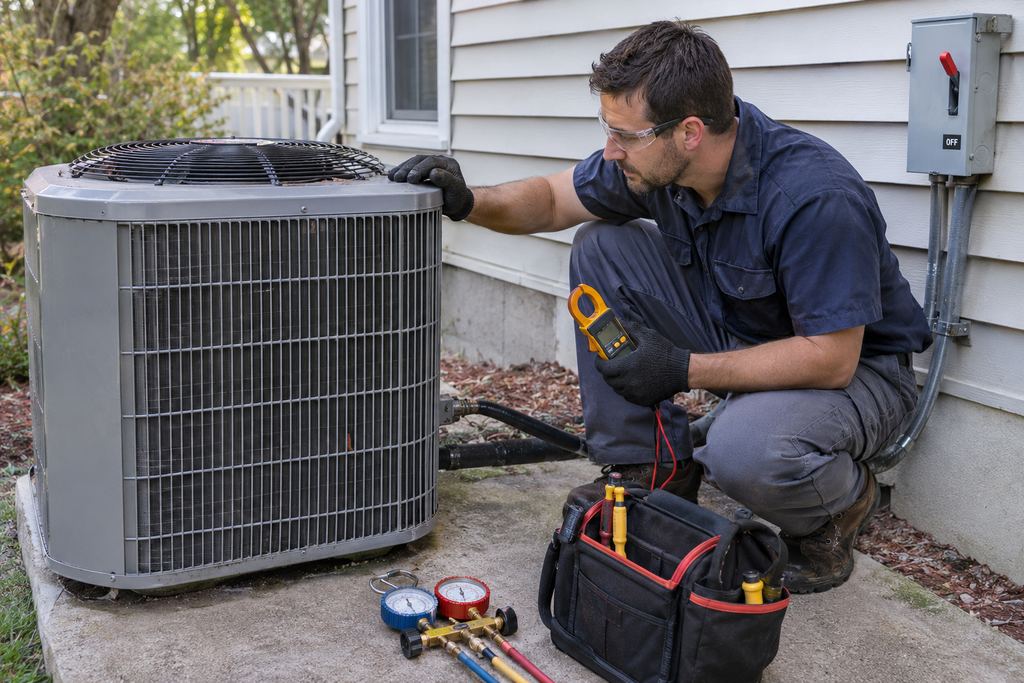
The contactor is the switch that tells your outdoor unit to start. When it wears out, the indoor fan may run while the outdoor unit stays silent, or the outdoor unit may refuse to shut off. Replacing it is a quick repair, but it is line-voltage work for an HVAC technician.
- Common cause of an outdoor unit that hums, buzzes or will not start
- Technician tests the capacitor and wiring at the same visit
- No homeowner work inside the electrical compartment
Describe what the outdoor unit is doing. A local contractor confirms the diagnosis before quoting.
Please keep this page open.
- Your request is matched with an independent contractor or partner network that serves your ZIP code.
- The contractor contacts you to confirm details and schedule a visit.
- They diagnose the system and quote the work. You decide whether to go ahead.
Read how requests are handled.
We're still setting up the contractor network that receives online requests, so your details were not sent to anyone and were not stored. Please call to request service, or check back soon.
Call (888) 555-0199Signs the contactor may be failing
These overlap with capacitor and motor faults, which is why a technician tests before replacing.
- Indoor air blows but is not cold: The thermostat calls for cooling, the blower runs, and the outdoor fan and compressor never start.
- Buzzing or chattering outside: A weak coil or dirty contacts can make the contactor hum or click rapidly.
- Outdoor unit will not turn off: Contacts welded together keep the compressor running even with the thermostat off. See AC won't turn off.
- Starts only after a tap or a delay: Worn contacts may connect intermittently.
- Burn marks or insects: Technicians often find ants or wasps nested between the contacts.
Set the thermostat to off and switch off the AC breaker. If it keeps running, or you see smoke or sparks, stay away from the unit and call a technician. If there is fire, leave and call 911.
Before you call, and what the technician does
Safe checks you can do
No tools beyond a flashlight. Turn the system off at the thermostat before opening any filter or access door.
- Check that the thermostat is on cool and has fresh batteries
- Look for a tripped AC breaker and reset it one time only
- Listen at the outdoor unit for humming or clicking and note it
- Replace a dirty filter so the indoor coil does not freeze while you wait
Leave these to a licensed technician
These involve high voltage, refrigerant or sealed components. Refrigerant work requires EPA Section 608 certification.
- Turn off power at the disconnect and discharge the capacitor
- Measure coil voltage and check the contacts for pitting
- Fit a contactor with the right poles, amp rating and coil voltage
- Test the capacitor, compressor and fan before leaving
Repair or replace the system?
A contactor is a small part, and replacing it rarely changes the repair-or-replace math. The question comes up when the technician finds the contactor failed because something else is wrong: a compressor drawing too much current, a capacitor that keeps failing, or wiring damaged by heat. In that case, ask what the readings showed and compare the cost of those repairs with the system's age.
One rule of thumb some contractors use is the $5,000 rule: multiply the system's age by the repair price, and if the result is over $5,000, look seriously at replacement. It is a rough guide, not a decision. For a newer system with a bad contactor, repair is almost always the answer. Details on compressor replacement help if a bigger fault turns up.
What to ask the contractor
- What tested bad, and can I see it?
Pitted contacts or a burned coil are easy to show. - Did you test the capacitor too?
A capacitor reading below its rating can explain hard starts. Read about capacitor replacement. - Is the price flat-rate or time and materials?
The contactor cost guide explains both. - Is your license current?
Check it on your state contractor board's site.
How a service request works
AC Service Near Me is a referral service. We don't send our own technicians. We connect you with independent local contractors.
- Tell us what you need
Enter your ZIP code and choose the service. Add a few details about the problem or project.
- Your request is routed
It goes to an independent HVAC contractor or partner network that serves your area and handles that type of work.
- A contractor contacts you
The contractor reaches out to confirm details and schedule a visit.
- You decide
The contractor diagnoses the system and quotes the work. Pricing, scheduling and warranty terms are between you and them.
Frequently asked questions
How much should a contactor replacement cost?
Most of the bill is the service call and labor, since the contactor itself is a low-cost part. Ask for the diagnostic fee and repair price in writing before work starts.
Can I replace the contactor or capacitor on my AC unit myself?
We do not recommend it. Both sit in the outdoor unit's electrical compartment, where line voltage is present and a capacitor can hold a charge after the power is off. A technician should do it.
Which AC brand lasts the longest?
There is no reliable ranking we can point to. Installation quality, correct sizing and regular maintenance affect lifespan more than the badge. Parts like contactors are generic and fit most brands.
What is the $5,000 AC rule?
A rule of thumb: system age multiplied by repair cost. Above $5,000, replacement deserves a look. It ignores efficiency, refrigerant type and your plans for the house, so treat it as a starting point.
Single-pole or double-pole contactor: does it matter?
Yes. The replacement should match the original's pole count, amp rating and coil voltage unless the manufacturer specifies otherwise.
- Electrical Safety Foundation International (ESFI)
- Heating and cooling maintenance checklist (ENERGY STAR)
Last updated November 24, 2026. Editorial policy · Report an error
Related guides and services
Get help with a failing contactor
Enter your ZIP code and describe the symptom. A local contractor follows up to arrange a diagnosis.
AC Service Near Me is an independent referral service. Work is performed by independent, locally owned contractors. How we earn money
Describe what the outdoor unit is doing. A local contractor confirms the diagnosis before quoting.
Please keep this page open.
- Your request is matched with an independent contractor or partner network that serves your ZIP code.
- The contractor contacts you to confirm details and schedule a visit.
- They diagnose the system and quote the work. You decide whether to go ahead.
Read how requests are handled.
We're still setting up the contractor network that receives online requests, so your details were not sent to anyone and were not stored. Please call to request service, or check back soon.
Call (888) 555-0199