AC Drain Line Cleaning
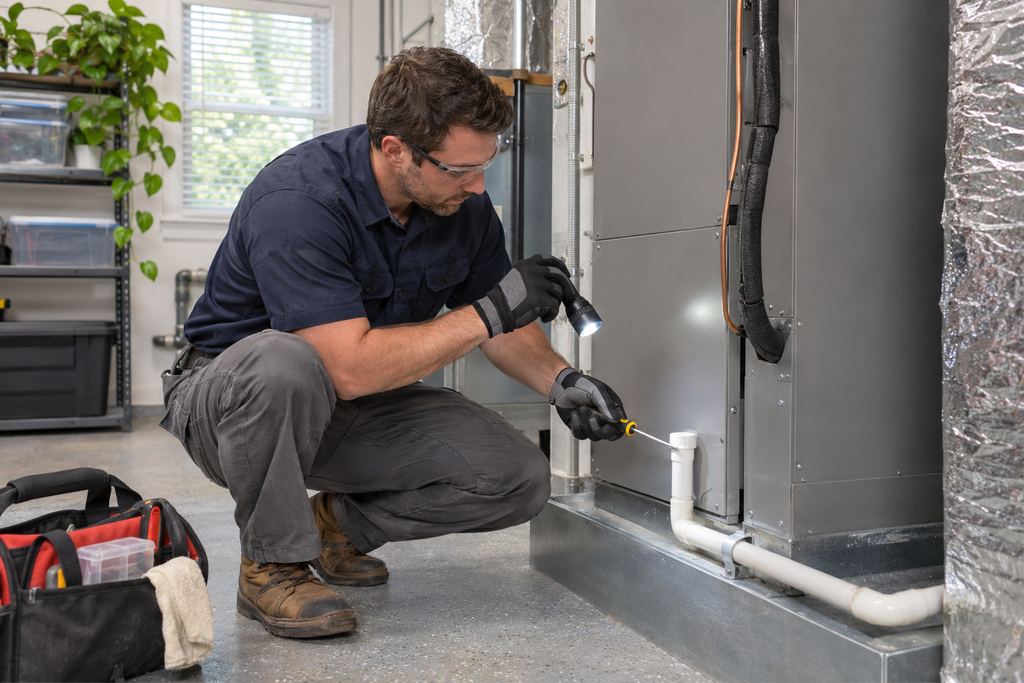
Your AC pulls water out of the air, and the condensate drain line carries it away. When algae and sludge build up inside, water backs into the pan, the safety switch shuts the system off, or the pan overflows. Many owner's manuals describe a simple flush you can do; anything past that, a technician should handle.
- Clears algae and sludge from the condensate line and trap
- Checks the float switch, pan and condensate pump
- Flush at home only as your equipment manual describes
Tell us where the water is showing up. A local contractor follows up to schedule a visit.
Please keep this page open.
- Your request is matched with an independent contractor or partner network that serves your ZIP code.
- The contractor contacts you to confirm details and schedule a visit.
- They diagnose the system and quote the work. You decide whether to go ahead.
Read how requests are handled.
We're still setting up the contractor network that receives online requests, so your details were not sent to anyone and were not stored. Please call to request service, or check back soon.
Call (888) 555-0199How to tell the condensate line is clogged
- Water around the indoor unit: Puddles by the furnace or air handler, or a wet ceiling under an attic unit. See AC leaking water.
- System shuts off and will not restart: A float or condensate safety switch has tripped because the pan is full.
- Water in the secondary pan: The backup pan under an attic unit should normally stay dry.
- Musty smell from vents: Standing water in the pan can grow mold and slime.
- No drip at the outside drain end: During steady cooling on a humid day, the line usually drips.
- Condensate pump running constantly: Or a pump that hums without moving water.
Why drain lines clog
Condensate is cool, slow-moving water that runs past dust that got by the filter. That mix grows algae and bacterial slime in the trap and pipe. Other causes include a line installed without enough slope, a trap that dried out in winter, insects or debris in the outdoor end, and a failed condensate pump.
The layout matters. Air handlers in attics and closets usually drain by gravity through PVC pipe to the outside or a floor drain. Basement systems often rely on a small pump. Mini-splits drain through a thin hose at the back of the indoor head, and window units drain from the base pan. Each clogs differently, and the right cleaning method depends on the type.
A typical owner's manual flush
Only follow these if your equipment manual describes this procedure. If it does not, call a technician.
- Turn the system off at the thermostat
This stops new water and keeps the blower from pulling air through an open fitting.
- Find the access point
Many installs have a capped vertical tee on the drain line near the indoor unit. Do not cut pipe to make one.
- Pour the cleaner the manual names
Often about a cup of warm water or distilled white vinegar, poured slowly. Watch that it drains and does not back up into the pan.
- Clear the outside end
A wet/dry vacuum held to the outdoor end of the line can pull out sludge. Clear any debris at the opening.
- Recap and restart
Replace the cap, turn cooling back on and check for a drip outside after it has run a while.
Homeowner flush or service call?
Safe checks you can do
No tools beyond a flashlight. Turn the system off at the thermostat before opening any filter or access door.
- Flush through the access tee if the manual allows it
- Vacuum the outdoor end of the line
- Empty water from a secondary pan with the system off
- Keep a clean filter in place to slow buildup
Leave these to a licensed technician
These involve high voltage, refrigerant or sealed components. Refrigerant work requires EPA Section 608 certification.
- Clear a blocked trap or line that a flush did not open
- Test and replace a condensate pump or float switch
- Correct line slope, add a cleanout or repair cracked pipe
- Clean the primary pan and indoor coil when slime has spread
What affects the price of drain line service
Contractors set their own prices. Ask for the trip fee and repair price in writing.
Attic and crawlspace work takes longer than a closet or basement.
A quick flush versus clearing a solid clog or replacing pipe.
A new condensate pump or float switch adds parts and labor.
Cleaning the line during a maintenance visit usually costs less than a separate call.
Keeping the line clear
The DOE suggests passing a stiff wire through a unit's drain channels now and then, and checking condensate drains during routine service. In humid climates, many homeowners flush the line once or twice during cooling season where the manual allows. Changing the filter on schedule slows buildup, and a yearly maintenance visit catches a sagging line or a weak pump before it overflows. If water is already on a ceiling, see AC clogged drain for next steps.
How a service request works
AC Service Near Me is a referral service. We don't send our own technicians. We connect you with independent local contractors.
- Tell us what you need
Enter your ZIP code and choose the service. Add a few details about the problem or project.
- Your request is routed
It goes to an independent HVAC contractor or partner network that serves your area and handles that type of work.
- A contractor contacts you
The contractor reaches out to confirm details and schedule a visit.
- You decide
The contractor diagnoses the system and quotes the work. Pricing, scheduling and warranty terms are between you and them.
Frequently asked questions
Is vinegar or bleach better for an AC drain line?
Follow your manual. Many manufacturers and contractors suggest distilled white vinegar or plain warm water because it is mild. Bleach can be harsh on some parts and must never be mixed with vinegar or other cleaners.
Can I pour Drano down my AC drain?
No. Household drain openers are not made for condensate systems and can damage the pan, pump and coil. Use only what the equipment manual names, or call a technician.
What can I pour down my AC drain line to unclog it?
For routine flushing, warm water or a cup of vinegar where the manual allows. A real clog usually needs a wet/dry vacuum at the outdoor end or a technician with drain tools.
How do I tell if my AC condensate line is clogged?
Look for water near the indoor unit, a full secondary pan, an AC that shuts off and will not restart, or no drip at the outside end while cooling on a humid day.
How often should the drain line be cleaned?
It depends on humidity and how dusty the home is. Check it at each maintenance visit and flush during cooling season if your manual describes how.
- Heating and cooling maintenance checklist (ENERGY STAR)
- ENERGY STAR (U.S. EPA and DOE, ENERGY STAR program)
Last updated November 24, 2026. Editorial policy · Report an error
Related guides and services
Request drain line service
Enter your ZIP code and describe where water is showing up. A contractor who serves your area follows up.
AC Service Near Me is an independent referral service. Work is performed by independent, locally owned contractors. How we earn money
Tell us where the water is showing up. A local contractor follows up to schedule a visit.
Please keep this page open.
- Your request is matched with an independent contractor or partner network that serves your ZIP code.
- The contractor contacts you to confirm details and schedule a visit.
- They diagnose the system and quote the work. You decide whether to go ahead.
Read how requests are handled.
We're still setting up the contractor network that receives online requests, so your details were not sent to anyone and were not stored. Please call to request service, or check back soon.
Call (888) 555-0199