Burning Smell From the AC: Causes and When to Shut It Off
A burning smell from an air conditioner is one symptom you should not wait out. Turn the system off at the thermostat first, then figure out which kind of smell it is.
An electrical or melting-plastic smell usually means a motor, capacitor or wire is overheating, so switch the AC off and keep it off until a technician checks it. A faint dusty odor that fades within the first hour of the season is usually dust burning off and is not a fault. If you see smoke, sparks or flames, leave the house and call 911.
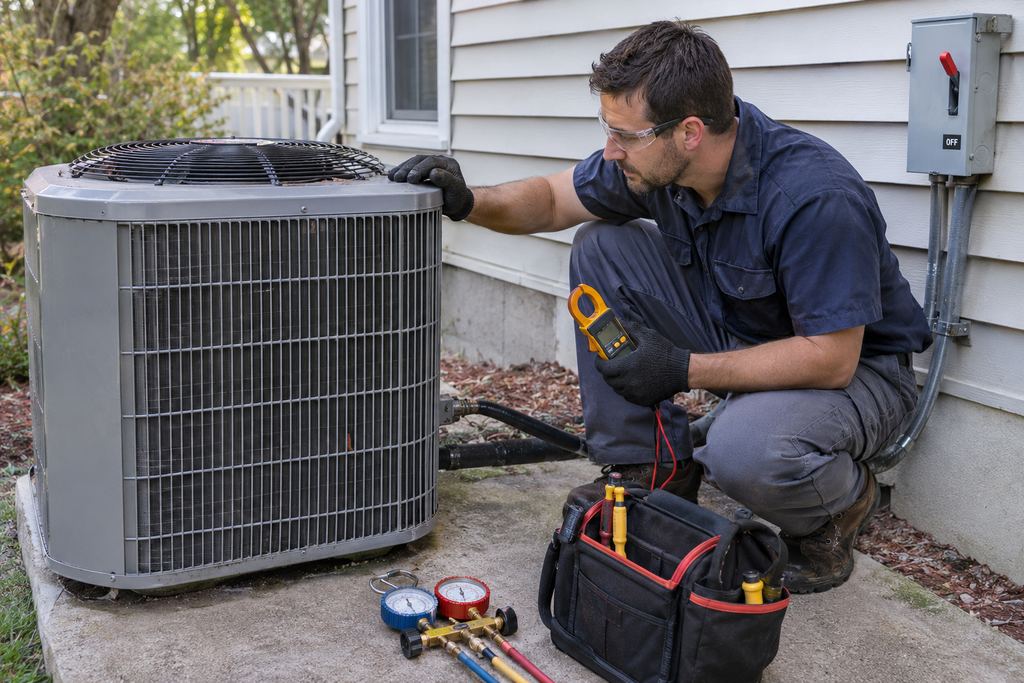
Turn the AC off at the thermostat and switch off its breaker if you can reach the panel without passing smoke. If you see smoke or flames, get everyone out and call 911 from outside. Do not open the air handler or the outdoor unit to look for the source.
What each type of smell usually points to
Describe the odor as precisely as you can when you call. It helps the technician narrow the search.
Why an AC overheats enough to smell
Most burning odors trace back to a part drawing more current than it should. A blower motor with worn bearings has to work harder, heats up and can cook the insulation on its windings. A capacitor that is bulging or leaking cannot help the motor start, so the motor stalls and heats. A loose lug on the contactor or at the disconnect arcs a little every time it starts, and that arcing chars the wire.
Restricted airflow makes all of this worse. A packed filter or blocked return forces the blower to strain, and a condenser smothered in debris runs its fan motor and compressor hot. That is why a technician will look at airflow even after replacing the part that burned.
The likely repairs are a blower motor replacement, a condenser fan motor replacement or a capacitor replacement, plus repair of any damaged wiring.
Safe steps for you, and the rest for the technician
Safe checks you can do
No tools beyond a flashlight. Turn the system off at the thermostat before opening any filter or access door.
- Turn the system off at the thermostat as soon as you notice the smell.
- Note whether the odor is strongest at the vents, near the indoor unit, or outside near the condenser.
- If the breaker for the AC has tripped, leave it off. Do not reset it after a burning smell.
- Check the air filter and replace it if it is clogged, but keep the system off until it is inspected.
- For a window unit, unplug it and look at the plug and outlet for scorch marks without touching anything hot.
Leave these to a licensed technician
These involve high voltage, refrigerant or sealed components. Refrigerant work requires EPA Section 608 certification.
- Opening the air handler or outdoor unit and inspecting motors, wiring and the control board.
- Testing and discharging capacitors.
- Measuring amp draw on the blower, fan motor and compressor.
- Replacing burned wire, terminals or a contactor.
- Deciding whether the outlet or circuit also needs an electrician.
Central systems, heat pumps and window units
On a central split system, the indoor air handler or furnace cabinet holds the blower and, in many homes, electric heat strips. The outdoor condenser holds the compressor, fan motor, capacitor and contactor. Either side can be the source, so a smell at the vents does not rule out the outdoor unit.
Heat pumps use the same parts and add a reversing valve and defrost controls, so the inspection is similar. Window and through-the-wall units are self-contained and plug into an outlet. A scorched plug or a warm outlet is a reason to stop using that unit and have the circuit checked. Using an extension cord with a window AC is a common cause of overheating.
What happens on the service call
- Visual check with power off
The technician looks for melted insulation, dark marks, a swollen capacitor or a burned smell at a specific component.
- Electrical tests
Voltage, amp draw and capacitor readings show which part is overloaded.
- Airflow check
Filter, return grilles and the blower wheel are inspected, since low airflow often caused the overheating.
- Written findings and quote
Ask for the failed part and the price in writing before the repair starts. Compare with the AC repair cost guide if the number seems off.
Questions to ask before you approve the repair
- What exactly burned, and is there damage beyond that part?
A motor may be replaced while scorched wiring nearby is left in place. Ask them to check both. - What caused it to overheat?
If the cause was low airflow or a weak capacitor, fixing only the motor invites a repeat. - Is the contractor licensed and insured where you live?
Most states license HVAC or mechanical contractors. Look the company up on your state licensing board's site.
Frequently asked questions
Can I smell burning without there being a fire?
Yes. Overheating motor windings, a failing capacitor or arcing wire can give off a burning smell long before anything catches fire. That is the warning. Shut the system off and keep it off until it has been checked.
Is a burning smell normal when the AC first turns on for the season?
A light dusty smell for a few minutes can be normal, especially on systems with electric heat strips. A sharp electrical or plastic smell is not normal, and neither is any smell that keeps coming back.
How do I know if my AC is about to fail badly?
Warning signs include a burning smell, a breaker that trips again after a reset, loud buzzing or banging from the outdoor unit, and visible scorch marks on a plug or outlet. Any one of these is a reason to turn the system off.
Should I replace a window AC that smelled like burning?
If the plug, cord or outlet is scorched, stop using the unit. On an older window unit, replacement often makes more sense than a motor or board repair, but check the manufacturer's warranty first.
- U.S. Fire Administration (FEMA U.S. Fire Administration)
- Electrical Safety Foundation International (ESFI)
- Heating and cooling maintenance checklist (ENERGY STAR)
Last updated November 24, 2026. Editorial policy · Report an error
Related guides and services
Request an inspection for a burning smell
Keep the system off and send a short description of the smell. A local contractor can follow up about a visit. Availability varies by ZIP code and season.
AC Service Near Me is an independent referral service. Work is performed by independent, locally owned contractors. How we earn money
Turn the system off first. Then describe the smell and where it seems strongest, and a local contractor can follow up.
Please keep this page open.
- Your request is matched with an independent contractor or partner network that serves your ZIP code.
- The contractor contacts you to confirm details and schedule a visit.
- They diagnose the system and quote the work. You decide whether to go ahead.
Read how requests are handled.
We're still setting up the contractor network that receives online requests, so your details were not sent to anyone and were not stored. Please call to request service, or check back soon.
Call (888) 555-0199