AC Condenser Fan Motor Replacement
If the top of your outdoor unit is not spinning while the AC runs, the condenser fan motor or its capacitor is the usual cause. Request AC condenser fan motor replacement and a local contractor can test both, replace what failed and protect the compressor from overheating.
- Fan motor and capacitor tested together
- Correct horsepower, speed and rotation
- Fan blade and wiring checked before restart
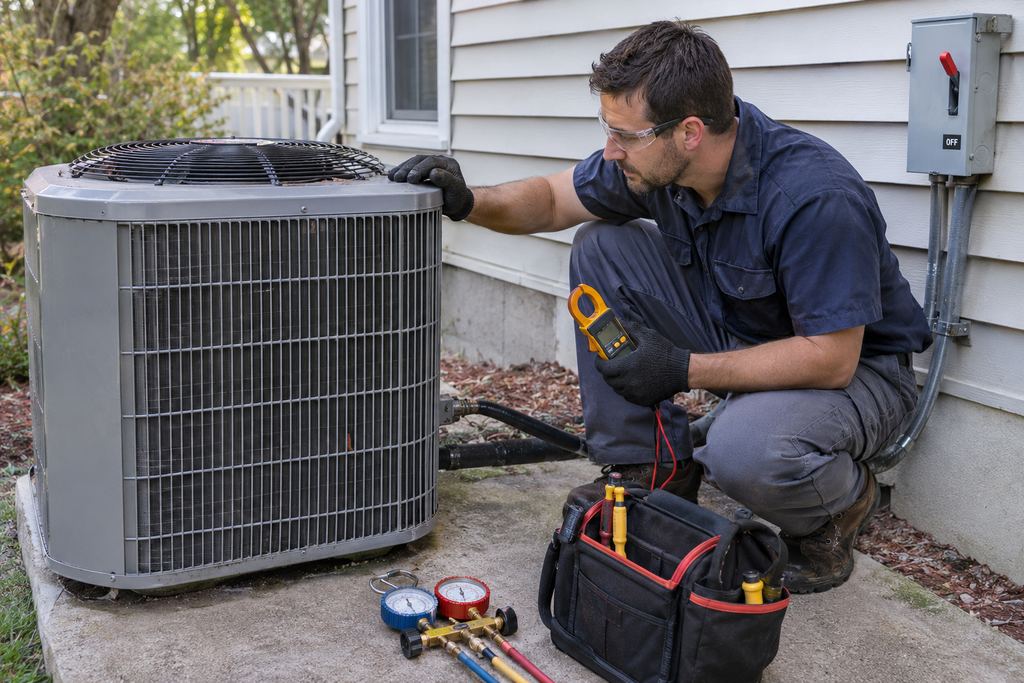
Tell us what the outdoor unit is doing. A local contractor confirms the cause before quoting.
Please keep this page open.
- Your request is matched with an independent contractor or partner network that serves your ZIP code.
- The contractor contacts you to confirm details and schedule a visit.
- They diagnose the system and quote the work. You decide whether to go ahead.
Read how requests are handled.
We're still setting up the contractor network that receives online requests, so your details were not sent to anyone and were not stored. Please call to request service, or check back soon.
Call (888) 555-0199Fan motor, capacitor and coil in the outdoor unit
- 1Compressor
Pumps refrigerant through the system. The most expensive part in the outdoor unit. - 2Condenser coil
Releases heat from the refrigerant to outdoor air. - 3Fan and motor
Pulls air across the coil. A failed motor can overheat the compressor. - 4Run capacitor
Helps the compressor and fan motor start and run. A common, lower-cost failure. - 5Contactor
Electrical switch that turns the unit on when the thermostat calls for cooling. - 6Service valves
Where the technician connects gauges to check refrigerant pressures.
Signs of a failing condenser fan motor
- Fan not turning while the compressor hums: Often the motor or its capacitor.
- Fan spins slowly or stops after a while: Overheating motor or weak capacitor.
- Grinding or squealing from the top of the unit: Worn bearings.
- Warm air indoors on hot afternoons: The compressor shuts off on overload because heat is not being removed. See AC blowing warm air.
- Burning smell at the outdoor unit: Turn the system off and keep it off.
Fan motor types
What is safe for you, and what is not
Safe checks you can do
No tools beyond a flashlight. Turn the system off at the thermostat before opening any filter or access door.
- Switch the thermostat to Off to protect the compressor
- Check the AC breaker and reset it once if it tripped
- Clear sticks, leaves or debris from the top grille without reaching inside
- Note whether you hear a hum and whether the fan moves at all
Leave these to a licensed technician
These involve high voltage, refrigerant or sealed components. Refrigerant work requires EPA Section 608 certification.
- Testing the fan motor and capacitor, which holds a charge
- Opening the service panel or removing the fan grille
- Replacing the motor, blade and capacitor
- Checking compressor temperature and amp draw afterward
Repair the motor or look at the whole unit?
A fan motor is a moderate repair and, on most systems, clearly worth doing. Technicians often replace the capacitor at the same time, because a weak capacitor shortens the new motor's life. If the unit is old and the compressor has been overheating for a while, ask the technician to check it before you commit. For larger decisions, see condenser replacement cost or compressor replacement.
Pricing for this repair depends on motor type, whether it is a factory part and the time of the visit. Ask for a written quote that lists the motor, capacitor and labor separately.
How a service request works
AC Service Near Me is a referral service. We don't send our own technicians. We connect you with independent local contractors.
- Tell us what you need
Enter your ZIP code and choose the service. Add a few details about the problem or project.
- Your request is routed
It goes to an independent HVAC contractor or partner network that serves your area and handles that type of work.
- A contractor contacts you
The contractor reaches out to confirm details and schedule a visit.
- You decide
The contractor diagnoses the system and quotes the work. Pricing, scheduling and warranty terms are between you and them.
Frequently asked questions
How do I know if my AC condenser fan motor is bad?
If the compressor runs but the fan does not spin, or spins weakly and stops, the motor or capacitor has likely failed. A technician tests both to tell which.
How much does it cost to replace an air conditioner fan motor?
A PSC universal motor is at the lower end; a factory ECM motor costs more. The service call, capacitor and labor add to it. Ask for a written, itemized quote.
How is a condenser fan motor replaced?
The technician shuts off power, discharges the capacitor, removes the fan grille and blade, swaps the motor, rewires it, reinstalls the blade at the right height and tests the unit. This is work for a technician, not a homeowner.
Will the AC fan still run if the capacitor is bad?
Usually not reliably. It may hum without turning, start only sometimes, or spin slowly. Keep the system off and request service.
- Electrical Safety (U.S. OSHA)
- Energy Saver: Air Conditioning and Maintenance (U.S. Department of Energy)
Last updated November 24, 2026. Editorial policy · Report an error
Related guides and services
Request fan motor replacement
Enter your ZIP code and describe what the outdoor fan is doing. A contractor who serves your area follows up.
AC Service Near Me is an independent referral service. Work is performed by independent, locally owned contractors. How we earn money
Tell us what the outdoor unit is doing. A local contractor confirms the cause before quoting.
Please keep this page open.
- Your request is matched with an independent contractor or partner network that serves your ZIP code.
- The contractor contacts you to confirm details and schedule a visit.
- They diagnose the system and quote the work. You decide whether to go ahead.
Read how requests are handled.
We're still setting up the contractor network that receives online requests, so your details were not sent to anyone and were not stored. Please call to request service, or check back soon.
Call (888) 555-0199