AC Making a Loud Noise: Identify the Sound, Then Act
Air conditioners hum, whoosh and click. When yours starts making a loud noise it did not make last summer, the type of sound tells you a lot about what is wearing out.
Screeching and squealing usually come from a fan or blower motor with failing bearings. Grinding means metal parts are rubbing. Banging or clanking can be a loose fan blade or a compressor problem. A loud buzz often points to an electrical part such as a contactor or capacitor. For grinding, banging or buzzing with no start, turn the system off and have a technician look before the damage spreads.
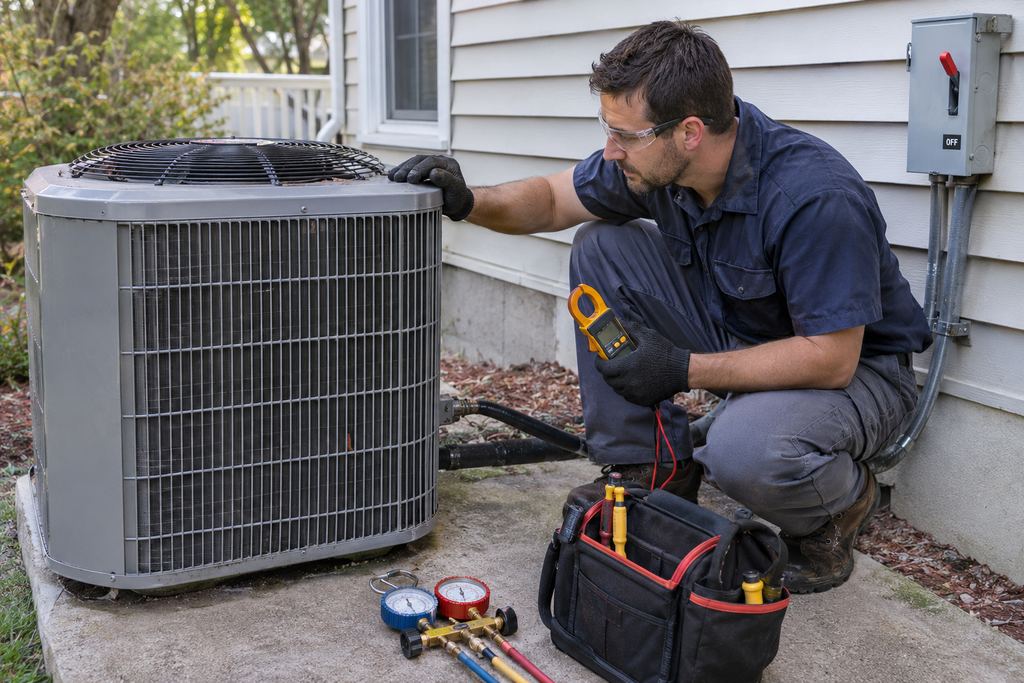
What the sound usually means
| Sound | Likely source | How urgent |
|---|---|---|
| Screeching or squealing | Worn motor bearings in the condenser fan or indoor blower; a slipping belt on older blowers | Soon. Bearings can seize and burn out the motor |
| Grinding | Metal on metal in a motor or a fan blade hitting the housing | Turn it off |
| Banging or clanking | Loose or broken fan blade, loose part inside the compressor, or a hard-starting compressor | Turn it off |
| Loud buzzing or humming without the fan | Contactor, capacitor or motor failing to start | Turn it off |
| Rattling | Loose panels, screws or debris in the unit | Check soon; see AC rattling noise |
| Repeated clicking | Relay or contactor chatter, failed starts | See AC clicking noise |
| Hissing or bubbling | Possible refrigerant leak or air in the drain line | Have it checked |
Grinding, banging, a loud buzz with no fan movement, or any noise with a burning smell can mean a part is about to fail or is overheating. Turn the AC off at the thermostat. If the breaker trips, do not reset it more than once. Smoke or sparks: leave and call 911.
Outdoor unit noise vs. indoor noise
Standing next to each unit while it runs tells you a lot. The outdoor condenser on a central system or heat pump holds the compressor and a large fan. Squeals there usually mean the condenser fan motor is wearing out, and a heavy knock at startup can come from the compressor. Heat pumps also make a loud whoosh when they switch into or out of defrost in winter; that one is normal.
Indoors, the air handler or furnace holds the blower. A squeal or scraping sound there often points to blower motor bearings or a blower wheel that has come loose on its shaft, which is a blower motor replacement or repair. Whistling at the vents is usually airflow, not a broken part: a dirty filter, closed registers or undersized returns.
Ductless mini-splits and window units are quieter by design, so new noise from them stands out. A rattle in a window unit is often a loose mounting, while a grinding sound usually means the fan motor.
Safe checks before you call
Safe checks you can do
No tools beyond a flashlight. Turn the system off at the thermostat before opening any filter or access door.
- Find out whether the noise is outside, inside at the air handler, or in the ducts.
- With the system off at the thermostat, look for sticks, leaves or toys in the outdoor unit's fan grille.
- Replace the air filter if vents are whistling.
- Tighten the screws on any access panel you can reach from outside the unit, without removing panels.
- Record a short video with sound; it helps the technician.
Leave these to a licensed technician
These involve high voltage, refrigerant or sealed components. Refrigerant work requires EPA Section 608 certification.
- Replacing fan or blower motors and their capacitors.
- Rebalancing or replacing a damaged fan blade or blower wheel.
- Testing the compressor and its electrical components.
- Checking for refrigerant leaks behind a hissing sound.
- Adding vibration pads or correcting a unit that is not level.
Repair or replace a noisy unit
A motor or capacitor repair on a healthy system is usually worth doing. The math changes when the compressor is the noisy part.
Older units with R-22 refrigerant cost more to repair, since R-22 has not been produced since 2020.
Fan motors and capacitors are moderate repairs. A failing compressor is often the point where replacement is discussed. See AC compressor repair.
Check whether the part is still under the manufacturer's warranty and whether the unit was registered.
Several repairs in a short time suggest the system is near the end of its life. The AC repair cost guide covers typical pricing factors.
Frequently asked questions
Why is my AC so loud when it first turns on?
A brief buzz and click at startup is normal. A loud bang, a long hum before the fan spins, or a squeal that fades as the motor warms up all point to a starting problem or worn bearings.
How much does it cost to replace an AC fan motor?
Price depends on whether it is the outdoor condenser fan motor or the indoor blower, the motor type, and local labor rates. Ask for a written quote. Our blower motor cost guide lists the factors.
Can a loud AC be dangerous?
The noise itself is not, but what causes it can be. Grinding and banging can mean a part is breaking apart, and buzzing can mean an electrical part is overheating. Turn the system off for either.
Is a humming AC normal?
A steady low hum while running is normal. A loud hum with the fan not spinning usually means a motor cannot start, often because of a weak capacitor.
Will maintenance make my AC quieter?
It can. Cleaning, tightening panels and fasteners, and replacing worn parts before they fail often reduces noise. It will not quiet a compressor that is failing.
- Heating and cooling maintenance checklist (ENERGY STAR)
- Section 608 Technician Certification (U.S. EPA)
Last updated November 24, 2026. Editorial policy · Report an error
Related guides and services
Request help with a noisy AC
Describe the sound and where it comes from. A local contractor can follow up to schedule a visit. Availability varies by ZIP code and season.
AC Service Near Me is an independent referral service. Work is performed by independent, locally owned contractors. How we earn money
Describe the sound and whether it comes from inside or outside. A local contractor can follow up.
Please keep this page open.
- Your request is matched with an independent contractor or partner network that serves your ZIP code.
- The contractor contacts you to confirm details and schedule a visit.
- They diagnose the system and quote the work. You decide whether to go ahead.
Read how requests are handled.
We're still setting up the contractor network that receives online requests, so your details were not sent to anyone and were not stored. Please call to request service, or check back soon.
Call (888) 555-0199