AC Rattling Noise: What It Means and What to Do
Most AC rattles come from something loose: a panel screw, a twig in the outdoor unit, a duct joint or a fan that has started to wobble. The location and timing of the sound tell you a lot before anyone opens the cabinet.
An AC rattling noise is usually a loose part or debris, not an emergency. Check the outdoor unit for sticks and leaves, press on loose access panels and listen at the vents. If the rattle comes with grinding, banging, burning smells or weak cooling, turn the system off and have a technician diagnose the fan motor, compressor or electrical parts.
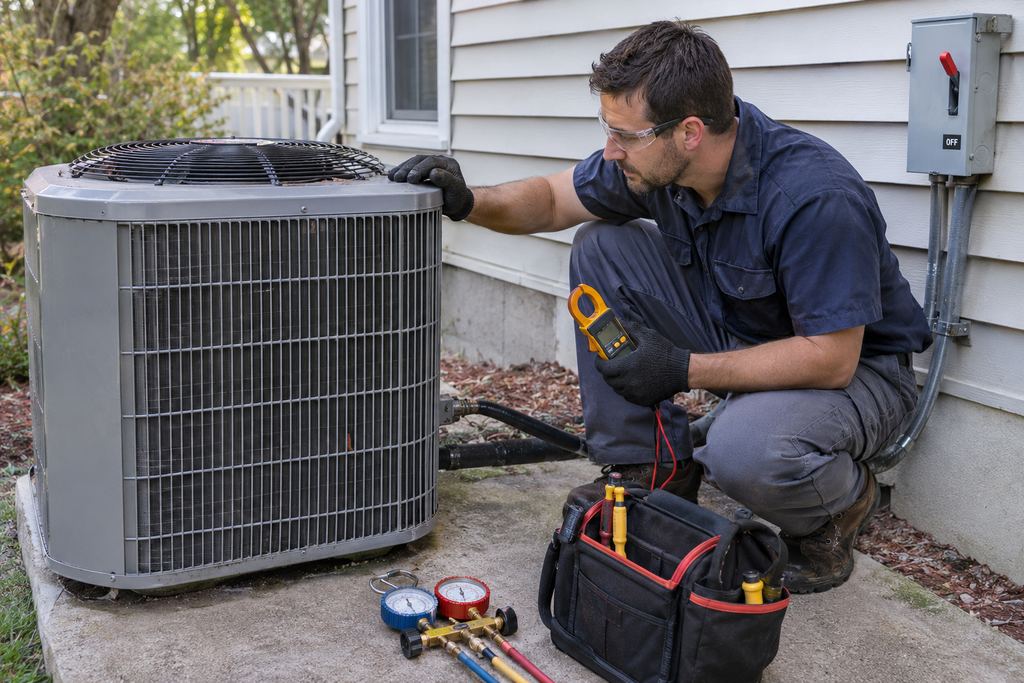
Pin down where the rattle starts
Stand next to the outdoor unit while the system runs, then go inside and listen at the air handler and a few supply vents. A rattle that is loudest outside points to the condenser cabinet, fan or compressor. A rattle near the indoor unit or inside the walls usually means the blower, a loose panel or ductwork.
Timing matters too. A short rattle right at startup or shutdown often comes from the compressor settling on its mounts or a duct flexing as pressure changes. A rattle that keeps going the whole cycle is more likely a loose part or something touching the fan blades. Write down what you notice, because it saves time on the diagnostic visit.
Rattle location and the usual suspects
| Where you hear it | Likely cause | Who handles it |
|---|---|---|
| Outdoor unit, constant | Twigs, leaves or a loose top grille; fan blade hitting debris | You can clear debris around the unit; a technician opens the cabinet |
| Outdoor unit, getting louder | Worn fan motor bearings or a bent fan blade | Technician, see condenser fan motor replacement |
| Outdoor unit, at startup | Compressor mounts, hard start, or a chattering contactor | Technician |
| Indoor unit | Loose access panel, blower wheel out of balance, debris in the blower | Panel check by you; blower work by a technician |
| Walls, ceiling or vents | Loose duct straps or joints, a loose register | Register screws by you; duct repair by a technician |
| Copper lines at the wall | Refrigerant line vibrating against siding or a bracket | Technician |
What you can check and what needs a pro
Safe checks you can do
No tools beyond a flashlight. Turn the system off at the thermostat before opening any filter or access door.
- Turn the system off at the thermostat, then clear sticks, leaves and trash from around the outdoor unit without reaching inside it.
- Look for an access panel on the indoor unit that is not fully seated and press it into place.
- Tighten a loose vent register cover with a screwdriver.
- Replace the air filter if it is dirty or has been sucked out of shape.
- Note when the noise happens and record a short video for the technician.
Leave these to a licensed technician
These involve high voltage, refrigerant or sealed components. Refrigerant work requires EPA Section 608 certification.
- Opening the condenser cabinet and removing debris from the fan area.
- Testing the fan motor, capacitor and contactor and replacing worn parts.
- Checking compressor mounts and refrigerant line supports.
- Balancing or replacing a blower wheel.
- Securing loose duct sections inside walls, attics or crawlspaces.
Turn the AC off at the thermostat and leave it off if the rattle becomes grinding or banging, or if you smell burning or see smoke or sparks. A fan blade striking metal or a failing motor can damage the compressor quickly. If there is smoke or fire, leave the home and call 911.
What a noise diagnosis usually covers
Visits vary by contractor, but a noise call typically includes these checks.
- Outdoor cabinet and fan: Fan blade condition, motor bearings, top grille fasteners and debris inside the coil area.
- Electrical parts: Contactor, capacitor and wiring connections, which can buzz or chatter when worn.
- Compressor: Mounts, startup behavior and running sound. A compressor that knocks inside its shell is a bigger repair.
- Indoor blower and ducts: Blower wheel balance, motor mounts and nearby duct joints.
- Written findings: What is loose or worn, the repair options and a written quote before work starts.
Keeping rattles from coming back
Many rattles start with neglect. Keep a clear area around the outdoor unit, trim shrubs back and change filters on schedule. A yearly AC maintenance visit is when a technician tightens panel screws, checks fan motors and spots worn mounts before they get loud. If your AC is also struggling to keep up, read AC not cooling, because a failing fan motor can cause both problems.
Contractor availability and visit fees depend on your ZIP code and the season, so ask about the diagnostic fee when you book. For other unusual sounds, see the guide to a loud AC or the full list of AC problems.
Frequently asked questions
Is a rattling AC dangerous?
Usually not right away. A loose panel or debris is a nuisance. It becomes urgent when the rattle turns into grinding or banging, or comes with a burning smell, because a damaged fan or motor can take out other parts. Turn it off in that case.
Why does my AC rattle when it turns on?
A brief rattle at startup often comes from the compressor moving on its mounts or a contactor closing. If it lasts more than a few seconds or keeps getting louder, ask a technician to check the compressor and the start components.
Does the 3 minute rule matter while I track down a rattle?
Yes. Many systems wait a few minutes before the compressor restarts so pressures can even out. If you switch the AC off and on while troubleshooting a noise, give it that time instead of cycling it repeatedly.
How expensive is it to fix an AC compressor?
Compressor work is one of the larger AC repairs, and the price depends on the unit, refrigerant type and labor in your area. Get a written quote and compare it with replacement. Our AC repair cost guide covers the factors.
Can a window AC rattle for the same reasons?
Partly. Window units often rattle from loose mounting, a bent fan blade or a loose front grille. Because the unit is one box, a technician may suggest replacing an older window AC rather than repairing it.
Which noises mean the AC could be close to a major failure?
Watch for loud banging, screeching, a burning smell, a tripping breaker or a compressor that hums but will not start. Any of these is a reason to shut the system off and request a repair instead of running it.
- Heating and cooling maintenance checklist (ENERGY STAR)
- Electrical Safety Foundation International (ESFI)
Last updated November 24, 2026. Editorial policy · Report an error
Related guides and services
Request a noise diagnosis
Tell us what the rattle sounds like and where it comes from. We pass your request to an independent local contractor who can inspect the unit and quote the repair.
AC Service Near Me is an independent referral service. Work is performed by independent, locally owned contractors. How we earn money
Describe the sound and where you hear it. Your request goes to an independent local contractor.
Please keep this page open.
- Your request is matched with an independent contractor or partner network that serves your ZIP code.
- The contractor contacts you to confirm details and schedule a visit.
- They diagnose the system and quote the work. You decide whether to go ahead.
Read how requests are handled.
We're still setting up the contractor network that receives online requests, so your details were not sent to anyone and were not stored. Please call to request service, or check back soon.
Call (888) 555-0199