Mini Split Freezing Up: How to Thaw It and Fix the Cause
Ice on the indoor coil of a ductless mini split, or frost along the copper lines at the outdoor unit, means the coil is running colder than it should. The fix starts with letting it thaw and then finding out why.
A mini split usually freezes up because air cannot move across the indoor coil (clogged filters or a dirty coil and blower wheel) or because refrigerant is low from a leak. Turn cooling off, let the ice melt on fan mode, then clean the filters. If ice returns within a day or two, a technician needs to check the refrigerant charge, sensors and fan.
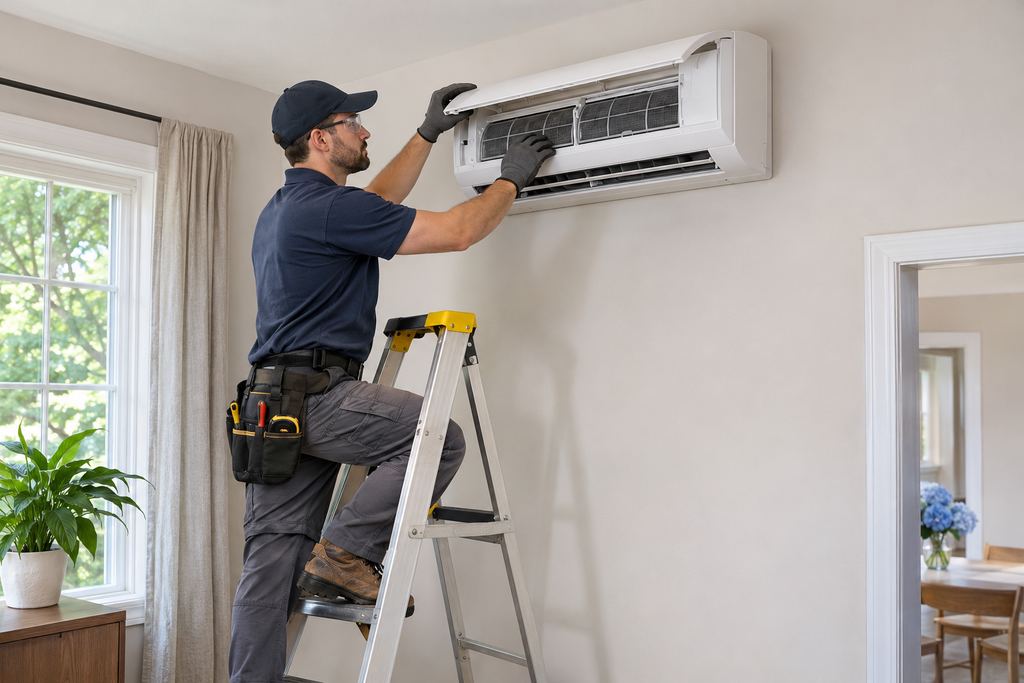
Thaw it without damage
- Stop cooling
Switch the unit from COOL to FAN (or turn it off) with the remote. Running cooling over ice makes it worse.
- Let it melt on its own
Fan mode speeds thawing. Expect a few hours for heavy ice. Put a towel under the indoor unit, since the drain may overflow as the ice melts.
- Do not chip or heat the ice
Scraping or prying can puncture the thin coil fins and tubing. Hair dryers and heat guns near the unit are a bad idea too.
- Clean the filters
Lift the front panel and slide out the mesh filters, rinse them as your manual describes, and let them dry fully before putting them back.
- Restart and watch
Run cooling at a moderate setpoint and normal fan speed. Check for frost again after a few hours and the next day.
What makes a ductless unit ice over
The most common cause. Mesh filters on wall units clog faster than many owners expect, especially with pets.
Dust and biological growth on the coil and the barrel-shaped blower wheel cut airflow even with clean filters.
A leak, often at a flare connection, drops coil pressure and temperature below freezing.
Very low fan speed with a very low setpoint, especially on cool nights, can let frost build.
A bad coil temperature sensor can stop the unit from protecting itself against icing.
Running cooling when it is cool outside, below the range in the manual, can freeze the coil.
Homeowner steps and technician work
Safe checks you can do
No tools beyond a flashlight. Turn the system off at the thermostat before opening any filter or access door.
- Switch to fan mode and let the ice melt.
- Rinse and dry the indoor filters.
- Make sure curtains or furniture are not blocking the indoor unit's air path.
- Clear snow, leaves or debris from around the outdoor unit.
- Note any blinking lights or error codes from the display.
Leave these to a licensed technician
These involve high voltage, refrigerant or sealed components. Refrigerant work requires EPA Section 608 certification.
- Measuring refrigerant pressures and searching for leaks, which requires EPA Section 608 certification.
- Deep cleaning the indoor coil and blower wheel.
- Testing coil and room temperature sensors.
- Checking the indoor fan motor and control board.
- Repairing flare connections and recharging to the manufacturer's charge.
Prevent the next freeze-up
Most freeze-ups trace back to airflow, so filter cleaning on the schedule in your manual does most of the work. Wall units also benefit from a periodic professional mini-split cleaning that reaches the coil and blower wheel, which a filter rinse cannot. A routine maintenance visit adds electrical checks and a look at the line set and flare joints.
If the unit also drips water inside, read mini split leaking water. If it runs without ice but the room stays warm, see mini split not cooling. Central systems freeze for similar reasons, covered in AC freezing up.
Frequently asked questions
Why does my mini split keep defrosting?
In heating mode, defrost cycles are normal and get more frequent in cold, damp weather. Constant defrosting, or defrost cycles that never clear the ice, can point to a sensor, refrigerant or fan problem.
Is it common for AC coils to freeze?
It is a common symptom, but not a normal operating state. A coil should be cold and wet, not iced. Ice means airflow or refrigerant is off.
How do I know if my mini split is low on refrigerant?
Signs include ice on the coil or lines, weak cooling, and hissing or oily spots near connections. Only a certified technician can confirm it with gauges. Topping off without fixing the leak only delays the problem; see refrigerant leak repair.
Can I keep using my mini split once the ice melts?
Yes, after cleaning the filters. If ice returns soon, stop using cooling and book a repair, because running a frozen coil can send liquid refrigerant back to the compressor.
What is the 3 minute rule, and does it apply to mini splits?
Many mini splits hold the compressor off for a few minutes after a restart or mode change. If nothing happens right after you switch back to cooling, give it a few minutes before assuming it has failed.
- Ductless heating and cooling (ENERGY STAR)
- Section 608 Technician Certification (U.S. EPA)
- Heating and cooling maintenance checklist (ENERGY STAR)
Last updated November 24, 2026. Editorial policy · Report an error
Related guides and services
Request mini-split repair
Tell us where the ice forms and what you have tried. We pass your request to an independent local contractor who works on ductless systems.
AC Service Near Me is an independent referral service. Work is performed by independent, locally owned contractors. How we earn money
Tell us whether the ice is on the indoor unit, the lines or the outdoor unit. A local contractor can follow up.
Please keep this page open.
- Your request is matched with an independent contractor or partner network that serves your ZIP code.
- The contractor contacts you to confirm details and schedule a visit.
- They diagnose the system and quote the work. You decide whether to go ahead.
Read how requests are handled.
We're still setting up the contractor network that receives online requests, so your details were not sent to anyone and were not stored. Please call to request service, or check back soon.
Call (888) 555-0199