Through the Wall Air Conditioner Installation
Through the wall air conditioner installation means cutting an opening in an exterior wall, framing it, setting a metal sleeve pitched slightly outward, sealing it, and sliding the unit in, with a suitable outlet nearby. Replacing a unit in an existing sleeve is a simple swap. Cutting a new opening is carpentry and often electrical work, and some HVAC contractors leave it to general contractors or handymen.
- New wall openings or existing sleeves
- 115V and 230V models
- Cooling-only and heat models
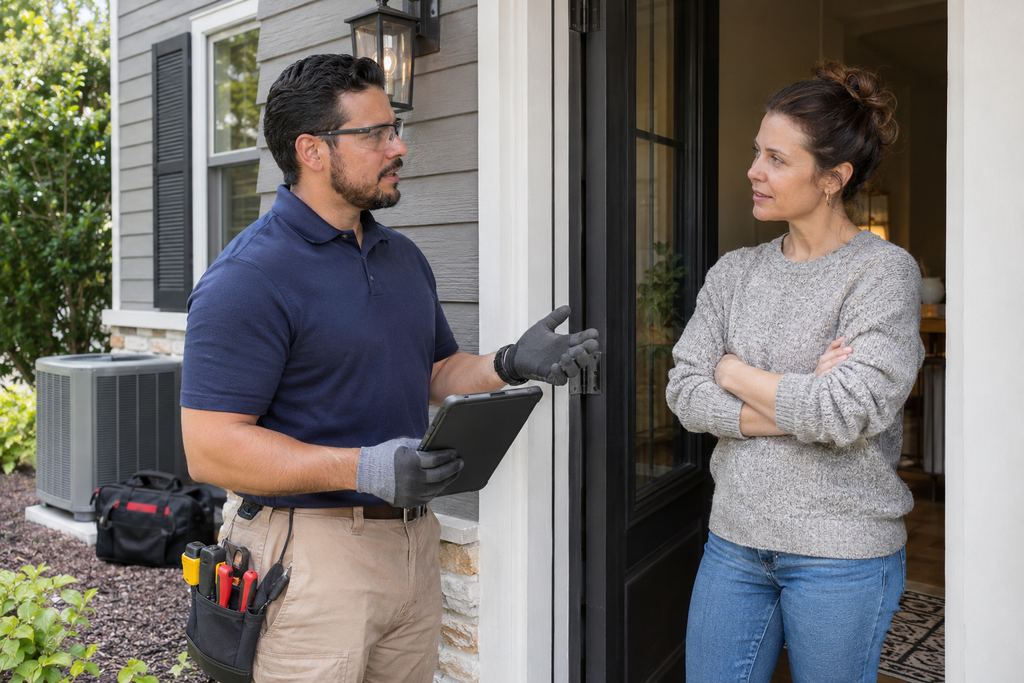
Say whether there is an existing sleeve, the wall type and the unit you plan to use.
Please keep this page open.
- Your request is matched with an independent contractor or partner network that serves your ZIP code.
- The contractor contacts you to confirm details and schedule a visit.
- They diagnose the system and quote the work. You decide whether to go ahead.
Read how requests are handled.
We're still setting up the contractor network that receives online requests, so your details were not sent to anyone and were not stored. Please call to request service, or check back soon.
Call (888) 555-0199Installing in a new opening
- Choose the location
An exterior wall with no plumbing, wiring or ducts in the bay, near an outlet of the right voltage, and with outdoor clearance that the manual lists.
- Cut and frame
The opening is sized to the sleeve. In a load-bearing wall a header carries the load above. Brick and block need masonry cutting and a lintel.
- Set the sleeve
The sleeve goes in level side to side and pitched slightly toward the outside so condensate drains out, then it is fastened and sealed inside and out.
- Trim and weatherproof
Exterior flashing or sealant and interior trim close the gaps. Poor sealing shows up as drafts and water stains.
- Install the unit
The chassis slides into the sleeve, the rear grille is attached and the unit is plugged into its outlet and tested.
Power, sizing and heat
Smaller through-wall units run on standard 115-volt outlets, while larger ones need a 230-volt dedicated circuit with a matching receptacle. Check the nameplate before buying, and do not use an extension cord or adapter. A new circuit is electrician work and may require a permit.
Size the unit to the room. ENERGY STAR publishes a room AC sizing chart by square footage, with adjustments for sunny rooms, kitchens and extra occupants. Some through-wall models include electric heat or work as heat pumps; on those, heat is a mode on the control panel. If you want heating and cooling for a whole apartment or hotel room, a PTAC is the commercial version of the same idea.
Read more about the equipment in the through the wall air conditioner guide.
Owner job or contractor job?
Safe checks you can do
No tools beyond a flashlight. Turn the system off at the thermostat before opening any filter or access door.
- Swapping a unit into an existing sleeve that fits it
- Sealing interior trim gaps with foam or caulk
- Cleaning the filter every few weeks during use
Leave these to a licensed technician
These involve high voltage, refrigerant or sealed components. Refrigerant work requires EPA Section 608 certification.
- Cutting into exterior walls, especially load-bearing or masonry
- Installing a header or lintel
- New 230V circuits and receptacles
- Permits where structural or electrical work is involved
Other options to compare
If cutting a wall is not allowed, as in many rentals and condos, a window unit may be the answer. For quieter, more efficient cooling, or to heat and cool several rooms, a ductless mini split needs only a small hole for the line set.
How a service request works
AC Service Near Me is a referral service. We don't send our own technicians. We connect you with independent local contractors.
- Tell us what you need
Enter your ZIP code and choose the service. Add a few details about the problem or project.
- Your request is routed
It goes to an independent HVAC contractor or partner network that serves your area and handles that type of work.
- A contractor contacts you
The contractor reaches out to confirm details and schedule a visit.
- You decide
The contractor diagnoses the system and quotes the work. Pricing, scheduling and warranty terms are between you and them.
Frequently asked questions
What is a through the wall air conditioner?
A self-contained room AC built to sit in a sleeve through an exterior wall. It vents only through the rear grille, so the wall does not block its airflow.
Can I put a window AC in a wall?
Usually not. Window units vent through side louvers that a wall would cover. Only use a model that the manufacturer lists as rated for through-the-wall installation.
How do I turn on heat on a wall AC?
Only units with electric heat or a heat pump can heat. On those, choose heat mode on the control panel or remote. A cooling-only unit has no heat setting.
Does a through-the-wall AC need a permit?
Cutting a structural wall or adding a circuit often does. Rules vary by city and building, so check with the local building department and, in rentals, with the landlord.
Why do I need to wait before turning the unit back on?
Restarting right after shutting off can strain the compressor. Waiting about three minutes lets pressures equalize, and many units enforce the delay on their own.
- Room Air Conditioners (ENERGY STAR)
Last updated November 24, 2026. Editorial policy · Report an error
Related guides and services
Get help with a wall AC
Tell us about the wall and the unit. Your request goes to independent local pros; who takes it depends on the work and your area.
AC Service Near Me is an independent referral service. Work is performed by independent, locally owned contractors. How we earn money
Say whether there is an existing sleeve, the wall type and the unit you plan to use.
Please keep this page open.
- Your request is matched with an independent contractor or partner network that serves your ZIP code.
- The contractor contacts you to confirm details and schedule a visit.
- They diagnose the system and quote the work. You decide whether to go ahead.
Read how requests are handled.
We're still setting up the contractor network that receives online requests, so your details were not sent to anyone and were not stored. Please call to request service, or check back soon.
Call (888) 555-0199