HVAC Emergency Repair for Heating and Cooling
An HVAC emergency is any failure that puts people, pipes or the house at risk: no heat in freezing weather, no cooling in dangerous heat, a gas smell, a carbon monoxide alarm or water damage. Handle the safety step first, then request emergency HVAC repair and we will route it to independent local contractors.
- Covers furnaces, heat pumps, boilers and central AC
- Safety steps for gas and carbon monoxide
- How to tell urgent from next-day
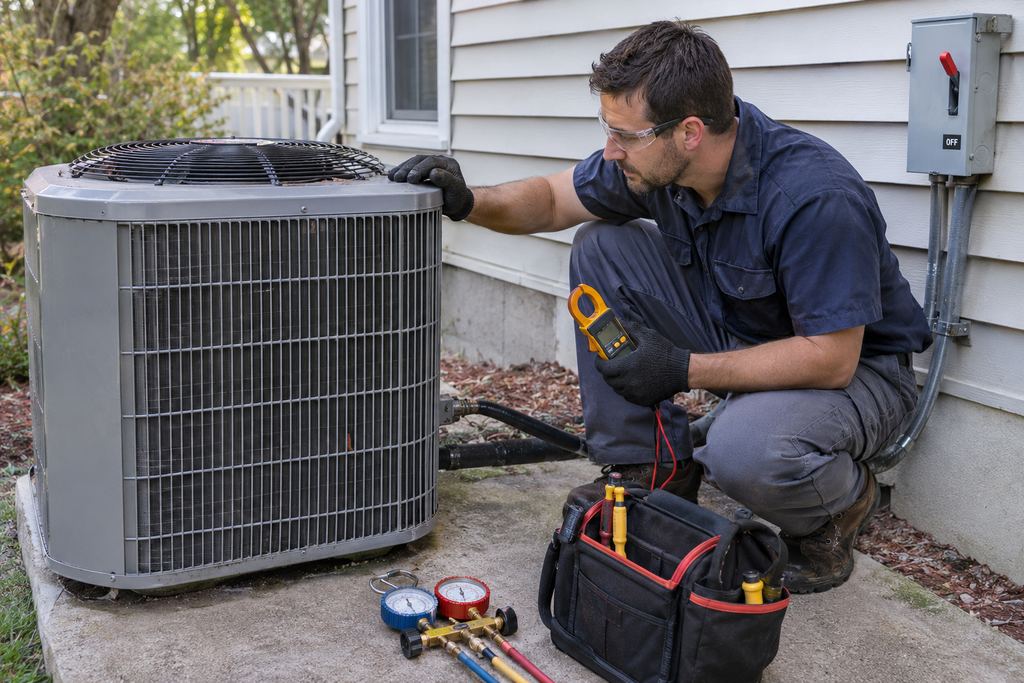
Say whether you have no heat or no cooling, the outdoor temperature, and anyone at risk.
Please keep this page open.
- Your request is matched with an independent contractor or partner network that serves your ZIP code.
- The contractor contacts you to confirm details and schedule a visit.
- They diagnose the system and quote the work. You decide whether to go ahead.
Read how requests are handled.
We're still setting up the contractor network that receives online requests, so your details were not sent to anyone and were not stored. Please call to request service, or check back soon.
Call (888) 555-0199Leave the house now. Do not flip switches or use phones inside. From outside, call 911 or your gas utility's emergency line. Do not go back in until responders say it is safe. An HVAC repair comes after that.
Emergency, urgent or schedule it
| What is happening | What to do |
|---|---|
| Gas smell, CO alarm, smoke | Leave, call 911 or the gas utility from outside |
| No heat and indoor temperature falling toward freezing | Call for emergency service; open cabinet doors under sinks to protect pipes |
| No cooling during extreme heat with vulnerable people home | Call for emergency service; move people somewhere cool |
| Water leaking from the furnace, air handler or ceiling | Turn the system off and call; protect floors |
| Burning smell, sparking, repeated breaker trips | Shut the system off at the thermostat and call |
| System works but is noisy or uneven | Book a regular visit; it usually costs less |
Safe first checks vs. technician work
Safe checks you can do
No tools beyond a flashlight. Turn the system off at the thermostat before opening any filter or access door.
- Confirm the thermostat is on Heat or Cool and has fresh batteries
- Reset a tripped HVAC breaker one time only
- Replace a clogged filter
- Make sure the furnace service switch, which looks like a light switch, is on
- Clear snow or debris from heat pump and AC outdoor units and from furnace vent pipes outside
Leave these to a licensed technician
These involve high voltage, refrigerant or sealed components. Refrigerant work requires EPA Section 608 certification.
- Ignitor, flame sensor and gas valve problems
- Heat pump defrost and reversing valve faults
- Boiler pressure and circulator pump issues
- Any electrical, refrigerant or control board repair
- Carbon monoxide or venting concerns after responders clear the house
Emergency HVAC services contractors handle
What drives the bill on an emergency call
We do not set prices. Ask the contractor for these before the visit.
Evening, weekend and holiday calls often have a higher service charge.
A flame sensor cleaning differs greatly from a heat exchanger or compressor problem.
The first cold snap and the first heat wave are the busiest days of the year.
Ask for the price in writing before work begins.
Fewer emergencies start with maintenance
Most no-heat and no-cool calls trace back to parts that wear slowly: a weak capacitor, a dirty flame sensor, a clogged drain, a filter left in too long. A pre-season visit catches many of them. Book HVAC maintenance in spring for cooling and in fall for heating, or once a year for a single-purpose system.
If the technician tells you the system is near the end of its life, take the repair if it is reasonable and plan the replacement on your own schedule. Our HVAC installation page explains what a planned install involves, and HVAC repair covers non-urgent service.
While you wait for the technician
With no heat in winter, keep the house as warm as you safely can. Close off unused rooms, open cabinet doors under sinks on outside walls so warm air reaches the pipes, and let a faucet drip if a hard freeze is forecast. If you use a space heater, plug it directly into a wall outlet, keep it three feet from anything that can burn, and never leave it running unattended. Never heat the house with an oven, a grill or a generator indoors; they can fill the home with carbon monoxide.
With no cooling in a heat wave, close blinds on sunny windows, run ceiling fans, drink water and spend the hottest hours somewhere air conditioned. Check on older neighbors and anyone with a health condition.
Before you book an emergency visit, ask
- Do you work on my type of system?
Boilers, heat pumps and high-efficiency furnaces each need specific experience. - What is the trip charge for tonight versus tomorrow morning?
If nobody is at risk, waiting a few hours can cut the bill. - Is the contractor licensed where I live?
Check the license number with your state or local licensing board. - How will I approve the price?
Agree that no work starts until you have seen the cost.
How a service request works
AC Service Near Me is a referral service. We don't send our own technicians. We connect you with independent local contractors.
- Tell us what you need
Enter your ZIP code and choose the service. Add a few details about the problem or project.
- Your request is routed
It goes to an independent HVAC contractor or partner network that serves your area and handles that type of work.
- A contractor contacts you
The contractor reaches out to confirm details and schedule a visit.
- You decide
The contractor diagnoses the system and quotes the work. Pricing, scheduling and warranty terms are between you and them.
Frequently asked questions
What counts as an HVAC emergency?
Anything that threatens safety or the house: gas smells, CO alarms, no heat in freezing weather, no cooling in dangerous heat with vulnerable people at home, and active water leaks.
Is 24 hour HVAC repair available everywhere?
No. Some contractors run night and weekend crews and others do not. Availability varies by ZIP code and season, so include your location and urgency in the request.
How often should home HVAC equipment get serviced?
Once a year at minimum, with many homeowners scheduling a cooling check in spring and a heating check in fall. Heat pumps run year-round and benefit from both.
What is the $5,000 rule?
It is a rule of thumb: multiply the system's age by the repair cost, and if the result is over 5,000, consider replacement. It ignores efficiency, condition and refrigerant type, so treat it as a starting point for a conversation with the technician.
Can I get same day HVAC repair?
Ask the contractor directly. Some offer same-day visits when their schedule allows, but that depends on the day, the season and your location.
- Indoor Air Quality (U.S. EPA)
- Heat Safety (National Weather Service)
- Heat and Health (CDC)
Last updated November 24, 2026. Editorial policy · Report an error
Related guides and services
Heating or cooling out?
Handle any safety step first, then send your request. Independent local HVAC contractors can respond based on their availability in your area.
AC Service Near Me is an independent referral service. Work is performed by independent, locally owned contractors. How we earn money
Say whether you have no heat or no cooling, the outdoor temperature, and anyone at risk.
Please keep this page open.
- Your request is matched with an independent contractor or partner network that serves your ZIP code.
- The contractor contacts you to confirm details and schedule a visit.
- They diagnose the system and quote the work. You decide whether to go ahead.
Read how requests are handled.
We're still setting up the contractor network that receives online requests, so your details were not sent to anyone and were not stored. Please call to request service, or check back soon.
Call (888) 555-0199