Emergency AC Repair in San Diego
If someone in the house is showing signs of heat illness, call 911 before anything else. If people are safe but the air conditioner has quit in a San Diego heat wave, send us the details: we pass urgent requests to independent local contractors, and availability depends on your ZIP code, the hour and how many calls are already waiting.
- Heat safety steps while you wait
- How to tell urgent from next-day
- After-hours fees to confirm before booking
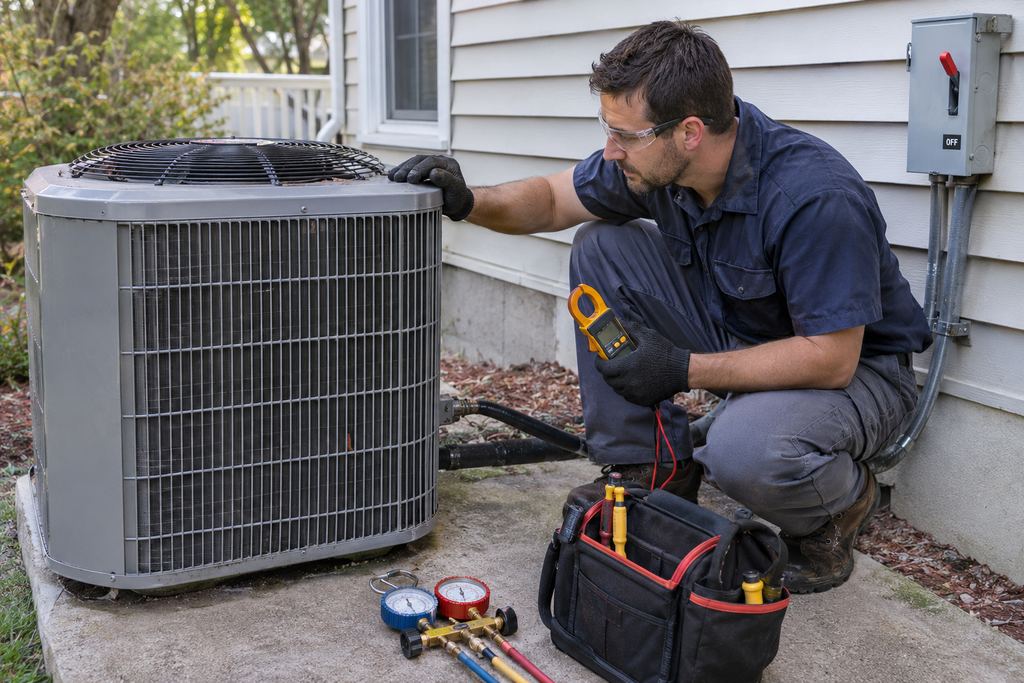
Tell us the symptom, who is in the home (infants, older adults, anyone with medical needs) and how hot it is indoors.
Please keep this page open.
- Your request is matched with an independent contractor or partner network that serves your ZIP code.
- The contractor contacts you to confirm details and schedule a visit.
- They diagnose the system and quote the work. You decide whether to go ahead.
Read how requests are handled.
We're still setting up the contractor network that receives online requests, so your details were not sent to anyone and were not stored. Please call to request service, or check back soon.
Call (888) 555-0199Anyone is confused, faints, has a seizure, stops sweating with hot red skin, or has a body temperature that feels dangerously high. Those are signs of heat stroke. While you wait, move the person to the coolest place available and cool them with wet cloths. Also call 911 and get out if you see smoke or fire from the equipment. The National Weather Service describes heat illness at weather.gov/safety/heat.
Why a San Diego AC failure can turn serious
Most of the year, San Diego hardly needs air conditioning. Near the coast, the marine layer keeps summer afternoons comfortable, and many people are not used to coping with real heat. That is what makes the hot spells dangerous. They often arrive in late summer and early fall, sometimes with dry Santa Ana winds blowing from the desert, and they can push temperatures well above normal even close to the ocean. Inland valleys and the foothills to the east get much hotter than the beaches, and stay hot longer into the evening.
When that happens, every system in the county runs at once, and a part that has barely worked all year gives out. Homes without central air, including many older houses and apartments, depend on window units and fans that cannot keep up. Older adults living alone are at the highest risk. During extreme heat the County of San Diego opens Cool Zones, air-conditioned public sites where anyone can wait out the hottest hours.
Urgent now, or fine until morning?
A contractor will ask you this, so think it through before you call.
While you wait for a technician
- Turn the AC off if anything smells hot
Running a failing compressor or motor can turn a small repair into a big one.
- Check the basics once
Thermostat on Cool, fresh batteries, a clean filter, and the AC breaker reset one time only. If it trips again, leave it off.
- Thaw ice instead of chipping it
If the indoor coil or copper lines are frozen, set the thermostat to fan-only so the ice melts.
- Close blinds on the sunny side
On the coast, open windows after sunset when the ocean air cools things off. Inland, keep the house closed until outdoor air is cooler than indoor air.
- Move vulnerable people
Take older relatives, infants and pets to the coolest room, a neighbor's house or a public Cool Zone. Keep everyone drinking water.
How a service request works
AC Service Near Me is a referral service. We don't send our own technicians. We connect you with independent local contractors.
- Tell us what you need
Enter your ZIP code and choose the service. Add a few details about the problem or project.
- Your request is routed
It goes to an independent HVAC contractor or partner network that serves your area and handles that type of work.
- A contractor contacts you
The contractor reaches out to confirm details and schedule a visit.
- You decide
The contractor diagnoses the system and quotes the work. Pricing, scheduling and warranty terms are between you and them.
What an urgent visit usually covers
- Safety check: Power at the disconnect and signs of overheating or burned wiring.
- Start components: Capacitor and contactor tests, the most common heat-wave failures.
- Fan motors: Both the outdoor condenser fan and the indoor blower.
- Refrigerant circuit: Pressures and temperatures, plus a leak search if the charge is low. This requires EPA Section 608 certification.
- Drainage: Clogged condensate lines that shut the system off through a float switch.
- A written option: What can be fixed tonight, what needs parts, and the price of each.
Systems that end up in emergency calls
| System | Common in | Typical urgent failure |
|---|---|---|
| Central split AC | Inland tract homes and newer houses | Capacitor, contactor, condenser fan motor |
| Heat pump | Newer and remodeled homes | Same as AC, plus control faults |
| Ductless mini-split | Coastal homes added on later, ADUs | Error codes, drain overflow, board failure |
| Packaged unit | Flat-roof homes, small commercial buildings | Wiring and motors stressed by roof heat |
| Window or wall unit | Older apartments and beach-area homes | Usually replaced rather than repaired |
Why urgent repairs cost more
We do not set prices. Confirm the fees before the technician drives out.
Nights, weekends and holidays often carry a higher trip or diagnostic fee.
Electrical parts are modest; a coil or compressor is not, and may not be in stock.
R-22 is scarce and expensive. Newer systems use refrigerants with their own handling rules.
Steep hillside lots, roof units and long drives inland add time.
Ask before you book
- How much is the after-hours trip fee tonight?
Get the number before anyone is dispatched. - What is your CSLB license number?
Check it at cslb.ca.gov. HVAC contractors usually hold a C-20 license. Heat waves bring out unlicensed operators. - Do you quote the repair in writing before touching it?
Even at midnight, a reputable contractor quotes the repair before doing it. - Do you carry common parts on the truck?
Capacitors and contactors usually are. Compressors and coils usually are not.
When the emergency is really a replacement
Sometimes the urgent visit ends with bad news: a dead compressor, a coil leaking refrigerant, or an R-22 system that would need scarce refrigerant to restart. Do not sign a replacement contract under pressure in the middle of a heat wave if you can avoid it. Ask whether a temporary fix or a portable unit can get you through the next few days, then collect written quotes. A replacement in California also needs a permit and often HERS testing, which no one can complete overnight. See AC installation in San Diego, or mini-split installation if the house has no ducts. For non-urgent problems, our San Diego AC repair page covers the usual causes, and the national emergency AC repair guide has more on after-hours service.
Other AC services in San Diego
- Air Conditioning Installation in San Diego
- AC Maintenance and Tune-Ups in San Diego
- Air Conditioning and HVAC Repair in San Diego
- AC and HVAC Replacement in San Diego
- Mini-Split Installation in San Diego
Emergency AC Repair in other California cities
Frequently asked questions
Is a broken air conditioner an emergency?
It is when the heat is a health risk: indoor temperatures rising during a heat wave with an infant, an older adult or someone with heart, lung or kidney problems in the home. A burning smell or sparks also makes it urgent. Otherwise, a next-day appointment at a normal rate is often the better choice.
How much does emergency AC repair cost in San Diego?
We do not publish prices, and the total depends on the failed part, the refrigerant, access and the hour. Expect after-hours visits to cost more than weekday appointments. Ask for the trip fee before dispatch and the repair price in writing before work begins.
Why wait three minutes before restarting an AC?
It is the advice to wait a few minutes after an air conditioner shuts off before turning it back on. The pause lets refrigerant pressures equalize so the compressor does not try to start against high pressure. Many modern thermostats and units build in this delay on their own.
What is the $5,000 rule for AC repair?
It is a rough rule of thumb: multiply the system's age in years by the repair price. If the result is above 5,000, replacement is usually worth considering. It ignores efficiency, refrigerant type and how long you plan to stay, so treat it as a starting point.
Where can I go to stay cool while I wait?
During extreme heat, the County of San Diego opens Cool Zones at libraries, recreation centers and other public sites. Check the county's website or call 211 for locations and hours.
- Heat Safety (National Weather Service)
- Heat and Health (CDC)
- Contractors State License Board (State of California)
- County of San Diego (County of San Diego)
- Section 608 Technician Certification (U.S. EPA)
Last updated November 24, 2026. Editorial policy · Report an error
Related guides and services
Send an urgent AC request
Tell us the symptom, your ZIP code and who is at home. If an independent contractor serves your area and has availability, they contact you directly about timing and fees.
AC Service Near Me is an independent referral service. Work is performed by independent, locally owned contractors. How we earn money
Tell us the symptom, who is in the home (infants, older adults, anyone with medical needs) and how hot it is indoors.
Please keep this page open.
- Your request is matched with an independent contractor or partner network that serves your ZIP code.
- The contractor contacts you to confirm details and schedule a visit.
- They diagnose the system and quote the work. You decide whether to go ahead.
Read how requests are handled.
We're still setting up the contractor network that receives online requests, so your details were not sent to anyone and were not stored. Please call to request service, or check back soon.
Call (888) 555-0199