Mini-Split Installation in Washington
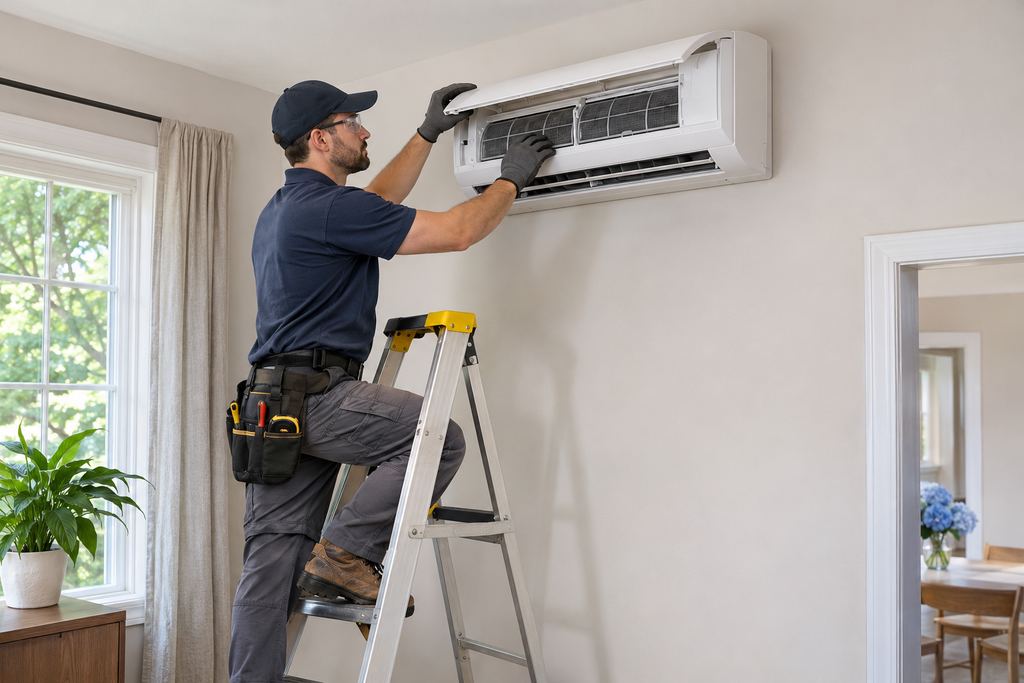
Mini-split installation in Washington is mostly a heating decision that happens to bring cooling with it. Ductless heat pumps are a standard retrofit for houses and condos heated by electric baseboards, wall heaters or an old oil furnace, and they add summer cooling to homes that never had it. Tell us how the home is heated now and which rooms matter most, and we pass the project to independent local installers.
- Single-zone, multi-zone and ducted mini-split options
- Sizing around winter heating, not just summer cooling
- Efficiency ratings and rebate questions to ask
How the home is heated now, how many rooms or zones you want covered, and whether it is a house, condo or townhome.
Please keep this page open.
- Your request is matched with an independent contractor or partner network that serves your ZIP code.
- The contractor contacts you to confirm details and schedule a visit.
- They diagnose the system and quote the work. You decide whether to go ahead.
Read how requests are handled.
We're still setting up the contractor network that receives online requests, so your details were not sent to anyone and were not stored. Please call to request service, or check back soon.
Call (888) 555-0199Why ductless fits so many Washington homes
A large share of Washington homes built from the 1960s through the 1980s, along with many condos and apartments, were heated with electric baseboards and never had ducts. Older craftsman and postwar homes often ran on oil. Adding ducts to either type is disruptive and expensive. A ductless heat pump needs only a small wall opening for the refrigerant lines and drain, and one well-placed indoor head can heat and cool an open main floor.
Electric utilities in the state, including Puget Sound Energy, Seattle City Light, Snohomish County PUD and Avista, have promoted ductless heat pumps for years because they use far less electricity than baseboard heat for the same warmth. The cooling is a bonus that became a priority for many owners after the 2021 heat dome.
Types of mini-split systems
Sizing for a Washington winter
Undersized and oversized ductless systems both disappoint. The contractor should size each zone from a load calculation.
On the west side, the winter heating load is usually larger than the summer cooling load, so size for heat.
In Spokane and the Okanogan, ask for the unit's rated heating capacity near 5 degrees and plan backup heat.
One head will not push heat into bedrooms with doors shut. Keep baseboards there or add heads.
Off the ground and clear of roof drip on the west side; above snow line on a stand in the east.
Efficiency ratings and rebates
Mini-splits are heat pumps, so they carry two ratings: SEER2 for cooling and HSPF2 for heating. Federal minimums for split heat pumps since 2023 are 14.3 SEER2 and 7.5 HSPF2, and many ductless models rate well above that. For Washington homes, HSPF2 and low-temperature heating capacity usually matter more than the cooling number. ENERGY STAR lists qualifying ductless models.
Utility rebates for replacing baseboard or oil heat with a ductless heat pump have been common in Washington, but amounts and rules change. Check your electric utility and the ENERGY STAR rebate finder before you sign. Do not count on the federal 25C credit, which ended with the 2025 tax year.
What the installation should include
- Load calculation per zone: Room-by-room sizing rather than a single guess.
- Line set route and cover: How lines run outside and whether a protective cover is included.
- Condensate drain: A gravity route or a pump, and where the water goes, including defrost meltwater from the outdoor unit in winter.
- Electrical circuit and permit: A dedicated circuit and disconnect, with the L&I or city electrical permit.
- HOA approval: Condos and townhomes often need approval for the outdoor unit location.
- Startup and owner training: Remote settings, filter washing and what defrost mode looks like.
Checking the installer and next steps
Confirm the company is registered with L&I and that the electrical connection is done under proper L&I licensing, commonly by a technician with the 06A HVAC/refrigeration specialty. If an existing mini-split has stopped working, start with AC repair in Washington. Seattle owners can read the Seattle mini-split page, and the AC installation guide compares ductless with ducted systems. Statewide information is on the Washington AC service page.
How a service request works
AC Service Near Me is a referral service. We don't send our own technicians. We connect you with independent local contractors.
- Tell us what you need
Enter your ZIP code and choose the service. Add a few details about the problem or project.
- Your request is routed
It goes to an independent HVAC contractor or partner network that serves your area and handles that type of work.
- A contractor contacts you
The contractor reaches out to confirm details and schedule a visit.
- You decide
The contractor diagnoses the system and quotes the work. Pricing, scheduling and warranty terms are between you and them.
Mini-Split Installation by city in Washington
Pick your city for local details.
Frequently asked questions
Can a mini-split heat a whole Washington house?
Sometimes. In an open, well-insulated home on the west side, one or two heads can carry most of the heating. Homes with many closed rooms usually need several heads or keep baseboards as backup.
Do mini-splits work in Spokane winters?
Cold-climate models keep heating well below freezing, but their capacity drops on the coldest nights. Ask for the rated capacity at low temperatures and keep a backup heat source.
How long does a ductless installation take?
A single-zone install is often done in a day. Multi-zone systems, long line routes or electrical panel work can take two or three days, plus permit and inspection scheduling.
What does mini-split installation cost?
It depends on the number of zones, equipment capacity and efficiency, line set length, electrical work and wall construction. Ask for itemized quotes. Our mini-split installation cost page explains the factors.
- Ductless Heating and Cooling (ENERGY STAR)
- Appliance and Equipment Standards Program (U.S. DOE)
- Washington State Department of Labor & Industries (State of Washington)
- Rebate Finder (ENERGY STAR)
Last updated November 24, 2026. Editorial policy · Report an error
Related guides and services
Request mini-split installation quotes in Washington
Tell us how the home is heated now and which rooms you want covered. Independent local installers receive the request and contact you to plan a visit.
AC Service Near Me is an independent referral service. Work is performed by independent, locally owned contractors. How we earn money
How the home is heated now, how many rooms or zones you want covered, and whether it is a house, condo or townhome.
Please keep this page open.
- Your request is matched with an independent contractor or partner network that serves your ZIP code.
- The contractor contacts you to confirm details and schedule a visit.
- They diagnose the system and quote the work. You decide whether to go ahead.
Read how requests are handled.
We're still setting up the contractor network that receives online requests, so your details were not sent to anyone and were not stored. Please call to request service, or check back soon.
Call (888) 555-0199