High Static Pressure in an HVAC System, Explained
Static pressure is the resistance your blower pushes against as it moves air through filters, coils and ducts. High static pressure in HVAC systems usually means something in that path is too small, too dirty or too closed off, and the blower cannot move the airflow the equipment was designed for.
High static pressure is a measured reading, taken in inches of water column, that shows the duct system is restricting airflow beyond what the blower is rated for. The usual causes are a restrictive or dirty filter, a dirty evaporator coil, undersized or crushed ducts, too few return grilles, or closed supply vents. It leads to weak airflow, noisy vents, frozen coils and a blower that works harder than it should. Fixes range from a different filter to adding a return or resizing ductwork.
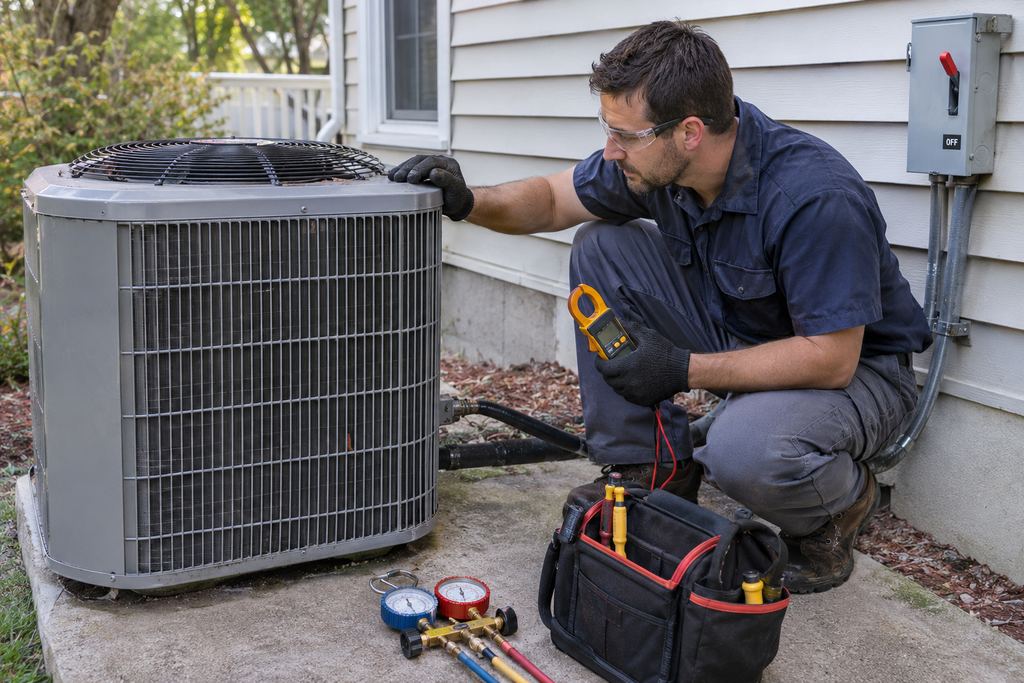
What static pressure measures
A technician measures static pressure with a manometer, inserting small probes into the supply and return sides of the air handler or furnace. Adding the two numbers gives total external static pressure, or TESP. It is a bit like blood pressure for the duct system: a single reading does not diagnose a cause, but it tells the technician whether the ducts, filter and coil are letting enough air through.
Each blower is designed to deliver its rated airflow up to a maximum external static pressure listed on the equipment's data plate or in its installation manual. Many standard residential furnaces and air handlers are rated around 0.5 inches of water column. A reading above the rating means the blower is moving less air than the system needs.
How to read the number you were given
Always compare against your equipment's own rating. These rows describe a typical residential system rated at 0.5 in. w.c.
| Total external static pressure | What it usually means |
|---|---|
| At or below the rated maximum | Ducts and filter are within the range the blower was designed for |
| Somewhat above the rating | Airflow is reduced; filter, coil and return size are the first things to check |
| Well above the rating, such as 0.8 in. w.c. or more on a 0.5-rated unit | Significant restriction; expect comfort problems, noise and strain on the blower |
What causes high static pressure
Signs of restricted airflow
- Whistling or roaring at grilles: Air forced through small openings gets loud.
- Weak airflow in far rooms: Rooms at the end of long runs get the least air.
- Frozen evaporator coil: Low airflow lets the coil drop below freezing. See AC freezing up.
- Doors that slam or whistle: Rooms without returns pressurize when doors close.
- Repeated blower motor failures: Motors working against high static run hotter and can wear out early.
What you can check and what needs a contractor
Safe checks you can do
No tools beyond a flashlight. Turn the system off at the thermostat before opening any filter or access door.
- Replace the filter, and ask whether the type and thickness you use suit your return.
- Open all supply registers and keep return grilles clear of furniture and rugs.
- Look at exposed flex duct in the basement or attic for kinks or crushed sections, without moving it.
- Write down the model number from the furnace or air handler data plate so the rating can be checked.
Leave these to a licensed technician
These involve high voltage, refrigerant or sealed components. Refrigerant work requires EPA Section 608 certification.
- Measuring total external static pressure and pressure drop across the filter and coil.
- Cleaning the evaporator coil and blower wheel.
- Adjusting the blower speed tap or settings within the manufacturer's limits.
- Adding a return, enlarging a filter grille or installing a media filter cabinet.
- Repairing or resizing ducts based on a load and duct design calculation.
Common fixes and what decides between them
Lowest cost. A larger, deeper filter has less resistance than a thin one with the same rating.
A second return, or a larger return grille and duct, often makes the largest single difference.
Crushed or disconnected runs can be repaired; undersized trunks need replacement. See air duct repair and duct replacement cost.
Duct leakage and airflow testing shows which fix matters before money is spent. Ask about duct testing.
If a replacement is planned, ask for a Manual J load calculation and duct evaluation so the new system matches the ducts or the ducts are corrected.
Frequently asked questions
How do you fix high static pressure in HVAC?
Start with the filter and coil, since they are the cheapest fixes. If the reading stays high, the usual fixes are adding return air, enlarging filter grilles, and repairing or resizing restrictive ducts. A contractor should measure before and after.
What causes high static pressure?
Anything that restricts air: a clogged or overly restrictive filter, a dirty coil, small or crushed ducts, too few returns, closed registers, or equipment installed larger than the ductwork was built for.
Is 0.8 static pressure good?
For most residential equipment rated around 0.5 inches of water column, 0.8 is high and means airflow is well below design. Some equipment is rated higher, so compare the reading with your unit's data plate.
Can high static pressure damage my system?
Over time, yes. Reduced airflow can freeze the evaporator coil, shorten blower motor life, and on furnaces cause overheating and limit switch trips.
Does a new filter lower static pressure?
A clean filter helps if the old one was clogged. If the filter is too restrictive for the return size, a deeper or larger filter cabinet may be needed to bring the pressure down.
- Energy Saver (U.S. Department of Energy)
- ENERGY STAR (U.S. EPA ENERGY STAR)
- Heating and cooling maintenance checklist (ENERGY STAR)
Last updated November 24, 2026. Editorial policy · Report an error
Related guides and services
Request an airflow and duct check
Send the reading you were given, if any, and the rooms that are uncomfortable. A local contractor can follow up. Availability varies by ZIP code and season.
AC Service Near Me is an independent referral service. Work is performed by independent, locally owned contractors. How we earn money
Share the reading if you have one, plus what you notice at the vents. A local contractor can follow up about a duct evaluation.
Please keep this page open.
- Your request is matched with an independent contractor or partner network that serves your ZIP code.
- The contractor contacts you to confirm details and schedule a visit.
- They diagnose the system and quote the work. You decide whether to go ahead.
Read how requests are handled.
We're still setting up the contractor network that receives online requests, so your details were not sent to anyone and were not stored. Please call to request service, or check back soon.
Call (888) 555-0199