HVAC System Replacement
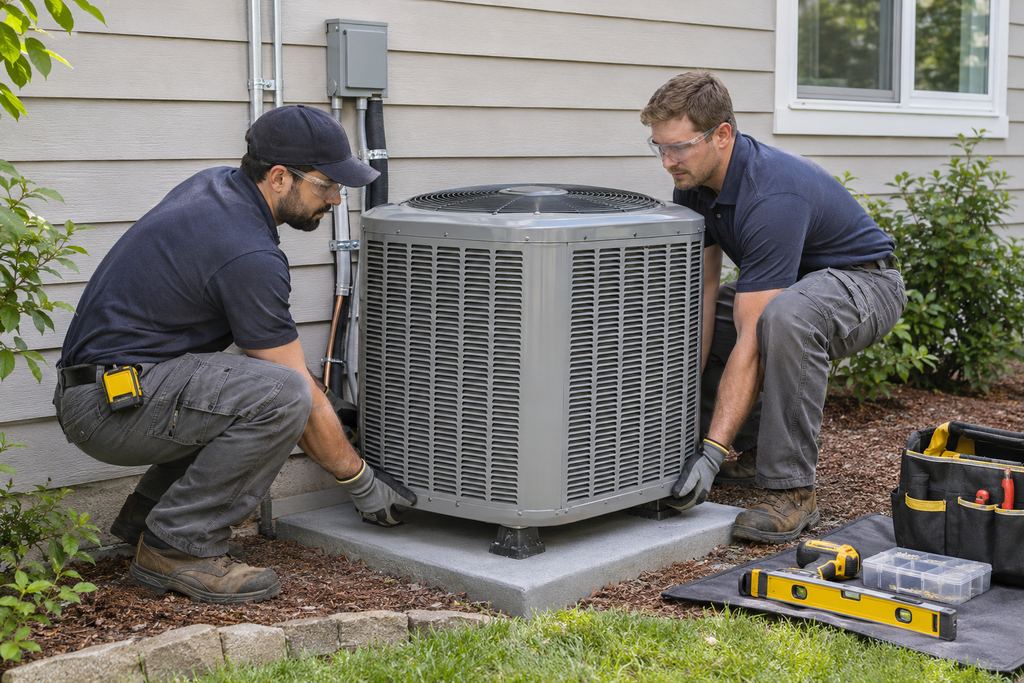
If your heating or cooling system is old, breaking down often or no longer keeps the house comfortable, request replacement quotes here. We pass your details to an independent local HVAC contractor who inspects the home, sizes new equipment and quotes the job in writing.
- AC, furnace, heat pump or full system replacement
- On-site assessment and a written, itemized quote from the contractor
- You choose whether to go ahead
The age, type and main problem help a contractor plan the visit.
Please keep this page open.
- Your request is matched with an independent contractor or partner network that serves your ZIP code.
- The contractor contacts you to confirm details and schedule a visit.
- They diagnose the system and quote the work. You decide whether to go ahead.
Read how requests are handled.
We're still setting up the contractor network that receives online requests, so your details were not sent to anyone and were not stored. Please call to request service, or check back soon.
Call (888) 555-0199Signs it may be time to replace
One sign alone rarely decides it. Two or three together usually justify getting a replacement quote next to the repair quote.
- Age: Air conditioners and heat pumps past roughly 10 to 15 years, or furnaces past 15 to 20, are near the end of a typical service life.
- R-22 refrigerant: Systems built for R-22 are costly to recharge because production of that refrigerant ended in 2020.
- Repeat repairs: Several service calls in two seasons, or a quote for a compressor or heat exchanger.
- Rising bills: Energy use climbing with no change in how you use the house.
- Comfort problems: Rooms that never reach the set temperature, high indoor humidity or constant running.
- Safety concerns: A cracked heat exchanger, scorched wiring or repeated breaker trips.
Repair or replace: a quick comparison
| Situation | Usually repair | Usually price a replacement |
|---|---|---|
| System age | Under about 10 years | Over about 12 to 15 years |
| Failed part | Capacitor, contactor, fan motor, thermostat | Compressor, coil, heat exchanger |
| Refrigerant | R-410A or newer | R-22 |
| Repair history | First major issue | Frequent calls |
| Age x repair cost | Below about 5,000 | Above about 5,000 |
Common replacement jobs
How an HVAC replacement usually goes
- Home assessment
The contractor looks at the current equipment, ducts, electrical service, thermostat and where the new units will sit.
- Load calculation
Capacity is set by a heating and cooling load calculation (ACCA Manual J), not by the size of the old unit.
- Written proposal
Model numbers, efficiency ratings, scope of duct and electrical work, permit, disposal and warranty terms.
- Permit
Most jurisdictions require a mechanical permit. The contractor usually applies for it.
- Removal and installation
Refrigerant is recovered from the old system, equipment is removed and the new system is set, connected and wired.
- Startup and checks
The installer verifies refrigerant charge, airflow and controls, then shows you the thermostat and filter location.
- Inspection and registration
A local inspector may visit, and the manufacturer warranty should be registered.
Efficiency and refrigerant on new equipment
New central air conditioners and heat pumps are rated in SEER2 under Department of Energy rules that started January 1, 2023. The minimum depends on your region, and a contractor should quote only equipment that meets it where you live. Going above the minimum lowers operating cost, and the payback depends on climate and how much the system runs.
Most new residential systems now use lower-global-warming refrigerants such as R-454B or R-32, as required by the EPA's AIM Act technology transitions rule. These are mildly flammable (A2L) refrigerants, so installers follow updated codes and handling practices. For a cost breakdown, see HVAC replacement cost.
How to compare replacement contractors
- License and insurance
Check the license on your state or local licensing board's site and ask for proof of insurance. - Load calculation
Ask whether the proposal is based on one and request a copy. - Itemized scope
Compare model numbers and work items, not only the total. - Labor warranty
Ask how long the contractor stands behind the installation and what it covers. - Financing terms
If financing is offered, read the full terms. Our AC financing guide explains the main options.
Protecting the new system
A new system still needs care. Change or clean filters on the schedule in the manual, keep the outdoor unit clear of plants and debris, and book professional HVAC maintenance each year. Many manufacturer warranties expect proof of regular maintenance, so keep the invoices.
How a service request works
AC Service Near Me is a referral service. We don't send our own technicians. We connect you with independent local contractors.
- Tell us what you need
Enter your ZIP code and choose the service. Add a few details about the problem or project.
- Your request is routed
It goes to an independent HVAC contractor or partner network that serves your area and handles that type of work.
- A contractor contacts you
The contractor reaches out to confirm details and schedule a visit.
- You decide
The contractor diagnoses the system and quotes the work. Pricing, scheduling and warranty terms are between you and them.
Frequently asked questions
Do I need to replace my HVAC system?
Not always. A newer system with a single failed part is usually worth repairing. Replacement makes more sense when the system is old, uses R-22, needs a major component or has frequent breakdowns. Ask the technician for a repair quote and a replacement quote so you can compare.
What are the top AC brands?
We do not rank brands and are not affiliated with any manufacturer. Most major brands offer entry, mid and premium product lines. Correct sizing, duct condition and installation quality affect performance more than the badge on the cabinet.
How long does HVAC replacement take?
A straightforward changeout of one system often takes one to two days. Duct changes, electrical upgrades, new locations or crane lifts for rooftop units can add time. Permit inspections may happen after installation.
Can I replace just the outdoor unit?
Replacing only the condenser on a split system is usually not recommended. The indoor coil should match the outdoor unit for the efficiency rating and refrigerant type, and many manufacturers tie warranty coverage to a matched system.
Is commercial HVAC replacement handled here too?
Yes. For rooftop and packaged units on business properties, see commercial AC replacement.
- Energy Saver: Heating and Cooling (U.S. Department of Energy)
- Protecting Our Climate by Reducing Use of HFCs (U.S. EPA)
- Section 608 Technician Certification (U.S. EPA)
- ENERGY STAR (U.S. EPA ENERGY STAR)
Last updated November 24, 2026. Editorial policy · Report an error
Related guides and services
Request HVAC replacement quotes
Share your ZIP code, the system you have and why you are thinking of replacing it. A local contractor can follow up to arrange an assessment.
AC Service Near Me is an independent referral service. Work is performed by independent, locally owned contractors. How we earn money
The age, type and main problem help a contractor plan the visit.
Please keep this page open.
- Your request is matched with an independent contractor or partner network that serves your ZIP code.
- The contractor contacts you to confirm details and schedule a visit.
- They diagnose the system and quote the work. You decide whether to go ahead.
Read how requests are handled.
We're still setting up the contractor network that receives online requests, so your details were not sent to anyone and were not stored. Please call to request service, or check back soon.
Call (888) 555-0199