Central Air Conditioner Installation
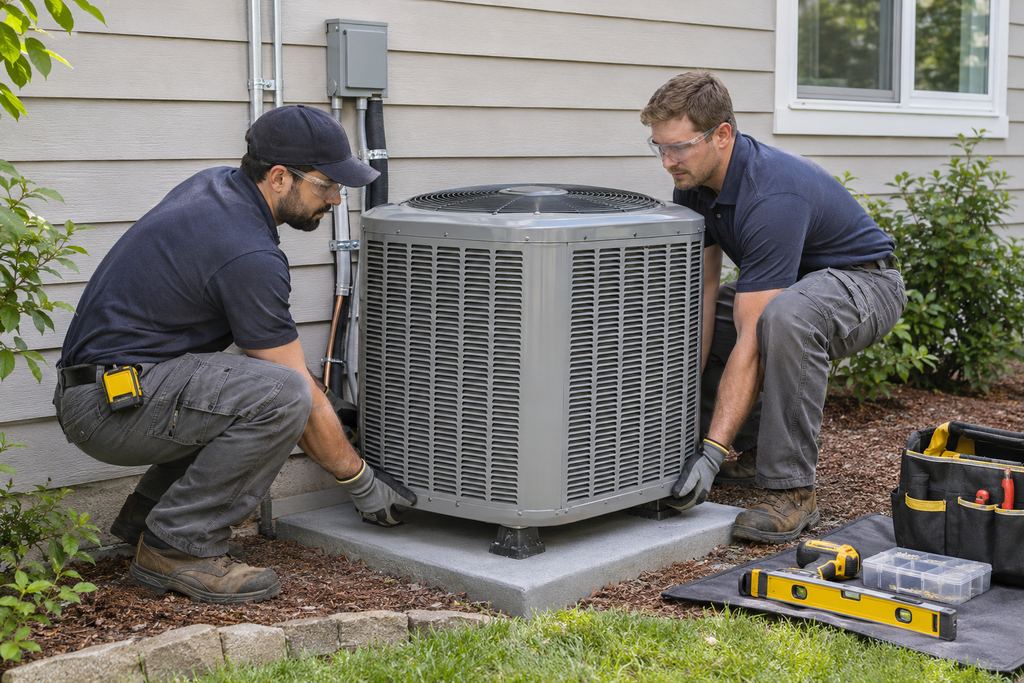
Central air conditioner installation is a two-part job: an outdoor condenser and an indoor coil joined by copper refrigerant lines, wired to its own circuit and tied into the home's ducts. Tell us about the house and an independent contractor near you can follow up to plan a site visit and a written quote.
- New central air or a full system changeout
- Sizing from a room-by-room load calculation
- Startup readings recorded before the crew leaves
Let us know if the house has ducts and a furnace today. A local installer follows up to arrange a visit.
Please keep this page open.
- Your request is matched with an independent contractor or partner network that serves your ZIP code.
- The contractor contacts you to confirm details and schedule a visit.
- They diagnose the system and quote the work. You decide whether to go ahead.
Read how requests are handled.
We're still setting up the contractor network that receives online requests, so your details were not sent to anyone and were not stored. Please call to request service, or check back soon.
Call (888) 555-0199How a central AC installation usually goes
- Site visit and load calculation
The installer measures rooms, notes windows and insulation, inspects the ducts and electrical panel, and runs a Manual J load calculation to pick the size.
- Written proposal
Model numbers, tonnage, SEER2 rating, line set plan, electrical work, permit and what is not included.
- Permit
Most cities and counties require a mechanical permit, and an electrical permit when a new circuit is run.
- Removal and prep
If an old system is there, its refrigerant is recovered by a certified technician before anything is disconnected. A level pad is set for the new condenser.
- Indoor coil and line set
The coil goes on top of the furnace or inside the air handler. Copper lines are run or flushed, brazed, then pressure tested.
- Evacuation and charge
The circuit is pulled into a deep vacuum to remove moisture, then the refrigerant is released and the charge is adjusted to the manufacturer's spec.
- Startup and walkthrough
Airflow, temperature split, amp draw and thermostat setup are checked. Ask for the readings in writing.
The parts of a split central air system
Which central air setup fits your house
Is central air hard to install yourself?
Safe checks you can do
No tools beyond a flashlight. Turn the system off at the thermostat before opening any filter or access door.
- Clear a path to the attic, closet or basement where the indoor unit goes
- Pick a condenser spot with the installer: clearance, noise near bedrooms, drainage
- Move cars, plants and stored items before install day
- Change the filter after the first few weeks of running
Leave these to a licensed technician
These involve high voltage, refrigerant or sealed components. Refrigerant work requires EPA Section 608 certification.
- Load calculation and equipment selection
- Brazing, pressure testing, vacuum and refrigerant charge (EPA Section 608 certification)
- Electrical circuit, disconnect and any panel work
- Duct modifications, permit and inspection
Install new, or repair what is there?
If the house already has central air, installation is usually part of a replacement decision. A young system with one failed part, such as a capacitor or fan motor, is normally worth repairing. An older system on R-22, a failed compressor out of warranty, or a house that never stays comfortable points toward a new install. See central AC replacement for that decision, or central AC repair if you want a repair price first.
Prices depend on ducts, electrical work and the efficiency tier, so we do not quote them. The central air installation cost guide walks through each line item.
Questions to ask before you sign
- Did you run a load calculation?
Ask for the result in Btu per hour, not just the tonnage. - Is the indoor coil matched to the outdoor unit?
A matched pair has its own rating in the AHRI directory. - Will you replace or flush the line set?
New refrigerants and old oil residue matter here. - Who pulls the permit?
And is the inspection fee in the quote? - What will the ducts need?
Leaky or undersized ducts limit any new system. ENERGY STAR notes that typical duct systems lose a meaningful share of air. - How is the warranty registered?
Many manufacturers require registration within a set time after install.
How a service request works
AC Service Near Me is a referral service. We don't send our own technicians. We connect you with independent local contractors.
- Tell us what you need
Enter your ZIP code and choose the service. Add a few details about the problem or project.
- Your request is routed
It goes to an independent HVAC contractor or partner network that serves your area and handles that type of work.
- A contractor contacts you
The contractor reaches out to confirm details and schedule a visit.
- You decide
The contractor diagnoses the system and quotes the work. Pricing, scheduling and warranty terms are between you and them.
Frequently asked questions
Is central AC hard to install?
The physical work takes a trained crew and specialized tools. Brazing, vacuum and refrigerant charging require EPA Section 608 certification, and most areas require a permit. It is not a do-it-yourself project.
How long does central air installation take?
A straight replacement on existing ducts is often finished in a day. A new install that needs ducts or electrical upgrades can take several days. Ask the contractor for a schedule in the proposal.
What does the 3 minute rule mean for a new system?
After the compressor shuts off, wait about three to five minutes before turning it back on so system pressures can even out. Many thermostats build in this delay automatically.
What mistakes should I avoid with a new central air system?
Choosing size by square footage, skipping a duct check, leaving an old coil on a new condenser and accepting a quote without model numbers. Each one shows up later as poor comfort or higher bills.
Are wall-mounted units worth it instead of central air?
For homes without ducts or for a few rooms, ductless wall units are often simpler to add. Where ducts already exist and are in good shape, central air usually costs less to install per room cooled.
- Manual J Residential Load Calculation (ACCA)
- Section 608 Technician Certification (U.S. EPA)
- Appliance and Equipment Standards Program (U.S. Department of Energy)
- Seal and Insulate (ENERGY STAR)
- AHRI (Air-Conditioning, Heating, and Refrigeration Institute)
Last updated November 24, 2026. Editorial policy · Report an error
Related guides and services
Plan your central air installation
Share the home size, heat source and whether ducts exist. A contractor who installs in your area follows up to arrange a site visit.
AC Service Near Me is an independent referral service. Work is performed by independent, locally owned contractors. How we earn money
Let us know if the house has ducts and a furnace today. A local installer follows up to arrange a visit.
Please keep this page open.
- Your request is matched with an independent contractor or partner network that serves your ZIP code.
- The contractor contacts you to confirm details and schedule a visit.
- They diagnose the system and quote the work. You decide whether to go ahead.
Read how requests are handled.
We're still setting up the contractor network that receives online requests, so your details were not sent to anyone and were not stored. Please call to request service, or check back soon.
Call (888) 555-0199