AC Installation in San Antonio, Texas
A new AC installation in San Antonio starts with a load calculation for your house, then a system matched to it: usually a central split system in newer slab homes, and sometimes ductless or a crawlspace layout in older pier-and-beam houses. Send us your project details and we pass the request to an independent installer serving your ZIP code, if one is available.
- New central air, system additions and ductless installation requests
- Permit, rebate and license checks specific to San Antonio
- Repair-or-replace guidance, including the $5000 rule
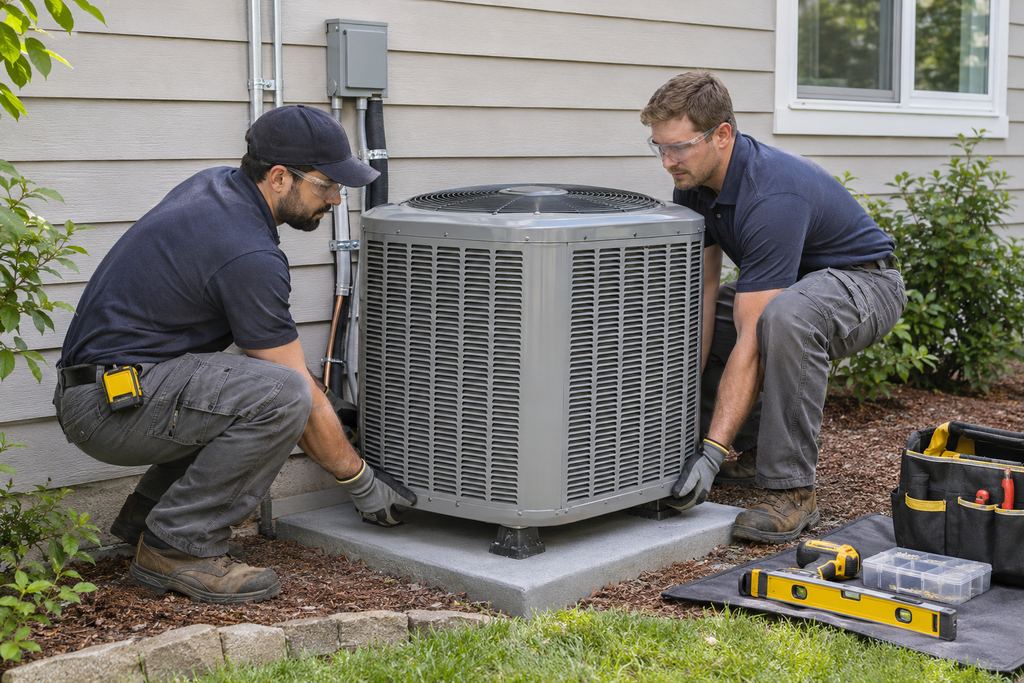
Home size, foundation type and whether you have ducts already help an installer give a useful estimate.
Please keep this page open.
- Your request is matched with an independent contractor or partner network that serves your ZIP code.
- The contractor contacts you to confirm details and schedule a visit.
- They diagnose the system and quote the work. You decide whether to go ahead.
Read how requests are handled.
We're still setting up the contractor network that receives online requests, so your details were not sent to anyone and were not stored. Please call to request service, or check back soon.
Call (888) 555-0199How San Antonio houses shape the installation
The city's housing stock spans a wide range, and the equipment layout follows it. Houses built in the last few decades on slab foundations usually have the furnace or air handler in the attic or a garage closet, with flex ducts across the attic. Older homes near the urban core are more often pier-and-beam, where ducts and sometimes the indoor unit sit in the crawlspace, or where the house had window units and never had ducts at all.
Each layout changes the job. Crawlspace ducts need sealing and insulation against damp air and pests. An attic air handler needs a secondary drain pan, a float switch and enough room to service it. Houses without ducts can get new ductwork, but a ductless mini-split is often less disruptive in plaster-walled rooms. If your home is in a designated historic district, ask the installer whether a visible new condenser location or wall penetrations need review by the city's Office of Historic Preservation before work starts.
System types to consider
What a complete installation should include
- Load calculation: Manual J style sizing, room by room if ducts are being changed.
- Matched equipment: Outdoor unit, coil and furnace or air handler listed together in the AHRI directory.
- Duct assessment: Static pressure check, sealing, and resizing where the old ducts are too small.
- Refrigerant lines: New or properly cleaned line set, pressure test and evacuation before charging.
- Drain and float switch: Primary drain routed correctly and overflow protection for attic units.
- Electrical: Breaker, wire size and disconnect matched to the new unit's nameplate.
- Permit and inspection: Inside city limits, mechanical permits come from the San Antonio Development Services Department.
- Thermostat and startup: A compatible thermostat, startup readings recorded, and a walk-through of settings.
What drives installation pricing
We do not quote prices. These are the factors behind most differences between estimates.
Texas follows the federal South region minimum of 14.3 SEER2 for split AC under 45,000 Btu/h. Two-stage and variable-speed units cost more and run more evenly.
Using existing ducts, repairing them or installing new ones is often the largest swing in a quote.
Attic, closet, crawlspace or a new spot each take different labor and materials.
Older homes may need a new circuit or panel capacity for central air.
CPS Energy offers home efficiency rebates through its STEP program; check current terms and the ENERGY STAR rebate finder.
Brands, and AC equipment made in Texas
Installers usually carry one or two brands they are trained on, and the quality of the installation matters more to how a system performs than the name on the cabinet. Ask why they recommend the brand they quote, how easy parts are to get locally, and what the manufacturer's warranty requires for registration.
Some residential equipment is built in Texas. Daikin's manufacturing campus in Waller County, west of Houston, builds Goodman, Amana and Daikin products, and Trane has long operated a residential plant in Tyler. Where a unit was assembled is less important than matching it to the house, but the question comes up often.
Questions to ask a San Antonio installer
- Is your Texas ACR license active?
Search the company at tdlr.texas.gov. TDLR licenses air conditioning and refrigeration contractors statewide. - How did you size the system?
Ask to see the load calculation, especially if they recommend a different size from the old unit. - What happens to the ducts?
Find out whether they were tested and what is being repaired or replaced. - Who files the permit?
The installer should apply and schedule inspection; if you live in a separate Bexar County city, that city handles it. - Which refrigerant will the system use?
New equipment uses R-454B or R-32. Ask how that affects service later. - What warranty applies?
Manufacturer parts warranty, registration deadline, and the installer's labor coverage.
After the installation and related services
A long cooling season means a new system benefits from a spring tune-up each year; keep the startup paperwork so the technician can compare readings. If the existing system can be saved, start with AC repair in San Antonio. For swapping out a worn system on existing ducts, see AC replacement in San Antonio. The national AC installation guide and installation cost guide add more detail, and the San Antonio page lists every local service.
How a service request works
AC Service Near Me is a referral service. We don't send our own technicians. We connect you with independent local contractors.
- Tell us what you need
Enter your ZIP code and choose the service. Add a few details about the problem or project.
- Your request is routed
It goes to an independent HVAC contractor or partner network that serves your area and handles that type of work.
- A contractor contacts you
The contractor reaches out to confirm details and schedule a visit.
- You decide
The contractor diagnoses the system and quotes the work. Pricing, scheduling and warranty terms are between you and them.
Other AC services in San Antonio
- Emergency AC Repair in San Antonio
- Air Conditioning Maintenance in San Antonio
- AC Repair in San Antonio
- AC and HVAC Replacement in San Antonio
- Thermostat Replacement in San Antonio
AC Installation in other Texas cities
Frequently asked questions
What is the $5000 rule for HVAC systems?
Multiply the system's age by the repair cost. Above 5,000 suggests getting a replacement quote. It is a rule of thumb that leaves out efficiency, refrigerant and comfort.
What is the most efficient air conditioning system for a home?
Among common options, variable-speed heat pumps and ductless mini-splits tend to have the highest SEER2 ratings. The right choice also depends on ducts, house layout and budget. ENERGY STAR lists certified models.
Are HVAC prices going up in 2026?
We cannot predict pricing. Equipment costs shifted with the 2025 refrigerant changeover, and contractors set their own labor rates. Get current written quotes and check incentives before you decide.
What AC unit is made in Texas?
Goodman, Amana and Daikin residential equipment is built at Daikin's campus in Waller County near Houston, and Trane has a residential plant in Tyler. We are not affiliated with any manufacturer.
Do I need a permit to install AC in San Antonio?
Yes, for a new or replacement central system inside city limits. The Development Services Department issues mechanical permits and the work is inspected. Other cities in Bexar County run their own permit offices.
Can I get a rebate from CPS Energy?
CPS Energy runs home efficiency rebates through its STEP program. Terms change, so check the CPS Energy site and confirm the equipment qualifies before you buy.
- Air Conditioning and Refrigeration (Texas Department of Licensing and Regulation)
- CPS Energy (CPS Energy)
- Development Services Department (City of San Antonio)
- Appliance and Equipment Standards Program (U.S. Department of Energy)
- Manual J Residential Load Calculation (ACCA)
Last updated November 24, 2026. Editorial policy · Report an error
Related guides and services
Request AC installation quotes in San Antonio
Tell us about the house, the current system and what you want installed. An independent installer serving your ZIP code, where one is available, can contact you to arrange an estimate.
AC Service Near Me is an independent referral service. Work is performed by independent, locally owned contractors. How we earn money
Home size, foundation type and whether you have ducts already help an installer give a useful estimate.
Please keep this page open.
- Your request is matched with an independent contractor or partner network that serves your ZIP code.
- The contractor contacts you to confirm details and schedule a visit.
- They diagnose the system and quote the work. You decide whether to go ahead.
Read how requests are handled.
We're still setting up the contractor network that receives online requests, so your details were not sent to anyone and were not stored. Please call to request service, or check back soon.
Call (888) 555-0199