AC Repair in Florida
Florida air conditioners run more hours than almost anywhere else in the country, so repairs here tend to follow a pattern: clogged condensate drains, worn capacitors and fan motors, corroded coils near the coast, and storm-related electrical damage. Tell us what your system is doing and we pass the request to an independent local contractor where one serves your ZIP code.
- Plain guidance on what you can check before a visit
- Florida-specific failure patterns: humidity, salt air, storms
- How to look up a contractor's state license before work starts
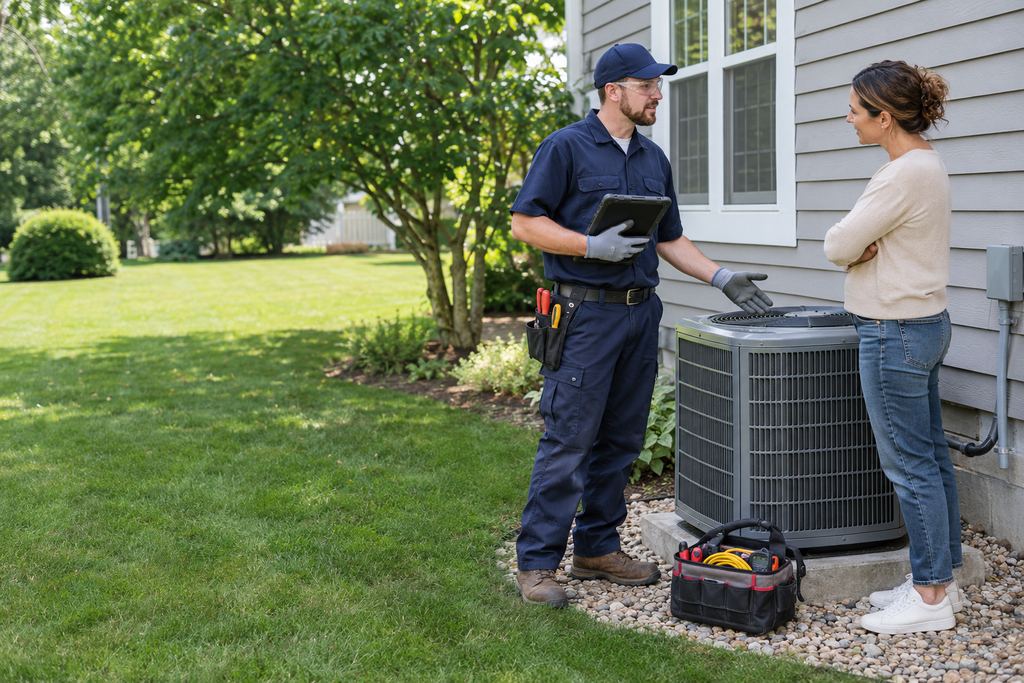
Share your ZIP code and what the system is doing. Availability varies by area and season.
Please keep this page open.
- Your request is matched with an independent contractor or partner network that serves your ZIP code.
- The contractor contacts you to confirm details and schedule a visit.
- They diagnose the system and quote the work. You decide whether to go ahead.
Read how requests are handled.
We're still setting up the contractor network that receives online requests, so your details were not sent to anyone and were not stored. Please call to request service, or check back soon.
Call (888) 555-0199Why Florida systems need repair more often
In much of the country an air conditioner works hard for three or four months. In Florida the cooling season starts in spring and often runs into November, and in the southern half of the state there are years when the system barely gets a break. More running hours means more wear on the compressor, the outdoor fan motor, the blower and the start components that kick each of them on.
Humidity adds a second load. A Florida system is not only lowering the temperature, it is pulling a large amount of water out of the air. That water drains through a condensate line, and algae and sludge grow in that line fast in a warm climate. A blocked drain is one of the most common service calls in the state, and it can shut the system down through a float switch or leak through a ceiling if the air handler sits in an attic.
The third factor is weather. Hurricane season runs from June 1 to November 30. Storms bring power outages, voltage surges when power returns, flooded outdoor units and wind-blown debris. Along the coast, salt spray settles on outdoor coils and fins and speeds up corrosion, which can lead to refrigerant leaks years earlier than the same equipment would see inland.
Common signs your system needs a technician
Pick the symptom that matches what you are seeing for causes and safe checks.
What usually causes the breakdown
These are the causes Florida homeowners hear about most often from technicians. A diagnostic visit confirms which one applies.
Algae and debris block the line, the float switch cuts power to the system, or water overflows the pan. Common in garage, closet and attic air handlers.
Heat and constant cycling wear out the parts that start the compressor and fan. The outdoor unit may hum, click or stay silent. This is technician work because capacitors hold a charge.
Salt air near the ocean and the Intracoastal eats at aluminum fins and copper tubing. Dirty or damaged coils cut capacity and can lead to leaks.
Refrigerant does not get used up. If the charge is low, there is a leak to find and repair, and the work requires EPA Section 608 certification.
Lightning, outages and power coming back unevenly can damage control boards, compressors and thermostat wiring.
Long run times wear bearings. Watch for grinding, squealing or a fan that turns slowly or not at all.
What you can check and what to leave to the technician
Safe checks you can do
No tools beyond a flashlight. Turn the system off at the thermostat before opening any filter or access door.
- Confirm the thermostat is set to Cool and a few degrees below room temperature, and replace its batteries if it has them
- Replace a dirty air filter; in a Florida summer many homes need a new one more often than the package suggests
- Check whether the AC breaker has tripped and reset it once; if it trips again, leave it off
- Clear leaves, storm debris and plants from around the outdoor unit
- If you see ice, switch the system to fan-only to let it thaw before a visit
- Flush the condensate line only if your owner's manual describes how
Leave these to a licensed technician
These involve high voltage, refrigerant or sealed components. Refrigerant work requires EPA Section 608 certification.
- Testing and replacing capacitors, contactors and control boards
- Finding and repairing refrigerant leaks and recharging the system
- Clearing a drain that keeps backing up and checking the float switch
- Cleaning or replacing salt-damaged coils
- Diagnosing compressor and motor failures
- Any work inside electrical panels or the unit's service panels
If you notice a burning smell, smoke, sparks, or a breaker that trips again after one reset, turn the system off at the thermostat and call a professional. If there is smoke or fire, leave the house and call 911. If anyone shows signs of heat illness such as confusion, fainting or hot, dry skin, call 911. The National Weather Service lists heat safety steps at weather.gov/safety/heat.
Systems Florida technicians work on
Florida homes use a few equipment layouts more than others. Knowing yours helps the contractor bring the right parts.
What a repair visit usually covers
- Symptom review: The technician asks what changed, when it started and whether it followed a storm or outage.
- Electrical checks: Voltage at the disconnect, capacitor and contactor condition, and wiring for heat or rodent damage.
- Airflow and drainage: Filter, blower, coil condition, drain pan and condensate line.
- Refrigerant circuit: Pressures and temperatures compared with the manufacturer's charging data, plus a leak search when the numbers point to one.
- Written findings: Ask for the diagnosis and the repair price in writing before you approve the work.
Repair, efficiency and when replacement makes more sense
Because Florida systems run so many hours, efficiency matters more here than in milder states. Since January 1, 2023, new central split air conditioners under 45,000 Btu/h sold in the Southeast region, which includes Florida, must meet at least 14.3 SEER2 under Department of Energy rules. A system installed fifteen or more years ago was built to a lower standard and may cost noticeably more to run.
A repair is usually worth it when the system is younger, the failed part is a common one such as a capacitor or a drain issue, and the coils are in good shape. Replacement starts to make sense when the compressor fails on an older unit, when the coil is badly corroded, or when an R-22 system needs refrigerant. Some people use the rough "$5,000 rule": multiply the system's age by the repair quote, and if the result is more than 5,000, look at replacement quotes. It is a rule of thumb, not a standard. Our guides on AC replacement and AC repair costs go further.
New split systems now ship with lower-GWP refrigerants such as R-454B or R-32 under the EPA's AIM Act transition, while existing R-410A systems can still be serviced.
How a service request works
AC Service Near Me is a referral service. We don't send our own technicians. We connect you with independent local contractors.
- Tell us what you need
Enter your ZIP code and choose the service. Add a few details about the problem or project.
- Your request is routed
It goes to an independent HVAC contractor or partner network that serves your area and handles that type of work.
- A contractor contacts you
The contractor reaches out to confirm details and schedule a visit.
- You decide
The contractor diagnoses the system and quotes the work. Pricing, scheduling and warranty terms are between you and them.
AC Repair by city in Florida
Pick your city for local details.
Frequently asked questions
How long does an air conditioner last in Florida?
Many central systems are replaced somewhere between 10 and 15 years in Florida, sooner near the coast where salt air attacks the outdoor coil, and longer for well-maintained units inland. ENERGY STAR suggests considering replacement when a system is more than 10 years old and needs frequent repairs. Regular coil cleaning and drain service help a system reach the upper end of that range.
What is the $5,000 rule for AC repair?
It is a rough way to compare repair and replacement. Multiply the age of the system in years by the repair quote in dollars. If the result is above 5,000, many homeowners start getting replacement quotes. It does not account for efficiency, refrigerant type or your plans for the house, so treat it as a starting point.
How do I find a reputable HVAC company in Florida?
Search the company's license at myfloridalicense.com, ask for proof of insurance, ask whether a permit will be pulled when one is required, and get the diagnosis and price in writing. Rankings of the "top" companies on social media are not a substitute for a license check and a written quote.
Why does my Florida AC keep shutting off with water in the pan?
That is usually a float switch doing its job. When the condensate drain clogs, water rises in the pan and the switch cuts power to prevent a leak. Clearing the line, and finding why it clogs, fixes the problem. Do not bypass the switch. See clogged AC drain for safe steps.
Which states rely on air conditioning the least?
Cool or mild places such as Alaska and parts of the Pacific Northwest have the lowest share of homes with AC, according to the U.S. Energy Information Administration's housing surveys. Florida is at the other end, with air conditioning in nearly every home.
Should I run my AC after a hurricane power outage?
Check the outdoor unit for flood water, debris and damage first. If it was under water, leave it off and have it inspected. If it looks normal, many manufacturers suggest waiting a few minutes after power returns before switching it back on. Read AC not working after a power outage for more.
- Florida DBPR license search (Florida Department of Business and Professional Regulation)
- Section 608 Technician Certification (U.S. EPA)
- National Hurricane Center (NOAA)
- ENERGY STAR (U.S. EPA)
- Heat Safety (National Weather Service)
Last updated November 24, 2026. Editorial policy · Report an error
Request AC repair in Florida
Tell us your ZIP code and what the system is doing. If an independent contractor serves your area, your request goes to them so they can contact you about a visit.
AC Service Near Me is an independent referral service. Work is performed by independent, locally owned contractors. How we earn money
Share your ZIP code and what the system is doing. Availability varies by area and season.
Please keep this page open.
- Your request is matched with an independent contractor or partner network that serves your ZIP code.
- The contractor contacts you to confirm details and schedule a visit.
- They diagnose the system and quote the work. You decide whether to go ahead.
Read how requests are handled.
We're still setting up the contractor network that receives online requests, so your details were not sent to anyone and were not stored. Please call to request service, or check back soon.
Call (888) 555-0199